Stamped Concrete in Mobile
Mobile's Trusted Stamped Concrete Contractors
Do We Serve Mobile, AL for Stamped Concrete?
We serve homeowners and property owners throughout Mobile, AL and the surrounding communities, including Spring Hill, Midtown Mobile, the Oakleigh Garden District, Cottage Hill, Timbercreek, and neighborhoods along Old Shell Road and Airport Boulevard. Whether your project is close to Mobile Bay or further inland near Schillinger Road, we can typically schedule a free on-site consultation within a few business days. We have over 10 years of hands-on experience working right here in Mobile, with more than 20 years of combined concrete experience across our crew.
Common Problems That Lead Homeowners to Consider Stamped Concrete
A lot of the homeowners we talk to are dealing with outdoor surfaces that look tired, cracked, or just plain dull. Maybe your plain gray patio has seen better days, or your pool deck has become a safety concern with uneven sections and a slippery surface. Others come to us after getting quotes for natural stone or brick and finding the cost too high. Stamped concrete gives you the look of stone, slate, or brick without the price tag that comes with those materials. It also gives you a seamless surface that resists weeds and is easier to maintain over time. If your existing concrete is still structurally sound, concrete resurfacing may be an option worth exploring before committing to a full replacement.
Local Knowledge: What Mobile Homeowners Need to Know About Stamped Concrete
Mobile's climate is hard on outdoor surfaces. High humidity, heavy Gulf Coast rainfall, salt air from Mobile Bay, and our warm UV-intense summers all put stress on concrete and sealers. The soil here is another factor. Much of the area sits on expansive clay and deltaic sediment that shifts with moisture changes. In neighborhoods like Leinkauf Historic District or along Dauphin Island Parkway, we regularly see settling and cracking on slabs that were not properly prepared for the local subgrade conditions. We account for all of this before we pour. That means proper subbase compaction, drainage planning with a 1/4 inch per foot drainage slope, and sealer systems rated to hold up in coastal plain conditions. We also stay current with permit requirements through the City of Mobile Building Inspection Division so your project is done by the book.
Frequently Asked Questions From Mobile, AL Homeowners About Stamped Concrete
Before we walk through all the details, here is a quick look at what people most often ask us before getting started. Homeowners want to know about stamped concrete costs, what patterns and concrete textures are available, how long the job takes, what maintenance looks like, and whether their specific area, like a pool deck or driveway, is a good fit for this type of surface. They also ask about durability in our local weather, how concrete sealing works, and whether they need a permit. We cover all of that throughout this page. If you have heard the term before but are not sure exactly what it means, a straightforward stamped concrete explained breakdown is coming up in the next section, where we walk through what this material actually is and how it works.
What Is Stamped Concrete?
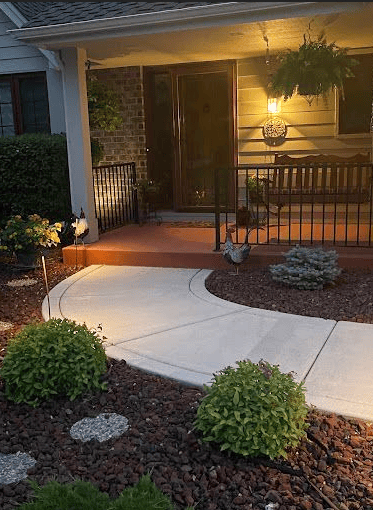
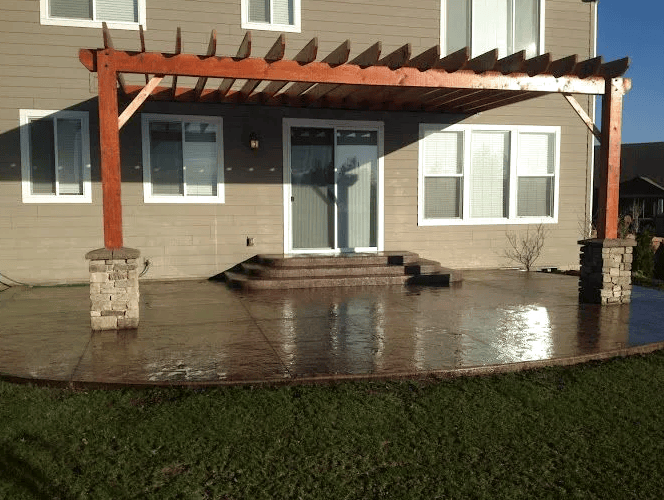
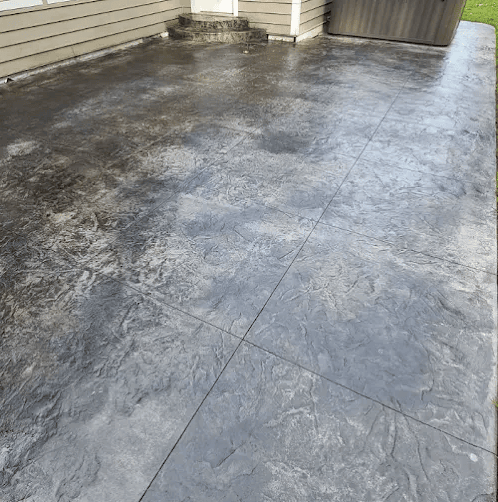
Stamped concrete is a type of decorative concrete that gets pressed with textured molds while it's still soft. The result is a surface that can look like brick, slate, flagstone, wood planks, cobblestone, or other materials — without the cost or upkeep that usually comes with them. It's one of the more versatile outdoor flooring solutions we work with, and it works well for patios, driveways, pool decks, and walkways across Mobile.
How the Stamping Process Works
After we pour and screed the concrete flat, we apply a color hardener and an antique release powder to the surface. The release powder keeps our stamping mats from sticking and adds a second tone that gives the finished surface some depth. Once the concrete firms up to just the right consistency — not too wet, not too stiff — we press the stamping mats into the surface in a careful, overlapping pattern. Timing matters a lot here. If we stamp too early, the texture smears. Too late, and the mats won't press deep enough. After stamping, we let the slab cure fully before washing off the excess release and applying a sealer to lock in the color and protect the surface.
What Materials and Tools Are Used
A good stamped concrete slab starts with a well-designed mix. We typically work with Portland cement combined with fiber reinforcement to reduce shrinkage cracking. For most residential slabs in Mobile, we aim for at least 4000 psi compressive strength and keep a close eye on the water-cement ratio, since adding too much water weakens the finished surface. Color comes from integral pigment mixed directly into the concrete or from color hardener broadcast on top. For texture and pattern, we use stamping mats, texture skins, and border stamps — many of which come from trusted tool lines like Proline Concrete Tools or Walttools. Once the slab is cured, we apply a quality acrylic sealer or polyurethane sealant using an airless sprayer for even coverage.
How Stamped Concrete Differs from Plain or Brushed Concrete
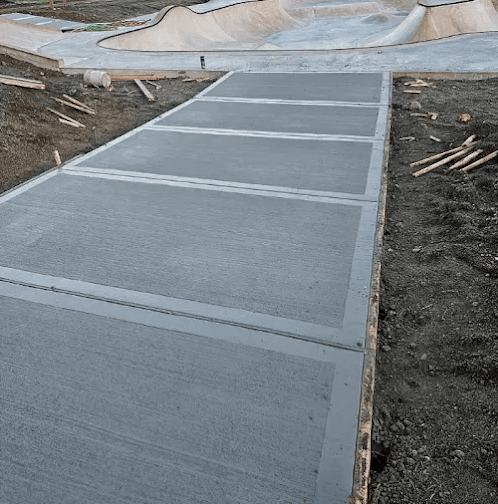
Plain concrete gets a simple broom or brushed finish for basic traction. It's functional, but it doesn't offer much in terms of appearance. Concrete textures, patterns, and color are what set stamped work apart. A brushed slab is one color and one texture. A stamped slab can mimic the look of expensive natural stone or pavers at a lower material cost, and it does so as a single seamless pour — meaning no shifting joints, no weeds pushing through the gaps, and easier long-term care. Concrete resurfacing can even bring a worn plain slab back to life with a stamped overlay if full replacement isn't necessary. The range of looks you can achieve is one reason stamped concrete stays a popular choice in neighborhoods like Spring Hill and the Oakleigh Garden District. That range of concrete patterns and finishes is exactly what we'll walk through next.
Stamped Concrete Pattern and Texture Options
Popular Patterns: Stone, Brick, Slate, Wood Plank and More
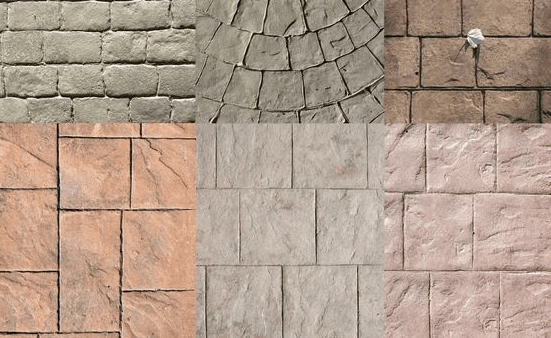
One of the biggest draws of stamped concrete is how many pattern choices you have. Using stamping mats and texture skins, we can press designs into fresh concrete that closely mimic natural stone, brick, slate, cobblestone, and even wood plank. These tools replicate the surface detail of real materials so well that most people have to look twice. For homeowners in Spring Hill or the Oakleigh Garden District who want the look of handset brick or cut flagstone without the long-term joint maintenance, stamped concrete offers a practical and good-looking alternative. Common patterns we work with include ashlar slate, running bond brick, random stone, European fan, and wood plank — all achievable with the right stamping mat layout and concrete finishing techniques.
Texture Options and How They Affect the Look and Feel
Texture plays a big role in how your finished surface looks and performs. A deeper, more aggressive texture gives a natural, rustic feel and adds grip underfoot — something especially useful around pool decks and walkways near Dog River or Fowl River where surfaces stay wet. Lighter textures produce a smoother, more refined look that suits formal patios and front walkways. We use seamless texture mats and flex mats to create consistent surface profiles across the full pour. The texture we recommend depends on where the concrete will be used, how much foot traffic it will see, and your personal preference for decorative concrete aesthetics.
Custom Borders, Medallions and Decorative Inlays
Borders, medallions, and inlays let us add detail and structure to a stamped concrete design. A border stamp around the perimeter of a patio in Timbercreek or Heron Lakes, for example, can frame the main pattern and give the surface a finished, intentional look. Medallions are often set at entryways or focal points and can be designed to match your home's architectural style. These details are laid out during the stamped concrete design phase before any concrete is poured, so the joint layout, pattern scale, and inlay placement all work together as a cohesive plan.
Choosing the Right Pattern for Your Home Style
Pattern selection works best when it fits the overall character of your home. A historic cottage along Old Dauphin Way tends to pair well with a cobblestone or worn brick pattern. A newer build off Cottage Hill Road might suit a clean ashlar slate or large-format stone. We look at your home's exterior materials, roof lines, and landscaping as part of our on-site consultation before making any recommendations. The goal is for the concrete to feel like it belongs rather than standing out for the wrong reasons. Getting the pattern scale right is just as important as the pattern itself — oversized stamps on a small patio, or undersized ones on a wide driveway, can make the finished surface look off. Once you settle on a pattern that fits your space, the next decision is color — and that choice has just as much impact on the final result.
A few years back, we took on a stamped concrete patio job for a family over in West Mobile. It seemed straightforward at first, a nice sized backyard patio with a slate pattern and a warm tan color to match their brick home. We had done dozens of jobs like it, so we felt good going in.
What we did not count on was the weather. If you have lived in Mobile for any amount of time, you know how fast the humidity and heat can team up against you in the summer. The morning we poured, the temperature climbed faster than we expected, and the concrete started setting up way too quickly. In stamped concrete work, timing is everything. You have a window to press the stamps into the surface, and that window is not very forgiving. When the mix stiffens too fast, the pattern does not transfer cleanly, and you end up with edges that look soft or blurred instead of sharp and defined.
We had to make some fast decisions. Our crew wet the surface carefully to buy a little more time, and we brought in an extra set of hands to move across the slab faster. We adjusted our release agent application and worked in smaller sections than we normally would. It added a couple of hours to the job and kept everyone on their toes.
In the end, the patio came out exactly the way the homeowner wanted it. But that day reminded us why experience matters on a job like this. With over 20 years of combined time pouring concrete and more than 10 years working right here in Mobile, we have learned how to read conditions and adapt when things do not go as planned. That kind of knowledge is what helps us protect your investment, no matter what the Alabama weather decides to do.
Color Options for Stamped Concrete
One of the biggest decisions you'll make when planning a stamped concrete project is choosing the right color. The good news is that modern decorative concrete gives you a wide range of options, and we're here to help you sort through them so you end up with a look you're happy with for years to come.
Integral Color vs. Color Hardener vs. Antiquing Release
There are three main ways we add color to stamped concrete, and they each work a little differently. Integral pigment is mixed directly into the concrete before it's poured. This gives you consistent color all the way through the slab, so if the surface ever chips or wears, the color stays visible. Products from Davis Colors and Solomon Colors are commonly used for this method.
Color hardener is a dry powder broadcast onto the surface while the concrete is still wet. It's worked into the top layer, which creates a denser, harder surface and allows for more vibrant tones than integral color alone. We often use color hardener when you want a richer, more defined look in your stamped concrete design.
Antiquing release, sometimes called antique release powder, serves two purposes. It acts as a bond breaker so our stamping mats lift cleanly off the surface, and it leaves a secondary accent color in the low spots of the pattern. This two-tone effect is what gives stamped concrete that realistic stone or brick appearance. Brickform and Butterfield Color both offer well-tested release agents we rely on regularly.
UV-Stable Color Options for Mobile's Sunny Climate
Mobile gets a lot of sun, and the UV exposure here along the Gulf Coast can fade concrete colors faster than homeowners expect. When we select pigments and concrete sealing systems for projects in areas like Spring Hill or along Cottage Hill Road, we factor in that sun load. UV-stable pigments and quality acrylic sealers help protect the color you choose from washing out over time. Resealing every few years also keeps the color looking fresh without needing a full replacement.
How to Match or Complement Your Home's Existing Colors
Choosing a concrete color that works with your home's exterior doesn't have to be complicated. We typically look at your siding, brick, trim, and roof tones before recommending any colored concrete options. Warm tans and buffs tend to complement the older craftsman and colonial-style homes you'll find in neighborhoods like the Oakleigh Garden District, while cooler grays and slate tones work well with more modern builds. We can also use borders or accent stamps to tie in a second color that pulls from your home's palette.
Getting the color right from the start matters because concrete color is not easy to change after the slab cures. That's one reason we take time on the front end to talk through your options before any concrete is poured. Once we've landed on the right color approach, the next step is figuring out where on your property stamped concrete makes the most sense.
Where Stamped Concrete Can Be Used
One of the things homeowners across Mobile appreciate most about decorative concrete is how many different surfaces it works on. Whether you live off Spring Hill Avenue, out near Timbercreek, or anywhere in between, stamped concrete fits a wide range of projects around the house.
Patios and Outdoor Living Areas
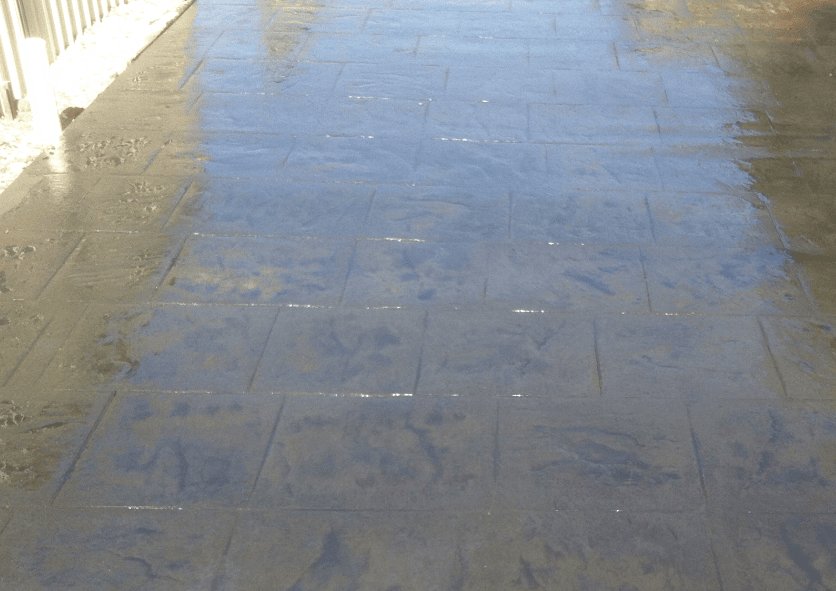
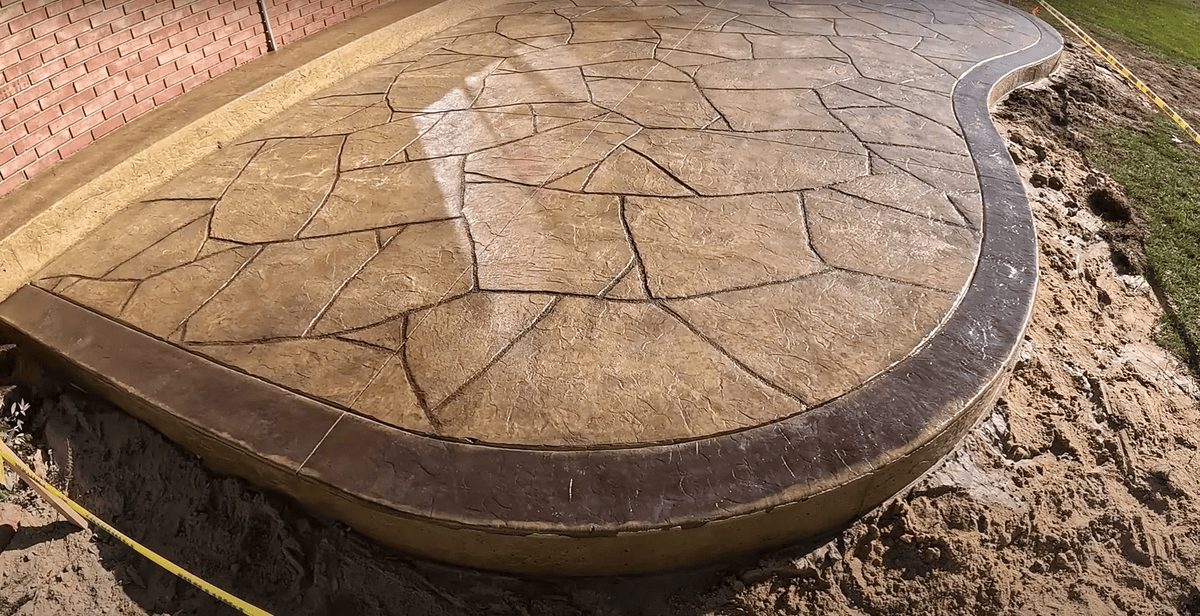
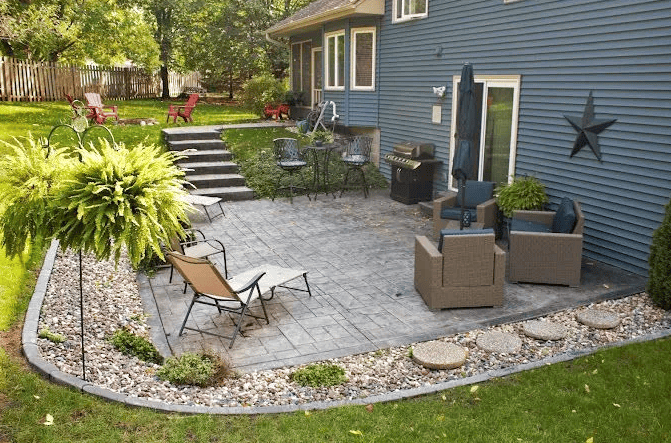
Stamped concrete patios are one of the most popular jobs we take on in Mobile. A poured and stamped patio gives you a seamless surface that holds up well in our humid Gulf Coast climate. We can work in concrete patterns that resemble natural stone, brick, or even wood, and pair them with colored concrete options to match your home's exterior. No shifting pavers, no joint weeds, and easy cleaning after those heavy Gulf Coast rain events.
Driveways
A stamped concrete driveway does more for curb appeal than most other outdoor flooring solutions. We pour driveways to a minimum of 4 inch slab thickness, often 6 inches for heavier vehicle loads, with proper reinforcement and a compacted base underneath. Given Mobile's expansive clay soils and high water table in certain areas, correct subgrade prep is not optional. We plan drainage carefully so water moves away from the slab at the right slope.
Pool Decks
Pool decks around Mobile get a lot of sun and a lot of foot traffic. Stamped concrete design works especially well here because we can apply slip-resistant concrete textures and use sealers rated for wet surfaces. The right concrete sealing system, applied correctly and timed to the cure cycle, protects the surface from pool chemicals, UV exposure, and the salt air that moves in off Mobile Bay.
Walkways and Sidewalks
Front walkways, garden paths, and side-yard connections are great candidates for stamped concrete. These smaller pours let us get creative with stamped concrete design details like border stamps and texture skins that complement your landscaping. We treat these as part of your overall concrete landscaping plan, not just an afterthought.
Interior Floors
Stamped and decoratively finished concrete works indoors too. Garages, sunrooms, and open living areas are common interior applications we handle. For existing slabs that are in decent shape, concrete resurfacing with a decorative overlay can refresh the surface without a full replacement, which keeps costs down considerably.
With so many surfaces in play, the natural next question most homeowners ask is how stamped concrete actually compares to the other materials they are considering.
Stamped Concrete vs. Other Materials
When you're planning a new patio, driveway, or pool deck in Mobile, it helps to understand how stamped concrete stacks up against other popular materials. We've worked on projects all across the area, from Spring Hill to the Oakleigh Garden District, and homeowners consistently ask us the same questions about materials. Here's an honest look at how stamped concrete compares.
Stamped Concrete vs. Natural Stone
Natural stone looks beautiful, but it comes with a high price tag and some real practical drawbacks in a coastal climate like ours. Stone slabs are heavy, require skilled cutting and fitting, and can shift over time when installed over Mobile's expansive clay and deltaic sediment soils. Stamped concrete can closely replicate the look of slate, flagstone, or limestone using concrete textures and integral pigment, and it does so at a significantly lower cost. Because the surface is poured as one continuous slab, there are no gaps for weeds, insects, or water to work their way in.
Stamped Concrete vs. Pavers
Pavers are another common choice, and they do offer the ability to replace individual pieces if something cracks. However, the joints between pavers collect dirt, allow weed growth, and can shift over time, especially on the soft subgrade and high water table conditions common near areas like Dog River and Fowl River. Decorative concrete with stamped patterns gives you the visual appearance of individual units without the joint maintenance. A well-reinforced slab using #4 rebar at 18-inch on center and a proper 4-inch compacted base will hold up reliably without the settling issues pavers can develop.
Stamped Concrete vs. Plain Concrete
Plain concrete is durable and affordable, but it offers very little in terms of appearance. Stamped concrete design takes the same core material and adds concrete patterns, color hardener, release agent, and antique release powder to create surfaces that look far more finished and intentional. For homeowners in neighborhoods like Timbercreek or Cottage Hill who want outdoor spaces that complement their home's architecture, plain gray concrete often falls short. The cost difference between plain and stamped is real, but so is the difference in curb appeal and long-term satisfaction.
Cost Comparison with Alternative Materials
Looking at stamped concrete costs in context makes the choice clearer. Natural stone installations typically run two to three times more per square foot than stamped concrete. Pavers fall somewhere in between, but when you factor in long-term upkeep, joint repairs, and re-leveling, the lifetime cost climbs. Plain concrete costs less upfront but may not meet your design goals. Concrete resurfacing is also worth considering if you have an existing slab in decent structural shape, since it can update the look at a lower cost than a full replacement. Outdoor flooring solutions like stamped concrete tend to offer a strong balance of appearance, durability, and value, particularly when properly sealed with a quality acrylic sealer or polyurethane sealant suited to our Gulf Coast weather.
Once you've settled on stamped concrete as the right material for your project, the next step is understanding how the work actually gets done. The installation process has several stages, and each one matters to the final result.
Licensed, Insured, and Local to Mobile
We are a licensed and insured concrete contractor based right here in Mobile, AL. Our team has over 20 years of combined experience pouring and finishing concrete, and we have spent more than 10 years working specifically in the Mobile area. That means we know this region well, the soil conditions, the humidity, the coastal weather, and the local codes that affect how concrete work gets done here.
When you hire us, you are working directly with experienced tradespeople who have handled concrete projects of all sizes across Mobile County. We have poured driveways in Midtown, built patios in West Mobile, installed commercial slabs in the Port City area, and completed foundation work throughout the surrounding communities. This is our home too, and we take the quality of our work seriously because of that.
Concrete is not a forgiving material. If the subbase is not compacted properly, if the mix is wrong for the conditions, or if the joints are not placed correctly, you will see problems within a few years. Mobile's high humidity, heavy rainfall, and clay-heavy soils make those details even more important. We have seen what happens when those steps get skipped, and we do not skip them.
We carry full licensing and insurance so you are protected throughout the project. We also help you navigate permits and inspections when your project requires them, which takes that burden off your plate. Whether you are planning a new driveway, need a cracked slab repaired, or want to explore stamped or decorative options, we are straightforward with you about what the work involves, how long it will take, and what it will cost.
We offer free on-site estimates so we can look at your specific conditions before we give you a number. Concrete projects vary a lot depending on the site, and an honest estimate needs to account for your actual ground, your actual layout, and your actual goals.
Stamped Concrete Installation Process
Understanding how we install stamped concrete helps you know what to expect and why each step matters. From the first shovel of dirt to the final coat of sealer, every phase of the job affects how your finished surface looks and holds up over time. Here is how we work through a typical project in the Mobile area.
Site Preparation and Base Work
Good stamped concrete starts well below the surface. We begin by excavating the area to the correct depth and grading it to promote drainage away from your home. Mobile sits on coastal plain subgrade that often includes expansive clay, silty soil, and areas with a high water table near Dog River, Fowl River, and other low-lying corridors. That kind of ground moves, and movement causes cracking. We account for that by compacting the subgrade and placing a minimum 4-inch compacted base of crushed stone or gravel to stabilize things before any concrete is poured. Where soil conditions are poor, we go deeper. We also lay a vapor barrier to limit moisture migration through the slab.
Pouring and Finishing the Concrete Slab
We design our concrete mix based on the specific conditions of your project. For most residential stamped concrete in Mobile, we use a mix meeting at least 3000 psi compressive strength, though we often specify 4000 psi for driveways and pool decks that take heavier loads. Controlling the water-to-cement ratio is critical. Too much water weakens the surface and causes cracking. We reinforce the slab with rebar or welded wire reinforcement sized and placed to reduce crack width if movement ever does occur. Once the concrete is placed and screeded level, we work it with a bull float to bring the surface to a consistent finish and begin preparing it for stamping.
Applying Color and Stamping the Pattern
Timing is everything when it comes to decorative concrete. Stamping too early or too late ruins the texture and pattern. We broadcast color hardener or use integral pigment mixed directly into the concrete, depending on the look you want. An antique release powder is then applied to the surface before stamping. The release agent does two things: it prevents the stamping mats from sticking, and it leaves a subtle secondary color in the recesses of the pattern, which gives the finished surface a natural, aged look that mimics stone, brick, or slate. We use professional-grade stamping mats and texture skins to press the concrete patterns and concrete textures into the surface while it is still workable. Border stamps and detail work are done by hand along edges and transitions.
Sealing the Finished Surface
Concrete sealing is one of the most important steps in the entire process, and it is one that DIY projects frequently get wrong. We allow the slab to cure properly before applying sealer, because sealing too soon traps moisture and causes cloudiness, peeling, and adhesion failure. For outdoor surfaces in Mobile's humid, salt-air climate, we apply a high-quality acrylic or polyurethane sealer that resists UV fading, surface staining, and water penetration. We can also apply a slip-resistant additive to pool decks and walkways for safety. Proper sealing done to accepted standards like ASTM C1315 extends the life of the color and the surface significantly.
How Long Installation Takes and When You Can Use the Surface
Most residential stamped concrete projects in the Mobile area take one to three days to complete, depending on the size and complexity of the job. Straightforward stamped concrete patios in neighborhoods like Spring Hill or Cottage Hill can often be poured and finished in a single day. After the pour, we recommend keeping foot traffic off the surface for at least 24 to 48 hours, and avoiding vehicle traffic for a full week. Concrete continues to gain strength over a 28-day cure period, so heavier loads should be held off until the slab reaches its full design strength. Once cured and sealed, your new surface is ready for regular use with minimal ongoing maintenance needed.
Now that you have a clear picture of how the work gets done, the next natural question is what it will cost. Stamped concrete pricing in Mobile varies based on several factors, and understanding those factors helps you compare bids and plan your budget accurately.
Stamped Concrete Costs in Mobile, AL
Understanding what goes into the price of a stamped concrete project helps you plan your budget and compare quotes with confidence. We've worked on projects across Mobile for over a decade, from Spring Hill patios to driveways along Cottage Hill Road, and the cost conversations are always a little different depending on the job. Here's what we've learned about how pricing actually works.
What Affects the Price of a Stamped Concrete Project
Several factors push the price up or down. The size of the area is the most obvious one, but it's far from the only one. Stamped concrete design complexity plays a big role. A single concrete pattern with one color costs less than a multi-border layout with an antique release powder finish and custom integral pigment. The depth of the slab matters too. Most patios and walkways call for a 4 inch slab thickness, while driveways typically need a 6 inch slab thickness with proper reinforcement like #4 rebar at 18 inch on center.
Mobile's soil conditions also affect cost in ways homeowners don't always expect. Our area sits on coastal plain subgrade that often includes expansive clay or silty subgrade near low-lying areas around Dog River or Three Mile Creek. When the ground is soft or poorly draining, we need to bring in additional base material and compaction work before we pour a single yard of concrete. Skipping that step leads to settling and cracking down the road, which costs far more to fix. Site prep, subgrade work, and a proper 4 inch compacted base are part of doing the job right here.
Other cost factors include the color system you choose, whether that's colored concrete through integral pigment or a color hardener applied at the surface, the type of sealer used, and whether you need control joints saw-cut at 10 foot intervals or expansion joints added along structure edges. High-quality sealers like an acrylic sealer or polyurethane sealant cost more upfront but reduce how often you'll need to reseal.
Average Cost Ranges for Common Project Types
Across Mobile, stamped concrete patios generally run between $12 and $20 per square foot for a standard single-pattern layout with basic coloring. More involved stamped concrete patios with multiple colors, borders, and detailed concrete textures can reach $20 to $30 per square foot or more. Driveways tend to fall in a similar range but require thicker slabs and stronger mixes, often 4000 psi compressive strength, which adds to material costs. Pool decks and walkways are often priced closer to patios, though slip-resistant finishes and careful drainage planning around a 1/4 inch per foot slope add to the total.
If you have existing concrete that's in decent structural shape, concrete resurfacing is worth discussing. It can refresh the look of a worn surface at a lower cost than a full replacement, and we can apply new decorative concrete finishes over it in many cases.
How to Get an Accurate Quote
The most reliable way to get a real number is to have us come out and look at the site. We offer free on-site consultations, and that visit lets us check the subgrade, measure the area, talk through pattern and color options, and flag anything that might affect the scope of work. A quote built from photos and rough measurements often misses site-specific details that change the price once work begins.
When you're comparing quotes from different contractors, make sure each one includes subgrade prep, base material, reinforcement, the concrete mix spec, stamping, coloring, concrete sealing, and joint work. A low quote that leaves those items out isn't really a lower price. You'll also want to confirm that whoever you hire is licensed, insured, and familiar with permit requirements through the City of Mobile Building Inspection Division, since some projects require a permit depending on size and location.
Once you have a clear picture of what the project will cost and what's included, the next thing worth thinking about is how that investment holds up over time, especially given what Mobile's coastal climate can throw at it.
Mobile AL Concrete
202 Congress St
Mobile, AL 36603
Business Hours
| Mon | 8:00 AM – 7:00 PM |
| Tue | 8:00 AM – 7:00 PM |
| Wed | 8:00 AM – 7:00 PM |
| Thu | 8:00 AM – 7:00 PM |
| Fri | 8:00 AM – 7:00 PM |
| Sat | 10:00 AM – 6:00 PM |