Retaining Walls in Mobile
Retaining Walls in Mobile Built for Heavy Rain and Runoff
We Serve Mobile, AL and Surrounding Areas
We build and repair retaining walls throughout Mobile, AL and the surrounding communities, including Spring Hill, Semmes, Theodore, Tillmans Corner, Eight Mile, and Cottage Hill. With over 10 years working specifically in the Mobile area and more than 20 years of combined concrete experience, we are familiar with the land, the weather, and the soil conditions that make this region unique. We typically respond to new project inquiries within one business day and can schedule an on-site assessment quickly.
Common Retaining Wall Problems Mobile Homeowners Face
If you have a slope on your property that is washing out, a wall that is leaning or cracking, or soil that keeps moving toward your foundation, driveway, or garden beds, you are not alone. These are some of the most common calls we receive from homeowners across Mobile County. Retaining wall drainage failures are especially frequent here because of how much rain this region gets. When water builds up behind a wall with nowhere to go, it creates pressure that pushes the wall outward. Over time, even a well-built wall can fail if drainage was not part of the original design. We have seen this in neighborhoods from Midtown Mobile to Carriage Hills to the Preserve at Three Mile Creek.
What We Know About Mobile Soil, Weather, and Site Conditions
Mobile averages around 67 inches of rain per year, which is one of the highest totals of any major city in the country. That rain does not just run off cleanly. The soils here, including expansive clay, silty clay, and Mobile Bay alluvial soils near waterways like Dog River, Three Mile Creek, and Halls Mill Creek, absorb water unevenly and shift under load. The Citronelle Formation, which underlies much of the higher ground in areas like Spring Hill and along Cottage Hill Road, can behave unpredictably when saturated. A perched water table is also common on many residential lots, which raises the hydrostatic pressure behind any wall significantly. These are conditions that affect retaining wall design and material selection directly. Understanding them is not optional. It is the starting point for every project we take on.
Frequently Asked Questions from Mobile Homeowners About Retaining Walls
Do I need a permit for a retaining wall in Mobile? That depends on the height and location of the wall. The City of Mobile Building Inspections office and the Mobile County Building Permits Office generally require permits for walls over a certain height, and taller or load-bearing walls often need a PE stamp from a licensed professional engineer before they can be approved. We handle that process for you.
What are the retaining wall uses on a residential property? Walls can hold back soil on a sloped yard, create flat terraced areas for gardens or patios, protect a foundation from soil movement, direct stormwater away from structures, and define property boundaries. Garden retaining walls, landscape retaining walls, and residential retaining walls all serve slightly different purposes, but they share the same core function: keeping soil where it belongs.
How long will a retaining wall last in Mobile? A properly built wall using the right retaining wall materials, reinforcement, and drainage can last several decades. Walls built without proper footings, compacted base material, geogrid reinforcement, or drainage tend to fail within a few years, especially given the rainfall and soil conditions here. Reinforced retaining walls built to standards like ACI 318 and using materials sourced from suppliers like Gulf Coast Concrete or American Concrete Products are built to hold up long-term.
Can I repair an existing wall instead of replacing it? Sometimes, yes. We assess each wall individually. A wall that is leaning, separating at joints, or showing signs of soil movement behind it may need full replacement, especially if the original retaining wall construction skipped critical steps. We will give you an honest evaluation during the site visit before recommending anything.
Once you understand why these walls matter and what can go wrong without proper planning, it helps to know exactly what makes a wall structural in the first place.
What Is a Structural Retaining Wall
How a Retaining Wall Works to Hold Back Soil and Water
A retaining wall is a structure built to hold soil in place on one side while the other side stays open or at a lower grade. It resists the pressure that soil, water, and other loads push against it — what engineers call lateral earth pressure. In Mobile, that pressure is higher than many people expect. Our soils often include expansive clay, silty clay, and Mobile Bay alluvial soils that shift, swell, and drain slowly. Add heavy seasonal rain and a high water table, and a wall faces serious force. That is why retaining wall drainage is built into every structural wall we install — weep holes, filter fabric, and #57 crushed stone work together to relieve hydrostatic pressure before it builds to a damaging level.
Difference Between a Decorative Garden Wall and a Structural Retaining Wall
Not every wall that holds soil is a structural wall. Decorative retaining walls and garden retaining walls are typically low, lightly loaded, and built mainly for looks or to define a planting bed. A structural retaining wall, on the other hand, is engineered to carry real loads — retained soil, surface traffic, slope weight, and water pressure. It requires proper retaining wall design, sized footings, reinforced retaining wall construction with rebar or geogrid, and in many cases a PE stamp from a licensed engineer. Confusing the two is one of the most common reasons walls lean, crack, or fail within a few years.
When a Retaining Wall Becomes Necessary on Your Property
You likely need a structural retaining wall when a slope is eroding, a grade change is threatening a foundation or driveway, or runoff from heavy rain is washing soil across your yard. We see this regularly in areas like Spring Hill, Semmes, and along Three Mile Creek where elevation changes and clay-heavy soil create real drainage and stability problems. If an existing wall is leaning, cracking, or showing signs of soil movement behind it, that is also a clear sign the current structure is no longer doing its job. The right wall — built with the correct retaining wall materials, drainage, and footings — solves those problems for the long term.
Once we understand what a structural wall is and when you need one, the next step is choosing the right type for your specific site — and that is where retaining wall construction decisions really begin.
Types of Retaining Walls We Build
After more than 10 years working in Mobile, we've learned that not every wall type works equally well in every situation. The soil conditions here, whether you're dealing with the silty clay common near Three Mile Creek or the sandy soils found in areas like Semmes and Theodore, play a big role in which wall design makes the most sense for your property. Below, we'll walk you through the main types of retaining wall construction we do and what each one is best suited for.
Poured Concrete Retaining Walls
Poured concrete walls are formed and cast on-site using 4,000 PSI concrete with steel reinforcement, typically #4 rebar at 12-inch on-center spacing. They're one of the strongest options available and work well where heavy lateral earth pressure is a concern. In areas with expansive clay or a perched water table, the solid, monolithic structure holds up better than loosely assembled systems. Retaining wall drainage is always built into these walls using HDPE drainage pipe and #57 crushed stone backfill to manage hydrostatic pressure, which is a serious concern throughout Mobile County.
Cast-in-Place Concrete Retaining Walls
Cast-in-place walls are a category of poured concrete construction that includes cantilever and counterfort designs. These walls use a footing that extends into stable soil, which helps resist the lateral forces pushing against the wall from behind. They're common along steeper slopes on properties near Dog River or in hillier neighborhoods like Spring Hill and Cottage Hill. For taller walls, a PE stamp from a licensed professional engineer is typically required by City of Mobile Building Inspections, and these walls are engineered to meet IBC Section 1807 requirements. Reinforced retaining walls like these are the right call when you're dealing with significant grade changes or structures sitting near the top of a slope.
Concrete Block Retaining Walls
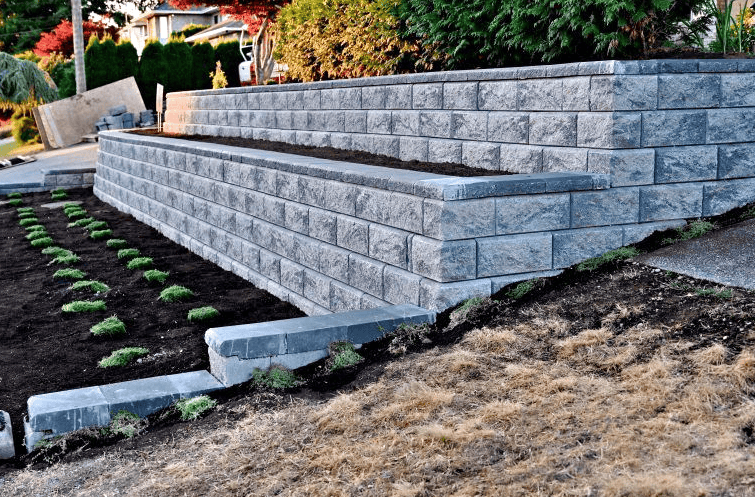
Concrete block walls use segmental retaining wall block systems like Versa-Lok or Allan Block. These are modular retaining walls that stack and interlock without mortar, using geogrid reinforcement layers placed every 16 inches through the backfill to tie the wall into the soil. They're a practical choice for residential retaining walls, garden retaining walls, and terraced landscape areas where a more finished look matters. They also work well as decorative retaining walls since the block faces come in different textures and colors. For homeowners in areas like Midtown Mobile or the Oakleigh Garden District who want both function and curb appeal, block walls give you real flexibility in retaining wall aesthetics without sacrificing durability.
Comparing Wall Types for Mobile, AL Conditions
Choosing between these systems comes down to your specific site. Poured and cast-in-place walls offer the highest structural strength and are best when loads are heavy or soil conditions are poor. Landscape retaining walls and gravity retaining walls built with segmental block are often a better fit for moderate slopes and residential settings where retaining wall materials and appearance matter alongside performance. In all cases, Mobile's heavy seasonal rainfall and clay-heavy soils make proper drainage design non-negotiable, regardless of which wall type you choose. Getting the wall type right starts with a close look at your actual site, which is exactly what we cover next.
A few years back, we took on a retaining wall project over near the Tillman's Corner area that turned into one of the more memorable jobs in our time working in Mobile. The homeowner needed a wall along the back of their property to hold back a steep slope that was causing serious erosion every time the rain came through. And if you know Mobile, you know we get plenty of rain.
We started digging out the base and ran into something we did not expect. About two feet down, we hit a layer of soft, unstable soil mixed with clay. That kind of soil shifts and holds water, which is the last thing you want behind a concrete retaining wall. If we had kept going without addressing it, that wall would have had serious pressure building up behind it, and it would have been at risk of cracking or leaning within just a few years.
We stopped, talked it through with the homeowner, and laid out exactly what we were dealing with. We brought in additional crushed stone to replace the unstable soil and extended our drainage system further than the original plan called for. We also adjusted the footer depth to make sure we were sitting on solid, stable ground before we poured a single inch of concrete.
It added time and some extra cost to the project, but we were not willing to cut corners on something that holds back that much weight and water. When we finished, the wall came out level, solid, and built to handle whatever Mobile weather throws at it. The homeowner still calls us when they have new projects, and that means a lot to us.
Site Assessment and Engineering
Before any concrete gets poured or a single block gets set, we take the time to walk your property and understand exactly what we are working with. Retaining wall construction in Mobile is not one-size-fits-all, and skipping this step is one of the fastest ways a wall ends up leaning, cracking, or failing within a few years. With over 20 years of combined concrete experience and more than 10 years working specifically in the Mobile area, we have seen what local conditions can do to walls that were not properly assessed from the start.
What Happens During Our On-Site Visit
When we come out to your property, we are looking at the full picture. We check the slope, measure grade changes, look at existing structures nearby, and get a feel for how water moves across your yard during a heavy rain. Mobile gets an average of around 67 inches of rainfall per year, which is well above the national average. That water has to go somewhere, and your retaining wall has to be designed with that reality in mind. We also take note of any existing walls, landscape retaining walls, or drainage features on the property that could affect the new work.
Evaluating Your Soil Type and Slope Conditions
Soil conditions around Mobile can be tricky. Many properties sit on Mobile Bay alluvial soils, expansive clay, or silty clay that shifts and holds water differently than sandy or rocky ground. A perched water table is not uncommon in areas near Three Mile Creek, Dog River, or low-lying parts of Spring Hill and Theodore. These soil types affect how much lateral earth pressure your wall will need to handle. We evaluate bearing capacity and look for signs of soil creep or existing movement before we recommend any wall type, whether that is poured concrete, segmental retaining wall block, or CMU block.
Engineering Recommendations for Wall Height and Footings
Wall height and footing depth are two areas where cutting corners causes the most problems. For most residential retaining walls in Mobile, we follow a minimum 12-inch base embedment and size footings based on the load the wall will carry. For gravity retaining walls and shorter garden walls, this is often straightforward. For taller structures, we factor in active earth pressure, surcharge loads from nearby driveways or structures, and hydrostatic pressure from groundwater. Our footing recommendations are based on ACI 318 and IBC Section 1807 standards, and we source our concrete locally through suppliers like Gulf Coast Concrete using 4,000 PSI concrete mixes appropriate for Mobile's humid coastal environment.
Reinforcement Planning for Taller and Load-Bearing Walls
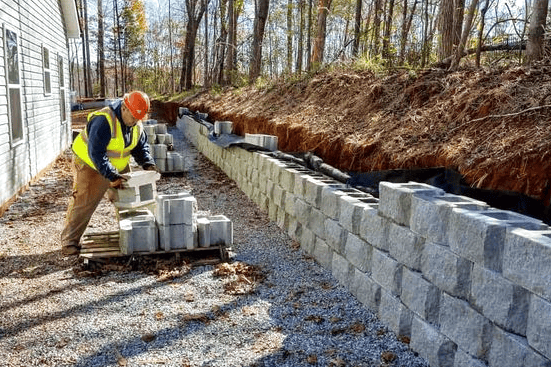
As wall height increases, so does the need for proper reinforcement. We commonly use #4 rebar at 12-inch on-center spacing for reinforced retaining walls, along with geogrid reinforcement from manufacturers like Tensar or Mirafi for segmental block systems. Geogrid layers are typically placed every 16 inches throughout the backfill zone to tie the wall into the soil mass behind it. For modular retaining walls using products like Allan Block, Versa-Lok, or Keystone Compac, geogrid is often required by the manufacturer's own engineering specifications. We follow ASTM D6637 guidelines when specifying and installing geogrid, and we use a plate compactor and vibratory roller to compact fill in lifts no greater than 18 inches to avoid overloading the wall during construction.
When a Licensed Engineer Sign-Off Is Required
Not every wall requires a PE stamp, but many do. The City of Mobile Building Inspections and Mobile County Building Permits Office generally require engineered drawings for walls over a certain height, walls located near property lines, or walls supporting a surcharge load like a parking area or structure. We coordinate directly with licensed structural engineers who understand local conditions and can produce drawings that meet ALDOT Standard Specifications and AASHTO Retaining Wall Standards. We handle the permit submittals through Mobile County Development Services so you do not have to manage that process on your own.
Once we have a clear picture of your soil, slope, wall type, and structural requirements, the next critical piece of the puzzle is drainage. How water is managed behind and beneath your wall will determine how long it performs and how well it protects your property.
Drainage Design and Backfill
Why Drainage Is Critical for Retaining Walls in Mobile, AL
Mobile gets around 67 inches of rain a year, and that water has to go somewhere. When it soaks into the soil behind a retaining wall, it builds up pressure that the wall has to resist. That pressure, known as hydrostatic pressure, is one of the leading causes of retaining wall failure. The clay-heavy soils common across areas like Spring Hill, Semmes, and Theodore hold water especially well, which makes drainage design more important here than in drier parts of the country. Getting retaining wall drainage right from the start is not optional — it is a core part of how we build every wall.
How Weep Holes and Drainpipes Prevent Hydrostatic Pressure
We install weep holes through the face of the wall at regular intervals near the base so trapped water has a way out. Behind the wall, we run perforated HDPE drainage pipe along the footing to collect groundwater and direct it away from the structure. These two systems work together to keep water from building up against the wall. Without them, even well-built reinforced retaining walls can lean, crack, or fail over time.
Proper Gravel Backfill and What It Does for Your Wall
The material placed directly behind the wall matters as much as the wall itself. We use a 6-inch drainage aggregate layer and #57 crushed stone to allow water to move freely down to the drain pipe. We also line the gravel zone with filter fabric to keep fine soil particles from clogging the drainage over time. This applies whether we are building gravity retaining walls, modular retaining walls, or poured concrete walls. Skipping this step with cheap fill is something we see fail regularly on properties across Mobile County.
Managing Surface Water Runoff and Storm Drainage on Your Property
Drainage does not stop at the wall itself. We also look at how surface water flows across your property during heavy rain and make sure the outlet design moves water away cleanly, without redirecting it onto neighboring lots. Doing that incorrectly can put you in conflict with local stormwater rules enforced by the City of Mobile Public Works Department. Proper grading, outlet placement, and a 1% backward slope drainage grade behind the wall all play a role in keeping your retaining wall performing the way it should through every storm season.
Once the drainage plan is in place, the next step is making sure your project meets all local building requirements. Permits, inspections, and code compliance are all part of how we keep your wall legal, safe, and built to last.
Permits, Code Compliance, and Inspections
Building a retaining wall in Mobile is not always as simple as digging and pouring. Depending on wall height, location, and soil conditions, you may need permits, engineered drawings, and inspections before, during, and after construction. We have been working with local offices for over 10 years, and we handle all of that on your behalf so nothing gets missed.
What Permits Are Required for Retaining Walls in Mobile, AL
The City of Mobile Building Inspections office and the Mobile County Building Permits Office both require permits for retaining walls that meet certain thresholds. Generally, walls over four feet in height measured from the bottom of the footing to the top of the wall trigger a permit requirement. Walls supporting a surcharge load, such as a driveway, structure, or vehicle traffic area, may require permits at lower heights. Retaining wall construction near drainage easements or flood zones adds another layer of review. We determine which rules apply to your specific lot before we ever break ground.
How We Handle the Permit and Inspection Process for You
We prepare and submit all permit applications to the City of Mobile Planning and Zoning and Mobile County Development Services on your behalf. We schedule required inspections at each phase, including footing inspection, reinforcement inspection before concrete placement, and final inspection. Our crews stay on schedule around those inspection windows so your project does not stall. Because we carry our licensing and insurance in full compliance with local requirements, there are no surprises for you during the review process.
Grading, Drainage, and Floodplain Rules That May Apply to Your Property
Mobile gets heavy rainfall, and the City of Mobile Public Works Department has rules about how stormwater leaves your property. If your wall redirects runoff toward a neighboring lot, a drainage easement, or a waterway like Three Mile Creek or Dog River, that is a problem that can trigger fines or require rework. Properties near floodplain boundaries mapped by FEMA may also require review before grading changes are approved. We evaluate your site drainage patterns early and design retaining wall drainage systems, including perforated HDPE drainage pipe, filter fabric, and #57 crushed stone backfill, that meet local grading and stormwater requirements from the start.
Structural Drawings and Engineer Approval for Qualifying Projects
For walls that exceed certain height thresholds or carry a surcharge load, the City of Mobile Building Inspections office requires a PE Stamp from a licensed professional engineer. This applies to many reinforced retaining walls and to projects governed by IBC Section 1807 or ACI 318 standards. We work with licensed engineers who produce structural drawings that specify footing dimensions, retaining wall materials, rebar sizing and spacing, geogrid placement, and drainage details. Those drawings go to the permit office with your application. For residential projects in areas like Spring Hill, Semmes, or Cottage Hill where sloped lots are common, engineer sign-off protects you, your neighbors, and the long-term integrity of the wall.
Once permits are in order and your wall design is code-compliant, the next step is making sure the ground behind and around the wall stays where it belongs. That brings us to slope stabilization and erosion control.
We Live and Work Right Here in Mobile
We are a licensed and insured concrete contractor based right here in Mobile, AL. Our team has over 20 years of combined experience pouring and finishing concrete, and we have spent more than 10 years working specifically in the Mobile area. That means we know this region well, the soil conditions, the humidity, the coastal weather, and the local codes that affect how concrete work gets done here.
When you hire us, you are working directly with experienced tradespeople who have handled concrete projects of all sizes across Mobile County. We have poured driveways in Midtown, built patios in West Mobile, installed commercial slabs in the Port City area, and completed foundation work throughout the surrounding communities. This is our home too, and we take the quality of our work seriously because of that.
Concrete is not a forgiving material. If the subbase is not compacted properly, if the mix is wrong for the conditions, or if the joints are not placed correctly, you will see problems within a few years. Mobile's high humidity, heavy rainfall, and clay-heavy soils make those details even more important. We have seen what happens when those steps get skipped, and we do not skip them.
We carry full licensing and insurance so you are protected throughout the project. We also help you navigate permits and inspections when your project requires them, which takes that burden off your plate. Whether you are planning a new driveway, need a cracked slab repaired, or want to explore stamped or decorative options, we are straightforward with you about what the work involves, how long it will take, and what it will cost.
We offer free on-site estimates so we can look at your specific conditions before we give you a number. Concrete projects vary a lot depending on the site, and an honest estimate needs to account for your actual ground, your actual layout, and your actual goals.
Slope Stabilization and Erosion Control
How Retaining Walls Stop Soil Erosion from Heavy Rain and Runoff
Mobile gets a lot of rain. When water runs down a slope, it carries soil with it, and over time that adds up to real damage. A properly built retaining wall holds that soil in place by pushing back against the pressure the ground creates as it absorbs water and shifts downhill. We size the footings, reinforcement, and retaining wall drainage to handle the kind of heavy runoff that comes with Gulf Coast storms. That means retaining wall construction details like perforated HDPE drainage pipe, filter fabric, and a 6-inch drainage aggregate layer behind the wall so water moves through instead of building up pressure against it.
Protecting Your Foundation, Driveway, and Walkways from Soil Movement
Soil movement does not just affect your yard. When ground shifts near a driveway, walkway, or home foundation, you start seeing cracks, settling, and undermining that get expensive fast. Residential retaining walls built with the right retaining wall materials and proper compaction stop that movement before it reaches your structure. We use geogrid reinforcement and compacted gravel base to lock the soil in place, and we set footings deep enough to stay stable even in the silty clay and expansive clay soils common around areas like Spring Hill and Semmes.
Terracing Slopes to Create Level, Usable Outdoor Areas
A steep backyard does not have to stay that way. We can break a slope into a series of stepped levels using landscape retaining walls or modular retaining walls, turning unusable hillside into flat space for gardens, patios, or play areas. Garden retaining walls and decorative retaining walls can be finished with caps, colored concrete, or veneer to match your home's look. Retaining wall aesthetics and function go together when the retaining wall design is done right from the start. Options like Allan Block or Versa-Lok give you flexibility in both appearance and structure.
Coastal and Storm-Prone Considerations Specific to Mobile Properties
Properties near Dog River, Three Mile Creek, or Mobile Bay face conditions that push wall systems harder than most. A high water table, Mobile Bay alluvial soils, and storm surge all increase hydrostatic pressure against a wall. Gravity retaining walls and reinforced retaining walls both have a role here, but the choice depends on your site. We evaluate bearing capacity, soil type, and drainage outlet locations before recommending anything. Walls near low-lying areas may also need to meet City of Mobile Building Inspections requirements and coordinate with the Mobile County Engineering Department on grading and drainage plans.
When a wall is not holding the way it should, whether it is leaning, cracking, or letting soil through, waiting usually makes the repair bigger and more costly. That brings us to what you should know about fixing or replacing a wall that is already in trouble.
Repairing or Replacing a Failing Retaining Wall
If you have an existing retaining wall on your property, keeping an eye on its condition is important. Mobile's heavy rainfall, high water table, and expansive clay soils put constant stress on retaining walls year after year. When a wall starts to go, it usually gives you warning signs before it fails completely.
Signs Your Existing Retaining Wall Is Failing
The most common signs we see are leaning or tilting, visible cracks running horizontally or diagonally through the wall face, bulging sections, and soil starting to push through gaps. You might also notice water pooling at the base of the wall or soil washing out behind it after a heavy rain. In areas like Spring Hill or along corridors near Three Mile Creek, we see these problems regularly because the soil holds moisture and shifts under pressure. If your wall has started to separate at the joints or the cap stones are lifting, those are also signs that something is wrong underneath.
Common Causes of Retaining Wall Damage in Mobile, AL
Most wall failures we come across trace back to one of a few root causes. Poor retaining wall drainage is at the top of the list. When water has nowhere to go, hydrostatic pressure builds up behind the wall and pushes it forward. Walls without weep holes, filter fabric, or a proper layer of #57 crushed stone behind them are especially vulnerable. Beyond drainage, we often find undersized footings, missing geogrid reinforcement, and poor compaction of the backfill. Mobile Bay alluvial soils and silty clay are not forgiving when those steps are skipped. Age also plays a role. Older residential retaining walls built without current standards under IBC Section 1807 or ACI 318 may simply be undersized for the loads they carry today.
Repair Options Versus Full Wall Replacement
Not every damaged wall needs to come down. We look at how far the damage has gone and what caused it before recommending anything. Localized cracking or a single failing section can sometimes be addressed with epoxy injection grout, hydraulic cement, or by adding drainage outlets to relieve pressure. Tiebacks or deadman anchors can stabilize a wall that is leaning but still structurally sound overall.
That said, if the footing is compromised, the wall has shifted significantly, or the drainage problems are built into the original design, a full replacement is usually the better path. Patching a wall that has fundamental structural problems tends to delay the inevitable and can cost more in the long run. We give you an honest assessment of both options along with a written estimate so you can make the call with full information.
What to Expect During a Repair or Replacement Project
We start with a site visit to evaluate the wall, the soil behind it, and the drainage situation. For taller or load-bearing walls, we bring in a licensed professional engineer for a PE-stamped assessment and structural drawings. If a permit is required through the City of Mobile Building Inspections office or Mobile County Building Permits Office, we handle that submittal before any work begins.
For a replacement, we excavate the old wall, address the soil and drainage conditions, and rebuild from the footing up using the right retaining wall materials for your site. That might mean poured concrete, CMU block, or a segmental retaining wall system like Versa-Lok or Allan Block, depending on what your property needs. We compact backfill in lifts, install filter fabric and HDPE drainage pipe, and make sure everything is graded to move water away from the wall and your foundation. Our crews have worked across Mobile for over 10 years, and we carry the licensing and insurance to stand behind what we build.
Once your wall is structurally sound and draining properly, the next thing worth thinking about is how it looks and how it fits into the rest of your outdoor space.
Aesthetic and Landscaping Options
A retaining wall does not have to look purely functional. Many homeowners in Spring Hill, Cottage Hill, and the Oakleigh Garden District want their wall to blend into the yard or match the style of their home. We work with you to find the right look without sacrificing the structural performance the wall needs to handle Mobile's heavy rainfall and soil conditions.
Stamped and Colored Concrete for Retaining Walls
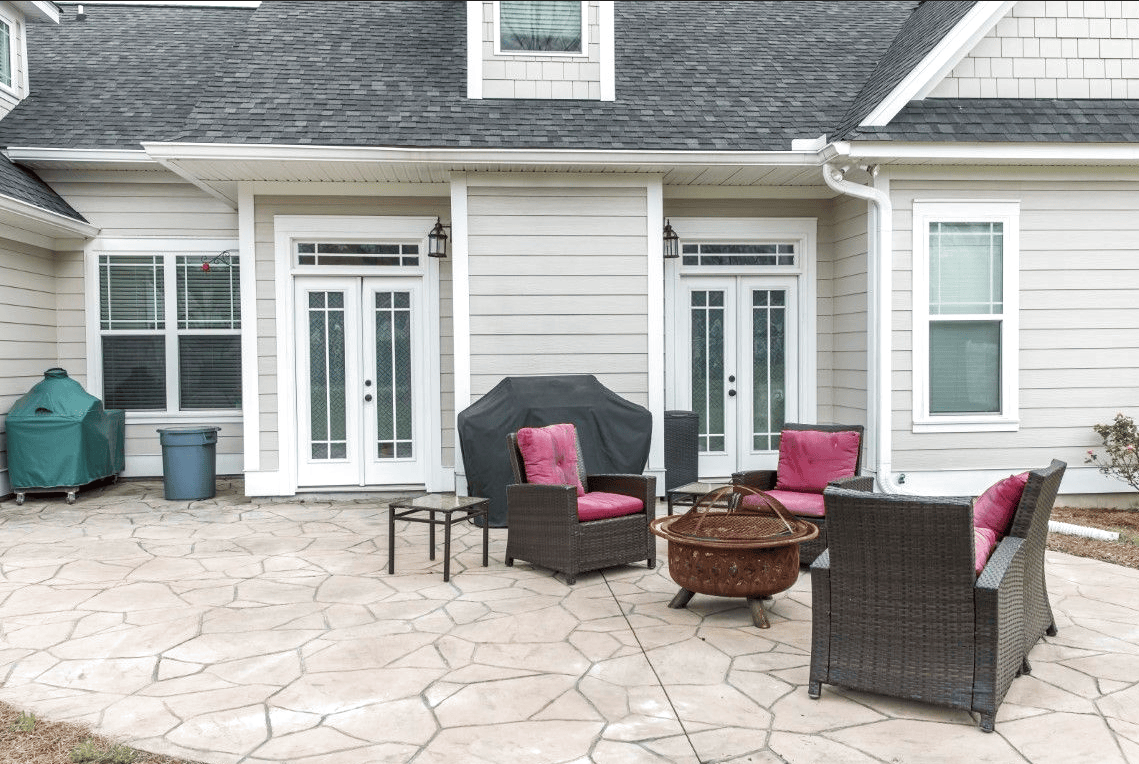
Retaining wall design choices go well beyond plain gray concrete. With poured concrete walls, we can apply stamped patterns that mimic natural stone or brick, and integral color pigments can be mixed directly into the concrete before it is placed. This gives the surface a consistent finish that holds up better over time than paint or surface coatings in our humid coastal climate. The color and texture are built in, not just applied on top.
Veneer Finishes and Decorative Caps
For decorative retaining walls, we can apply a stone or brick veneer over a structural CMU block or poured concrete core. The veneer handles the appearance while the core handles the load. Caps along the top of the wall give it a clean, finished edge and help shed water away from the wall face, which matters a lot in a place like Mobile where we can see several inches of rain in a single storm. Products like those from Belgard and Keystone Retaining Wall Systems include cap units designed to fit their block profiles cleanly.
Integrating Plantings and Landscaping With Your Wall Design
Garden retaining walls and landscape retaining walls work especially well when plantings are built into the plan from the start. Terraced walls create level planting beds that hold soil in place and give roots a stable environment. We can design pockets or stepped sections into modular retaining walls to give you space for shrubs, groundcovers, or ornamental grasses. This also helps with retaining wall drainage because plant root systems contribute to soil stability and reduce surface runoff. We make sure any planting plan does not compromise the drainage layer or the filter fabric behind the wall.
How a Well-Built Wall Improves Curb Appeal and Property Value
Retaining wall aesthetics matter to buyers and appraisers. A wall that is level, clean, and well-finished signals that the property has been maintained and that the grading and drainage have been handled correctly. In neighborhoods like Midtown Mobile or along corridors off Spring Hill Avenue, a thoughtfully built residential retaining wall can noticeably improve how a property presents from the street. A failing or leaning wall does the opposite, and it raises questions about what else may have been neglected.
Choosing the right look involves weighing retaining wall materials, finish options, and budget together. That conversation connects directly to what your project will cost and how long it will take to complete.
Cost, Materials, and Project Timelines
What Affects the Cost of a Retaining Wall in Mobile, AL
Several factors shape what you will pay for retaining wall construction in Mobile. Wall height and length are the two biggest drivers, but soil conditions matter just as much here. Mobile Bay alluvial soils, expansive clay, and a perched water table add engineering steps that a simpler site would not need. Slopes near areas like Spring Hill or Semmes often require deeper footings, geogrid reinforcement, and more drainage aggregate than a flatter lot closer to Tillmans Corner. Permits from the City of Mobile Building Inspections office and engineered drawings for taller walls add to the budget as well, but they protect you from costly problems down the road.
Material Choices and How They Compare in Price and Performance
Retaining wall materials range widely in cost and durability. Poured concrete with #4 rebar at 12-inch on-center spacing is one of the strongest options and holds up well against Mobile's heavy rainfall and high humidity. Segmental retaining wall block systems like Versa-Lok or Allan Block cost less up front and work well for modular retaining walls, garden retaining walls, and landscape retaining walls where a finished look matters. CMU block sits in the middle on price and performs reliably when reinforced and properly drained. For decorative retaining walls, Belgard and Keystone Retaining Wall Systems offer cap and color options that improve retaining wall aesthetics without sacrificing structure. We source materials locally through suppliers like Gulf Coast Concrete and American Concrete Products to keep lead times short.
How Long a Retaining Wall Project Typically Takes
A straightforward residential retaining wall in a neighborhood like Cottage Hill or Midtown Mobile typically runs one to two weeks from groundbreaking to cleanup. Larger reinforced retaining walls or gravity retaining walls requiring engineered plans, permit review by Mobile County Development Services, and multiple inspection holds will take longer, sometimes three to four weeks or more. Weather is a real factor here. Mobile averages over 65 inches of rain per year, and we build concrete cure time and drainage backfill steps into every schedule so that does not catch anyone off guard.
What Is Included in Our Written Estimates
Our written estimates cover wall dimensions, footing depth, material specifications, retaining wall drainage details including HDPE drainage pipe and filter fabric, labor, equipment, permit fees, and a project timeline. We also note whether a PE stamp is required under IBC Section 1807 for taller or load-bearing walls. Nothing is left vague. With over 20 years of combined concrete experience and more than 10 years working specifically in Mobile, we know what these projects actually cost and what they require to be done right. That foundation of knowledge carries directly into how we stand behind our work, which brings us to our credentials, licensing, and warranties.
Our Credentials, Licensing, and Warranties
Our Licensing and Insurance as a Mobile, AL Concrete Contractor
We carry full general liability insurance and maintain all licensing required to work in Mobile and Mobile County. Before we pour a single yard of concrete or set a block, we make sure every permit is filed correctly with the City of Mobile Building Inspections office or the Mobile County Building Permits Office, depending on where your property sits. For taller or load-bearing retaining wall construction projects, we coordinate PE-stamped drawings when required so your wall passes inspection without delays or fines.
Our Combined Experience with Concrete and Retaining Wall Projects
Between our crew, we bring over 20 years of concrete work and more than 10 years working specifically in Mobile. We understand what the soils here do — the expansive clay, silty clay, and Mobile Bay alluvial soils that shift with moisture and put real lateral earth pressure on a wall. We have built reinforced retaining walls, gravity retaining walls, and modular retaining walls across neighborhoods from Spring Hill to Theodore, Semmes to Cottage Hill. That local track record matters when your site drains toward Dog River or sits near Three Mile Creek.
Warranties We Offer on Our Retaining Wall Work
We stand behind our work with written warranties covering both materials and labor. Retaining wall drainage details, footing depth, reinforcement placement, and concrete mix all affect how long a wall holds up in Mobile's wet climate. Because we build each wall correctly from the start using materials like #57 crushed stone, geogrid reinforcement, and 4,000 PSI concrete, our warranty is something we are comfortable putting on paper.
Local References and Past Projects in the Mobile Area
We have completed residential retaining walls and landscape retaining walls for homeowners throughout Mobile County. If you want to talk to past clients in areas like Midtown Mobile, Tillmans Corner, or Semmes, we can connect you with local references. Seeing finished work in your own community gives you a realistic picture of what we build and how we work. When you are ready to move forward, we can set up a site visit to look at your property and start putting together a project plan.
Scheduling Your Project
How to Arrange a Site Visit and Get Your Project Scoped
Getting started is straightforward. Reach out to us and we will set up a time to come out to your property. We work across Mobile, from Spring Hill and Midtown Mobile to Semmes, Theodore, and Cottage Hill. During the visit, we look at the slope, soil conditions, drainage patterns, and anything nearby that could affect the wall, like driveways, structures, or low spots where water collects. Mobile Bay alluvial soils and the area's high water table play a big role in how we approach retaining wall design, so seeing your site in person matters. After the visit, we put together a written scope that covers wall type, retaining wall materials, drainage plan, footing depth, reinforcement, and a cost estimate. If your wall requires engineered drawings or a PE stamp for permitting through the City of Mobile Building Inspections office, we handle coordinating that too.
How We Set Your Project Schedule and Keep You Informed
Once the scope is agreed on, we work with you to set a start date that fits your schedule and ours. We account for permit lead times through Mobile County Development Services, material delivery, and weather. Mobile gets significant rainfall, and we plan around that so work is not rushed or done in conditions that could affect concrete placement and curing. Throughout the project, we keep you updated on progress, any field conditions that come up, and next steps. You will not be left wondering where things stand.
Payment Options Available for Your Retaining Wall Project
We offer straightforward payment arrangements. Typically, we collect a deposit before work begins to cover materials, with the remaining balance due at project completion. For larger residential retaining walls or phased projects, we can discuss a payment schedule tied to project milestones. We accept check, bank transfer, and major credit cards. If you have questions about financing options, ask us during your site visit and we will go over what is available. We want the process to be clear and manageable from start to finish, so there are no surprises on either end when the job wraps up.
Why Choosing the Right Contractor Makes All the Difference
Once your project is scheduled, the last thing you want is to second-guess who is doing the work. We have seen firsthand how Mobile's soil and weather conditions can turn a poorly built retaining wall into a costly problem within just a few seasons. Getting this right the first time starts with hiring someone who knows what they are dealing with.
Why working with a local Mobile, AL contractor matters for your retaining wall
We have spent over 10 years working across Mobile, from Spring Hill and Semmes to Theodore and Cottage Hill. We know how Mobile Bay alluvial soils, expansive clay, and a high water table affect retaining wall design and long-term performance. We also work directly with City of Mobile Building Inspections and the Mobile County Building Permits Office, so permits, engineered drawings, and inspections are handled without putting that burden on you.
Here is what working with us means for your project:
- Over 20 years of combined concrete experience and more than 10 years serving Mobile-area homeowners and property owners
- Proper retaining wall drainage built into every project, including perforated HDPE drainage pipe, filter fabric, and #57 crushed stone backfill to prevent hydrostatic pressure buildup
- Correctly sized footings, geogrid reinforcement, and compacted gravel base installed to code so your wall does not lean, settle, or fail
- Material options that fit your goals, whether that means poured concrete, CMU block, or modular retaining walls using systems like Versa-Lok or Allan Block
- Attention to retaining wall aesthetics so the finished wall works with your landscaping and adds real value to your property
- Full handling of permit submittals and PE-stamped drawings when required for taller or load-bearing walls
- Licensed, insured, and accountable for the work we do, protecting your property and your finances
- Concrete mixed and placed to 4,000 PSI standards with proper curing practices suited to Mobile's humid coastal climate
- Honest written estimates, clear timelines, and no surprises once the project begins
Next steps to get your project started
Whether you are dealing with erosion on a sloped yard, a failing wall that needs replacing, or you want to add level outdoor space to your property, we are ready to come out, look at your site, and give you a straight answer on what it will take. We serve neighborhoods across Mobile County and bring the same care to every job, whether it is a garden retaining wall in Midtown Mobile or a reinforced retaining wall on a steeper lot in Eight Mile or Carriage Hills.
Call us today or fill out the form below to get your free, no-obligation quote. We will get back to you quickly to set up a site visit and talk through your options.
Mobile AL Concrete
202 Congress St
Mobile, AL 36603
Business Hours
| Mon | 7:00 AM – 10:00 PM |
| Tue | 7:00 AM – 10:00 PM |
| Wed | 7:00 AM – 10:00 PM |
| Thu | 7:00 AM – 10:00 PM |
| Fri | 7:00 AM – 10:00 PM |
| Sat | 7:00 AM – 10:00 PM |
| Sun | 7:00 AM – 10:00 PM |