Concrete Pool Decks in Mobile
Concrete Pool Decks Poured for Mobile Families
Who We Are and Where We Serve in Mobile, AL
We serve homeowners throughout Mobile, AL and the surrounding communities, including Spring Hill, Semmes, Theodore, Tillmans Corner, and Eight Mile. Our crews are available Monday through Saturday, and we can typically get out for an estimate within a few business days of your call. Whether your home sits just off Cottage Hill Road, out near Schillinger Road, or closer to the Dog River area, we cover it.
With over 20 years of combined experience pouring concrete and more than 10 years working specifically in Mobile, we have seen just about every pool deck situation there is. Homeowners often come to us after noticing cracks spreading across the surface, water pooling near the pool edge after a rainstorm, or a finish that has gone rough and slippery in the wrong ways. Some folks are starting fresh with a new pool and want to get the deck done right the first time. Others are dealing with an older slab that has shifted or spalled and need honest advice about whether concrete pool resurfacing makes sense or whether a full replacement is the better call.
Mobile's coastal climate throws a lot at concrete. The humidity stays high most of the year, salt air drifts in from Mobile Bay, and the soil under many yards in neighborhoods like Midtown Mobile and the Oakleigh Garden District is heavy with expansive clay. That Mobile Bay clay shifts with moisture, which is a big reason why pool decks here develop cracks and settlement issues faster than they might in drier parts of the country. We factor all of that in before we ever pour a single yard of concrete.
Common Pool Deck Problems Mobile Homeowners Face
The most common complaints we hear from Mobile homeowners are cracking, surface erosion, standing water, and finishes that have become unsafe around a wet pool. A surface that once looked clean and solid can become a real hazard after a few Alabama summers. Slip-resistant concrete finishes wear down over time, especially when pool chemicals, humidity, and foot traffic are working against the surface every season. Chlorine and salt water splash onto the deck constantly, and without the right sealer, that moisture works into the slab and weakens it from the inside out.
Drainage is another issue we see regularly. A pool deck that was not graded properly from the start will hold water instead of shedding it. Standing water leads to algae, staining, and eventually surface damage. Good pool deck drainage solutions start with the right slope during the pour, typically a 1/4-inch per foot drainage slope away from the pool and the house, and they sometimes include channel drains or French drain tie-ins depending on the yard layout. Getting this wrong early on costs more to fix later than it would have to do correctly the first time.
We also work with homeowners who simply want to update the look of an aging deck. A concrete overlay for pools can give a worn surface a fresh appearance and improved texture without a full tear-out. It is one of the more cost-effective ways to upgrade pool deck materials and finishes when the underlying slab is still structurally sound.
Why Local Knowledge Matters for Pool Deck Work in Mobile
Working in Mobile for over a decade means we know what the ground, the weather, and the building department are going to ask of a pool deck. Many areas around Theodore and Tillmans Corner sit on fill soil or gulf coast sandy loam with a high water table. That affects how we prepare the subgrade, what thickness we pour, and what reinforcement we use. A 4-inch slab thickness may work fine in some areas, while a 6-inch slab with No. 4 rebar on 18-inch spacing is the smarter call on softer or wetter ground.
We pull permits through the City of Mobile Building Permits and Inspections office and stay current with local code requirements so you do not have to navigate that process alone. We also understand the practical details, like how to tie concrete pool coping into the deck properly so joints do not open up and let water migrate behind the pool shell. These are the kinds of details that come from years of working in one place, not from reading a manual.
When it comes to choosing among the truly durable options for poolside flooring, we can walk you through the full range, from stamped concrete pool decks and textured concrete finishes to exposed aggregate concrete and decorative concrete options that fit your style and budget. Local suppliers like Gulf Coast Ready Mix keep us stocked with the right mixes for this climate, and we use products from trusted names like Sika, Euclid Chemical, and Butterfield Color when the job calls for specialty finishes or sealers.
Frequently Asked Questions from Mobile Homeowners About Concrete Pool Decks
How long does a concrete pool deck last in Mobile's climate? A properly poured and sealed deck can last 25 to 30 years or more. Using 4000 PSI concrete with the right admixtures and a quality sealer like an acrylic cure and seal or lithium silicate sealer goes a long way in coastal conditions.
Do I need a permit for a pool deck in Mobile? In most cases, yes. The Mobile County Building Department and the City's permits office typically require a permit for new pool deck construction. We handle that process as part of our work.
Can my existing deck be resurfaced instead of replaced? Often, yes. Concrete pool resurfacing is a good option when the slab is structurally sound but the surface is worn or outdated. We will assess the slab first and give you an honest answer.
What finish is safest around a pool? Broom-finished concrete and exposed aggregate are both proven choices for wet areas. They provide natural texture that reduces slip risk. We can also apply specialty coatings for added traction. The right choice depends on your priorities around safety, looks, and maintenance.
The next step in understanding your options is knowing exactly what a concrete pool deck is made of and how it is built, which is where we will go next.
What Is a Concrete Pool Deck
Definition and Basic Purpose of a Pool Deck
A pool deck is the paved surface that surrounds your swimming pool. It gives you a safe place to walk, lounge, and move around the pool edge. A well-built pool deck also handles water runoff, supports foot traffic, and connects the pool to the rest of your outdoor space. When we build one, we think about more than just looks. The surface needs to drain properly, hold up under heavy use, and stay safe when wet.
How Concrete Differs from Other Pool Deck Materials
When it comes to pool deck materials, homeowners often compare concrete to wood, pavers, and tile. Wood decks can rot and splinter in Mobile's humidity. Pavers can shift over time, especially on expansive clay soil and the softer alluvial soil common near Dog River and Fowl River. Tile can crack and become slippery. Concrete, poured as a single connected slab, gives you a stable, seamless surface that resists weeds, pests, and the kind of ground movement we see across Mobile County. It also holds up against pool chemicals and salt air far better than most alternatives.
Why Concrete Is a Popular Choice in Coastal Climates like Mobile
Mobile's heat, humidity, and proximity to Mobile Bay put real stress on outdoor surfaces. Slip-resistant concrete finishes, like broom-finished concrete or textured concrete finishes, stay safer underfoot when wet compared to smoother materials. Concrete also handles the freeze-thaw cycles we occasionally see, and it does not absorb chlorine the way softer materials do. Families in Spring Hill, Theodore, and Semmes have found that durable poolside options like concrete hold their shape and finish for many years with basic care. That durability, combined with the wide range of pool deck designs available, makes concrete one of the most practical choices for outdoor pool area flooring in this part of Alabama.
Once you understand why concrete works so well as a base material, the next step is deciding how you want it to look and feel underfoot. That is where finish options come in.
Concrete Pool Deck Finish Options
When it comes to pool deck designs, the finish you choose affects how the surface looks, how safe it feels underfoot, and how well it holds up over time. Mobile's heat, humidity, and salt air put real demands on any surface around a pool. We help families across Spring Hill, Theodore, and Semmes pick finishes that handle those conditions and still look good year after year. Here is a closer look at what we offer.
Broom Finish Concrete for Pool Decks
A broom finish is one of the most practical textured concrete finishes for pool areas. After we pour and level the slab, we drag a stiff brush across the surface while the concrete is still workable. That creates shallow grooves that give bare feet something to grip. It is a straightforward, cost-effective choice that performs well in wet conditions and requires very little upkeep.
Stamped Concrete Pool Decks
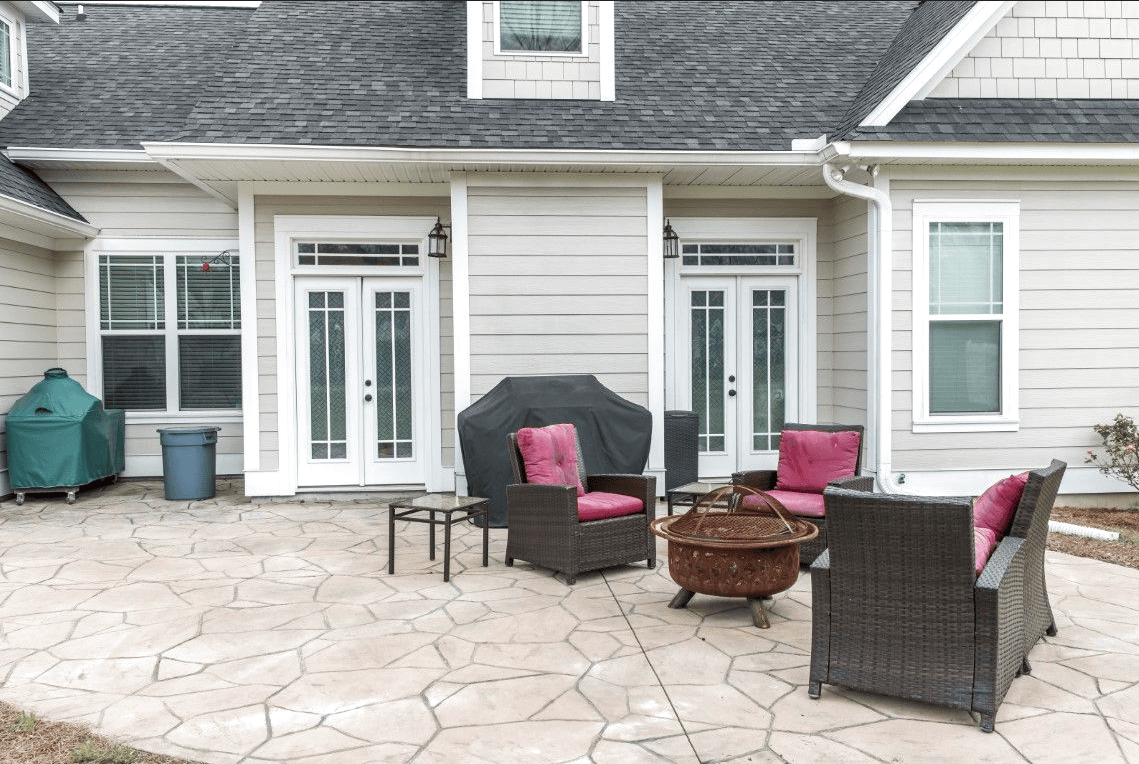
Stamped concrete pool decks let you get the look of stone, slate, or brick without the uneven joints and ongoing maintenance those materials bring. We press textured stamp mats into freshly poured concrete along with color hardener or an integral color admixture to build realistic pattern and tone. The result is a seamless surface that handles pool splashes, chlorine, and Gulf Coast humidity better than natural stone typically does.
Exposed Aggregate Pool Decks
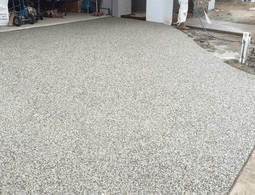
Exposed aggregate concrete is poured with pea gravel or similar material mixed in, then the surface paste is washed away before it fully sets. What remains is a naturally textured, slip-resistant surface. The stones embedded in the slab create built-in grip without any added coating. This finish has been a reliable choice around pools for decades and holds up well against the wear and chemical exposure common to pool environments.
Concrete Overlays for Existing Pool Decks
If your existing deck is structurally sound but worn, stained, or dated, a concrete overlay for pools is worth considering before committing to full replacement. We apply a thin polymer-modified layer over the old surface, which can then be stamped, textured, or stained. Concrete pool resurfacing this way costs less than tearing out and replacing the slab and can add years of service life back to a deck that still has a solid base underneath.
Stained and Colored Concrete Pool Decks
Color opens up a wide range of decorative concrete options for the area around your pool. We can use acid staining to create earthy, translucent tones that soak into the surface, or apply water-based stains for more consistent, predictable color. Integral color admixtures from suppliers like Solomon Colors or Butterfield Color can be added directly to the mix for color that runs all the way through the slab rather than sitting on top.
Scored and Decorative Pattern Options
Scoring uses a concrete saw or angle grinder fitted with a diamond blade to cut lines and patterns into a cured slab. Combined with staining or sealing, scored concrete can mimic tile grids, geometric shapes, or custom layouts. It is a good way to add visual interest to an otherwise plain surface without a full overlay or repour. We can incorporate scoring into new pours or use it to refresh an existing deck during a resurfacing project.
Every finish we have covered here can be made safer for wet, barefoot use by adjusting texture depth and applying the right sealer. In the next section, we take a closer look at slip resistance specifically, and what options make the most sense around a pool in Mobile's climate.
Slip Resistance and Safety for Pool Decks
Why Slip Resistance Matters Around a Pool
Water, bare feet, and hard surfaces are a combination that deserves careful thought. Around any pool in Mobile, you can count on the deck staying wet for much of the day, especially during the long summer season. That moisture, combined with sunscreen, algae, and pool chemicals, can make a smooth concrete surface slippery in a hurry. When we pour pool deck materials and design the surface, slip resistance is not an afterthought. It is built into the plan from the start, and it shapes every decision we make about finish type, sealer, and texture.
Finish Types That Improve Traction on Wet Surfaces
The finish we apply during and after the pour has the biggest effect on how safe a surface feels underfoot. Broom-finished concrete is one of the most reliable choices for wet areas. Running a stiff brush across fresh concrete leaves small ridges that give bare feet something to grip. Exposed aggregate concrete works in a similar way, with pea gravel or silica sand embedded in the surface creating a naturally textured feel. Stamped concrete pool decks can also be slip-resistant when the right stamp mats and textured concrete finishes are used, though the depth and pattern matter a great deal. We lean on our experience with local conditions near neighborhoods like Spring Hill and Theodore to choose finishes that hold up to both foot traffic and Mobile's humidity.
Coatings and Sealers That Add Grip Without Sacrificing Appearance
A good sealer protects the concrete from pool chemicals and chlorine exposure, but the wrong one can leave the surface dangerously slick. We use slip-resistant concrete sealers that include a fine aggregate broadcast, such as silica sand mixed into an acrylic cure and seal product, or a polyurea coating applied with a texture roller. These options keep the deck looking clean and finished while adding measurable grip. If you have an older deck and are considering a concrete overlay for pools or concrete pool resurfacing, we can incorporate the same anti-slip additives into the overlay mix or topcoat. The right sealer also resists the heat that Mobile's summer sun pushes into dark or heavily pigmented surfaces, which brings us to another factor worth thinking through carefully.
Heat and Sun Considerations in Mobile, AL
How Mobile's Climate Affects Pool Deck Surfaces
Mobile sits close to Mobile Bay and the Gulf Coast, which means your pool deck takes a beating from heat, humidity, and intense UV rays for a good part of the year. Concrete absorbs and holds heat, so a dark or uncoated slab can get uncomfortably hot on bare feet by midday in July or August. When we plan pool deck designs for homeowners in areas like Spring Hill or Semmes, the local climate is one of the first things we factor into our material and finish choices.
Lighter Color Options and Coatings That Reduce Surface Heat
One of the simplest ways to keep your deck cooler is to choose lighter colors. Integral color admixtures in light gray, tan, or cream tones reflect more sunlight than darker shades. Stamped concrete pool decks done in lighter tones can feel noticeably cooler underfoot compared to standard gray slabs left uncoated. We also apply reflective sealers, including acrylic cure and seal products, that help reduce heat absorption without sacrificing the slip-resistant concrete texture you need around water. For existing surfaces, a concrete overlay for pools can update the color and add a cooler, fresher finish at the same time.
How UV Exposure Affects Concrete Over Time in the Gulf Coast Area
The Gulf Coast sun is hard on sealers and surface color. UV rays break down acrylic-based coatings faster here than in cooler climates, which means resealing on a regular schedule matters. We recommend lithium silicate sealers or UV-stable polyurea coatings for outdoor pool area flooring that needs to hold up year after year. Textured concrete finishes may also show fading sooner if left unsealed, so keeping up with maintenance protects both the look and the surface integrity of your deck. These same durable poolside options that stand up to heat and sun also need to handle salt air, humidity, and moisture from the pool itself.
Durability Against Coastal Conditions
Living close to Mobile Bay means your pool deck faces more than just foot traffic. Salt air, high humidity, and heavy summer rains all work on concrete year-round. After more than 10 years working across neighborhoods like Spring Hill, Theodore, and Semmes, we have seen what the Gulf Coast climate does to pool decks that were not built with local conditions in mind. The good news is that concrete, when it is mixed and finished the right way, holds up very well here.
How Salt Air and Humidity Affect Pool Deck Concrete
Salt air carries moisture and chlorides that can work into surface pores over time. When that happens on a poorly sealed or low-strength slab, you start to see surface scaling, pitting, and eventually deeper damage. High humidity also slows the drying process in ways that can affect finishing if a crew is not paying attention to timing. We account for these conditions on every pour, adjusting our approach based on the season and the site.
Resistance to Pool Chemicals and Chlorine
Chlorine splashout and pool water runoff are a regular part of life around any pool. Weaker slabs break down faster when they are exposed to those chemicals repeatedly. We use 4000 PSI concrete for most pool deck work, which gives the surface better density and resistance to chemical wear. We also apply sealers suited for pool environments, including lithium silicate sealers and acrylic cure and seal products that hold up against chlorine exposure without breaking down quickly.
How We Mix and Finish Concrete to Hold Up in Mobile's Environment
Our mix designs follow a controlled water-cement ratio to keep the slab dense and reduce surface porosity. On many pool deck projects, we use fiber-reinforced concrete along with proper rebar or wire mesh placement to manage cracking from ground movement. Mobile Bay clay and alluvial soils are common under local properties, and they shift with moisture changes. Good reinforcement and a well-compacted base aggregate layer are what keep a slab from cracking early. For slip-resistant concrete finishes, we use textured concrete finishes and broom-finished concrete that stay safe underfoot when wet without sacrificing appearance. For homeowners who want more visual interest, stamped concrete pool decks and exposed aggregate concrete are both solid, durable poolside options that we finish with sealers rated for pool environments.
All of this work starts at the ground level, which is why how we grade and drain the slab matters just as much as what goes into the mix.
Drainage, Grading, and Water Management
Why Proper Drainage Is Critical for Pool Decks in Mobile
Mobile gets a lot of rain. Between the Gulf Coast humidity, afternoon thunderstorms, and the occasional tropical system rolling in off Mobile Bay, water management on your pool deck is not optional. It is one of the most important parts of the whole project. If water sits on your deck, you end up with mildew, slippery surfaces, and concrete that breaks down faster than it should. On top of that, Mobile's expansive clay soil and high water table mean the ground beneath your deck can shift when it stays wet. Getting drainage right from the start protects your investment and keeps your pool area safe and usable year round.
How We Grade and Slope Concrete to Move Water Away from the Pool and Your Home
We use a laser level during layout to set precise grades before we pour anything. The standard we follow is a 1/4-inch per foot drainage slope, which moves water steadily off the surface without making the deck feel uneven underfoot. We slope away from both the pool edge and your home's foundation, so runoff does not collect where it causes damage. This kind of grading has to be built into the subgrade and the slab itself. It cannot be added after the fact. Whether we are working on a project in Spring Hill or out near Semmes, the slope plan is always drawn up before the first truck from Gulf Coast Ready Mix backs in.
Drainage Channel and Trench Drain Options
On larger pool deck designs or lots with limited natural runoff, a surface slope alone may not be enough. We often add trench drains or channel drains around the perimeter to catch water before it has anywhere to collect. These drains tie into your property's drainage system and are sized to handle the kind of rain Mobile actually gets, not just a light shower. We seal all connections with polyurethane joint sealant to keep them watertight. If your yard drains toward Dog River or you are in a low-lying area near Fowl River, we take that into account when we plan where the water needs to go.
Preventing Standing Water and Mildew on Your Pool Deck
Standing water on a pool deck leads to algae, mildew, and surfaces that become a slip hazard fast. Slip-resistant concrete finishes like broom-finished concrete and textured concrete finishes help with traction, but they only work well when water is actually moving off the surface. After the concrete cures, we apply a sealer suited for pool environments to reduce absorption and make the surface easier to clean. A pressure washer and mild cleaner is usually all you need to keep things looking good. When drainage is designed and built correctly from day one, low maintenance is a realistic outcome rather than just a hope.
Once water management is handled, the next thing we plan for is how the slab itself moves over time. That is where expansion joints and structural considerations come in.
A few years back, we took on a concrete pool deck job for a family over in West Mobile that really tested everything we knew about working with concrete in this area. The homeowner had a beautiful in-ground pool, and they wanted a full wrap-around deck that could handle the heat and heavy foot traffic from their kids and grandkids all summer long.
We started the project in late July, which, if you know Mobile summers, you already know where this is going. The temperatures were sitting right around 95 degrees, and the humidity was making it feel even worse. Those conditions are tough on fresh concrete. When you pour in extreme heat and humidity, the concrete can dry too fast on the surface while the deeper layers are still setting up. That causes cracking, and cracking on a pool deck is a serious problem.
On top of that, when we started digging out the subbase, we hit some soft, unstable soil about eight inches down. Mobile sits on a lot of clay-heavy ground, and that clay had shifted and settled unevenly around the pool shell. If we poured over that without fixing it first, the deck would have cracked and sunk within a couple of seasons.
We stopped, brought in the right fill material, and compacted everything in layers until the base was solid. We also adjusted our pour schedule to work in the early morning hours before the day heated up, and we used wet burlap covers to slow the curing process down and keep moisture in the slab.
The deck turned out great, and that family has been enjoying it for years now. That job is a good reminder of why having over 20 years of concrete experience and more than 10 years working right here in Mobile matters when you are making decisions that affect how your project holds up long term.
Expansion Joints and Structural Considerations
What Expansion Joints Are and Why Pool Decks Need Them
Concrete moves. It expands when temperatures rise and contracts when they drop. Without a planned place for that movement to happen, the slab will crack on its own terms, not yours. Expansion joints are intentional gaps built into the slab that give the concrete room to shift without breaking apart. On a pool deck, these joints also separate the deck from the pool shell itself. The pool and the surrounding concrete move independently, and without a proper 3/8-inch expansion joint filled with a flexible polyurethane joint sealant, you end up with gaps, water intrusion, and damage to both surfaces over time.
How Mobile's Heat and Soil Movement Affect Concrete Slabs
Working in Mobile for over ten years, we have seen firsthand what the local environment does to concrete. The heat along the Gulf Coast pushes surface temperatures well above air temperature in summer, and that thermal stress adds up. Beneath the slab, expansive clay soil and areas with fill soil or high organic content shift with moisture changes, especially near Dog River neighborhoods, Semmes, and parts of Theodore where soil conditions vary widely. A high water table in low-lying areas around Mobile Bay can also undermine a subgrade that was not properly compacted and graded before the pour. These conditions make joint planning more important here than in drier, more stable regions.
How We Plan and Place Joints to Prevent Cracking
We lay out control joints every 10 feet across the deck using a diamond blade saw after the concrete sets. This gives the slab predictable places to relieve stress. We also use No. 4 rebar and fiber-reinforced concrete to hold the slab together across those joints when the ground shifts. For outdoor pool area flooring, we grade the surface at a 1/4-inch per foot drainage slope so water moves away from the pool shell and the house. Good pool deck drainage solutions start with slope, but joints that stay sealed keep water from working its way underneath. Once all joints are cut and cured, we fill them with a sealant that stays flexible through Mobile's seasonal temperature swings. This approach protects the slab long-term and sets a solid foundation for everything added around the pool perimeter.
Coping, Steps, and Pool Perimeter Add-Ons
What Coping Is and How It Connects Your Deck to the Pool Shell
Concrete pool coping is the cap that runs along the top edge of your pool wall, right where the pool shell meets your deck. It covers the bond beam, creates a finished edge, and gives swimmers something to grip. Without proper coping, water can seep behind the pool wall and cause damage over time. We pour coping as part of the overall deck work so the joint between the coping and deck is handled correctly from the start. That joint gets filled with a flexible polyurethane joint sealant, which allows for natural movement without cracking or letting water in. In Mobile, where we deal with high humidity, Mobile Bay clay soil, and seasonal temperature swings, that flexibility matters a lot. We follow ACI 332 guidelines when detailing these perimeter connections, and we make sure the slope directs water away from the pool structure, not toward it.
Concrete Step Options for Pool Entry and Deck Access
Steps that connect your deck to the pool entry or to different deck levels need to be built with the same care as the rest of the slab. We form and pour steps as part of the deck where possible, which gives you a monolithic connection rather than a separate piece that can shift or crack away from the main surface. For finish, we typically use broom-finished concrete or a textured concrete finish on treads to keep things safe when wet. Slip-resistant concrete on steps is not just about comfort. It is a real safety issue, especially for kids and older adults getting in and out of the water. We can match the step finish to whatever pool deck designs you have chosen for the surrounding area, whether that is stamped, exposed aggregate, or a smooth trowel finish.
Lighting, Built-In Seating, and Other Add-On Features
A pool deck can do more than just surround the water. Many homeowners in areas like Spring Hill and Timbercreek add built-in benches, planters, or low knee walls as part of their outdoor pool area. We can form and pour these features as part of the original pour or as tied additions, depending on your layout. Low-voltage deck lighting set into the concrete edge is another popular choice that adds both safety and a clean look after dark. If you are thinking about built-in seating, we account for it during the layout phase so the drainage slope and expansion joints still work properly around those features. We also coordinate with electricians when lighting conduit needs to be stubbed in before the pour. Once we have the coping, steps, and perimeter details sorted out, we turn our attention to the deck surface itself. If you have an older deck that needs work rather than a new build, the next section covers what we can do for repair and resurfacing.
Pool Deck Repair and Resurfacing
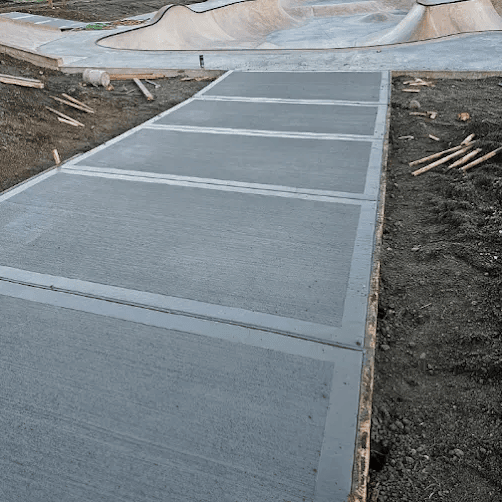
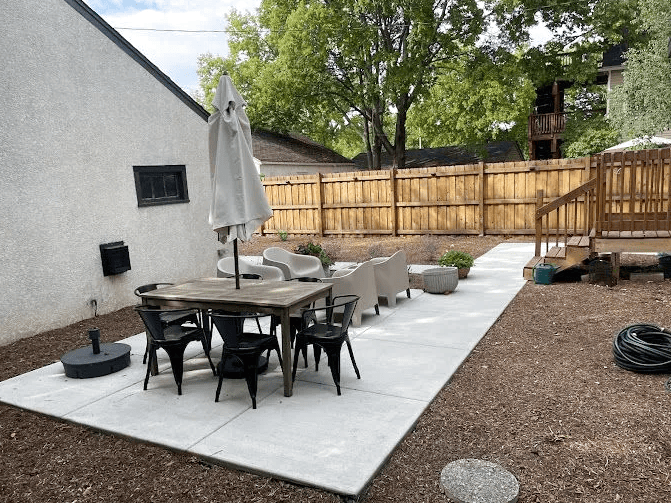
If your pool deck is showing its age, you are not always looking at a full tear-out. We work with homeowners across Spring Hill, Semmes, and Theodore to figure out whether a repair, a resurface, or a full replacement makes the most sense for their situation and budget.
Signs Your Existing Pool Deck Needs Repair or Replacement
Some problems are cosmetic. Others point to something deeper. Cracks wider than a hairline, sections that rock underfoot, or areas where water pools instead of draining away are all worth paying attention to. Around Mobile, the combination of expansive clay soil, a high water table near Dog River or Fowl River, and our coastal humidity can work on a slab over time. If you are seeing significant settling, spalling, or surface erosion, those are signs that the underlying subgrade or the original concrete mix may not have held up the way it should.
Concrete Resurfacing Versus Full Pool Deck Replacement
Concrete pool resurfacing works well when the existing slab is structurally sound but worn, stained, or just plain dated. If the slab has good compressive strength and the cracks are minor, resurfacing can extend the life of your deck at a fraction of the cost of replacement. Full replacement makes more sense when there is widespread structural failure, poor drainage slope, or the original pour did not use the right mix for pool conditions. We will give you an honest read on which direction fits your deck.
How Overlays Can Update an Old Pool Deck Without Tearing It Out
A concrete overlay for pools is one of the more practical tools we have. A properly bonded overlay, sometimes applied with a stamped concrete overlay system using products from manufacturers like Bomanite or Butterfield Color, can bring decorative concrete options to a surface that already exists. You can add texture, color, or pattern without demo costs. The key is proper surface prep. We use diamond blade saws and angle grinders to open the surface, check for delamination, and make sure the bond is solid before anything goes down.
Our Repair Process for Cracked or Settled Pool Decks in Mobile
When we address cracked or settled sections, we start by understanding why the movement happened. Mobile Bay clay and gulf coast sandy loam soils can shift with moisture changes, and that movement telegraphs right through a slab. We remove damaged sections, re-compact the base aggregate, and pour replacement concrete at 4000 PSI compressive strength where conditions call for it. Control joint sealant and expansion joint filler are cut and filled to spec so the new work can move with the rest of the deck rather than crack against it. For slip-resistant concrete surfaces near the water's edge, we match the surrounding textured concrete finishes so the repair blends in rather than standing out. Pool deck drainage solutions are also reviewed at this stage, since correcting a 1/4-inch per foot drainage slope issue now prevents bigger problems later.
Once your deck is repaired or resurfaced, the next thing to sort out is making sure everything meets local requirements. Permits, inspections, and drainage rules in Mobile are worth knowing before work starts, not after.
Local Permits, Codes, and Requirements in Mobile, AL
Pool deck work in Mobile is not a permit-free project in most cases. Understanding what the City of Mobile and Mobile County expect before work starts keeps your project on solid legal ground and protects your property down the road.
When a Permit Is Required for Pool Deck Work in Mobile
In most situations, building a new concrete pool deck or replacing an existing one requires a permit through the City of Mobile Building Permits and Inspections office. The same usually applies if you are expanding the deck area or making structural changes. Smaller jobs like concrete resurfacing or applying a concrete overlay for pools may not always require a permit, but that depends on the scope of work. We verify this before any project starts so you are not caught off guard.
The ICC International Residential Code and local amendments guide what inspectors look for. Decks around pools also need to meet ADA Accessibility Guidelines in certain situations, particularly in HOA communities or shared-use settings.
Mobile County and City of Mobile Code Considerations for Pool Areas
A few things come up consistently on pool deck projects here. Drainage is one of them. Inspectors want to see that water moves away from the pool structure and your home. We slope the slab at roughly 1/4 inch per foot to handle Mobile's heavy rainfall and keep standing water from becoming a problem. Pool deck drainage solutions like channel drains or area drains may also be required depending on your yard grade and lot layout.
Setbacks from property lines, the pool shell, and any structures matter too. If you live in Spring Hill, Semmes, or a subdivision like Timbercreek or Heron Lakes, HOA rules may add another layer of requirements on top of county and city codes. We have worked in enough neighborhoods around Mobile to know where those layers tend to show up.
Slip-resistant concrete finishes are not just a good idea near a pool. Some local code interpretations and HOA standards reference surface safety requirements for outdoor pool area flooring, especially for textured concrete finishes and broom-finished surfaces.
How We Handle the Permitting Process for You
We pull the permits, coordinate with the Mobile County Building Department or City of Mobile as needed, and schedule any required inspections. You do not have to figure out which office handles your address or what documents they need. That is part of what we bring to the job with over 10 years working in the Mobile area.
Getting permits handled correctly up front also protects you when it comes time to sell your home. Unpermitted work around a pool can become a serious issue during a real estate transaction. We make sure everything is documented and signed off before we consider the job finished.
Once the permit is in hand and the site is ready to go, we move into our installation process, starting with the groundwork that sets the foundation for a pool deck that holds up for years.
Our Installation Process
Initial Consultation and Site Evaluation
When you reach out to us, we start by coming out to your property for a free on-site look. We check the existing pool area, note how water currently drains, and look at the soil conditions beneath your deck. Mobile-area yards often have expansive clay soil or fill soil that can shift under a slab if it is not handled correctly. We take that into account before we ever talk about finishes or prices. This visit also gives you a chance to ask questions and tell us what you are hoping for, whether that is a brand-new pour, concrete pool resurfacing, or a repair to what you already have.
Design Planning and Finish Selection
Once we understand your site, we sit down with you to go over pool deck designs and finishes. There are a lot of decorative concrete options to consider. Stamped concrete pool decks can mimic stone or tile. Broom-finished concrete gives you a clean, traditional look with good traction. Exposed aggregate adds texture and handles foot traffic well around wet areas. We can also talk about a concrete overlay for pools if you want to refresh an older surface without a full tear-out. Color hardeners and integral color admixtures from brands like Butterfield Color and Solomon Colors give you real flexibility in matching your home and landscape. We help you narrow things down based on your budget, how much maintenance you want to do later, and what holds up best in Mobile's coastal climate.
Site Preparation, Forming, and Subgrade Work
Good preparation is where a pool deck either succeeds or fails long-term. We excavate to the right depth, compact the subgrade using a plate compactor, and bring in base aggregate where the soil needs it. Because a high water table is common in areas near Dog River, Fowl River, and other low-lying neighborhoods, we pay close attention to grading and drainage from the start. We set forms carefully and use a laser level to make sure the finished slab will carry water away from the pool and house at the right slope. We then place No. 4 rebar or 6x6 W1.4 x W1.4 wire mesh for reinforcement, depending on what the site calls for, and we plan control joints every 10 feet to manage cracking as the concrete moves through Mobile's heat and humidity cycles.
Pouring, Finishing, and Curing the Concrete
We typically use 4000 PSI concrete for pool decks, which handles pool chemicals, foot traffic, and the demands of coastal weather better than a standard mix. Ready-mix trucks from local suppliers like Gulf Coast Ready Mix or CEMEX Mobile deliver the concrete, and we use a concrete pump truck when access is tight. After the pour, we screed and bull float the surface, then apply the chosen finish, whether that is a textured concrete finish, a stamp mat pattern, or a simple broom drag for slip-resistant concrete. Curing is done following ACI 308 standards. We apply an acrylic cure and seal product to hold moisture in the slab during the 28-day cure period, which helps the concrete reach its full designed strength before anyone walks on it regularly.
Sealing and Final Walkthrough
After the slab has cured, we seal it with a product suited for pool environments, often a lithium silicate sealer or a polyurea coating depending on the finish type. We also fill expansion joints with a polyurethane joint sealant to keep water and debris out of the gaps. Before we call the job done, we walk the entire deck with you. We check the surface, the drainage slope, the edges, and any concrete pool coping we installed. We go over how to clean the surface, when to reseal, and what to watch for as the concrete settles into its first season. From there, the conversation moves naturally into scheduling, which is something worth thinking about given Mobile's busy construction seasons and the way weather can affect pour days and cure times.
Project Timelines and Scheduling in Mobile
Before we pour a single yard of concrete, we want you to know what to expect with timing. Pool deck projects move through several stages, and knowing the schedule up front helps you plan around the work and avoid surprises.
How Long a Concrete Pool Deck Installation Takes
Most residential pool deck projects in Mobile take between three and seven days of active work on site. That includes site prep, forming, pouring, finishing, and saw cutting control joints to manage cracking. After the pour, concrete needs time to cure before anyone walks or sets furniture on it. We follow ACI 308 curing guidelines, and the surface is typically ready for light foot traffic within 24 to 48 hours. Full strength develops over a 28-day cure time, though we generally recommend waiting at least a week before moving patio furniture back into place.
Larger decks, custom stamped concrete pool decks, or projects that include concrete pool coping, steps, and drainage work will naturally take longer. We will give you a specific timeframe during the estimate once we see your yard and pool layout.
Best Times of Year to Pour a Pool Deck in Mobile, AL
In Mobile, the sweet spot for pouring outdoor pool area flooring is generally from mid-February through late May, and again from September through November. Temperatures during these windows are more predictable, humidity is more manageable, and afternoon thunderstorms are less frequent. Concrete placed in mild temperatures cures more evenly and develops better long-term strength.
Summer work is possible, and we do it regularly, but the heat and humidity along the Gulf Coast require us to adjust our mix and timing. We source our ready-mix from suppliers like Gulf Coast Ready Mix and work closely with them on water-cement ratios, typically holding to a 0.45 water-cement ratio or tighter, to keep strength up and shrinkage down in hot conditions.
How Weather and Rain Affect Our Schedule
Mobile averages around 67 inches of rain per year, more than almost any other city in the country. That affects scheduling in real ways. We monitor forecasts closely and will not pour if rain is expected during or shortly after placement. Rainwater on fresh concrete disrupts the surface finish and weakens the top layer, which leads to problems down the road with slip-resistant concrete finishes and sealers bonding properly.
If weather pushes a pour date back, we will contact you as early as possible to reschedule. We have been working in Mobile for over ten years, so we know how to read the local patterns and build reasonable buffers into our project plans. Delays from weather are not common, but they do happen, and we handle them straightforwardly.
Current Lead Times and How to Get on Our Schedule
Right now, our lead time for new pool deck projects runs anywhere from two to four weeks from the time a contract is signed and permits are pulled through the City of Mobile Building Permits and Inspections office. Spring tends to book up faster than other seasons, so if you are planning for a spring or early summer project, it helps to reach out sooner rather than later.
Getting on our schedule starts with a free on-site estimate. We come out, look at your pool area, talk through your goals for pool deck designs and finishes, and give you a written quote with a realistic project window. Once you are ready to move forward, we handle the permitting process and keep you updated at each stage.
Once you have a sense of the timeline, the next natural question is what all of this costs. Concrete pool deck pricing in Mobile depends on several factors, from slab thickness and finish type to site conditions and add-ons like drainage and coping.
Cost of a Concrete Pool Deck in Mobile, AL
If you are planning a new pool deck or thinking about replacing an old one, understanding what things cost upfront helps you plan without surprises. We have been pouring concrete in Mobile for over ten years and working with families from Spring Hill to Theodore, so we can give you a realistic picture of what to expect when it comes to pricing.
What Factors Affect the Cost of a Pool Deck
Several things influence what you will pay. The size of the deck is the biggest driver, but it is far from the only one. The condition of your existing subgrade matters a great deal here in Mobile. Our area sits on expansive clay soil and alluvial soil near waterways like Dog River and Fowl River, which sometimes requires extra excavation, base aggregate, or grading work before we pour a single yard of concrete. That prep work protects your investment long term.
The finish you choose also affects price. A basic broom-finished slab costs less than stamped concrete pool decks or an exposed aggregate surface. Reinforcement choices, such as fiber-reinforced concrete versus a standard wire mesh layout, add a small cost but improve performance. Drainage work, including getting a proper 1/4-inch per foot drainage slope and building in pool deck drainage solutions like channel drains, adds to the total but prevents much bigger problems down the road. Permits pulled through the City of Mobile Building Permits and Inspections office are also part of the budget.
Typical Price Ranges for Different Finish Types in Mobile
For a standard broom-finished concrete deck using 4000 PSI concrete, you can generally expect to pay somewhere in the range of $6 to $10 per square foot installed. That range reflects local labor rates, concrete delivery from suppliers like Gulf Coast Ready Mix or CEMEX Mobile, and basic site prep.
Decorative concrete options such as stamped patterns or textured concrete finishes with color hardener or integral color admixture typically run $12 to $18 per square foot depending on pattern complexity. A stamped concrete overlay applied over an existing surface can be a more affordable path to a decorative look and usually falls between $8 and $14 per square foot. Exposed aggregate finishes land somewhere in the middle of those ranges.
Concrete pool resurfacing or a concrete overlay for pools that are worn but structurally sound is often the most budget-friendly route and can run $4 to $10 per square foot depending on surface prep needed. Adding slip-resistant concrete coatings, concrete pool coping, expansion joints, or lighting integration will adjust the final number accordingly.
How Concrete Compares in Cost to Pavers, Wood, and Other Materials
Among the common outdoor pool area flooring choices, poured concrete is typically one of the most cost-effective options at installation. Concrete pavers tend to cost more upfront and require a more involved base system. Wood and composite decking can appear competitive at first glance, but in Mobile's coastal climate those materials face serious wear from humidity, salt air off Mobile Bay, and pool chemicals. Replacement and maintenance costs add up fast.
Concrete, when properly sealed and poured to the right spec, holds up with minimal upkeep. Among durable poolside options, it offers one of the lowest lifecycle costs when you account for how long a well-built slab actually lasts. Pool deck materials like pavers or timber may need significant attention within five to ten years, while a properly poured and sealed concrete deck can serve you for twenty years or more with routine care.
Financing Options and Payment Terms We Offer
We understand that a pool deck is a meaningful investment for most families. We work with you on payment terms that are straightforward and fair. Typically we ask for a deposit at the start of the project, a progress payment when the slab is poured, and a final payment upon completion. For larger projects, we are open to discussing a phased schedule that aligns with your budget.
We can walk you through third-party financing options if you prefer to spread the cost over time. Just ask when you reach out for your estimate and we will go over what is available. Once your deck is poured and cured, keeping it looking good and performing well is straightforward, and the next thing worth understanding is how to seal and maintain it properly over the years ahead.
Sealing and Long-Term Maintenance
Why Sealing Your Pool Deck Matters in Mobile's Climate
Mobile's heat, humidity, and salt air are hard on any outdoor surface. Pool decks take on extra wear from chlorine splash, standing water, and UV exposure. Without a good sealer, concrete absorbs moisture, which leads to staining, surface scaling, and over time, cracking. We see this often with pool deck materials that were installed without proper sealing from the start. A quality sealer creates a barrier that keeps water, pool chemicals, and mold from working their way into the slab. On the Gulf Coast, that protection is not optional — it is part of building something that lasts.
How Often to Reseal and What Products Work Best
Most pool decks in the Mobile area need resealing every two to three years, though high-traffic areas or stamped concrete pool decks with color hardener may need attention sooner. We typically use an acrylic cure and seal or a lithium silicate sealer depending on the finish. For decorative surfaces, a penetrating sealer protects the slab without leaving a heavy film that can peel. Products from Prosoco and Euclid Chemical hold up well in coastal conditions. For slip-resistant concrete finishes, we make sure any sealer we apply does not reduce the surface texture that keeps the deck safe when wet.
Day-to-Day Cleaning and Care Tips for Concrete Pool Decks
Regular cleaning goes a long way. A pressure washer on a low setting handles most dirt, algae, and mildew without damaging the surface. For tougher stains from leaves or pool chemicals, an efflorescence cleaner works well. Avoid using muriatic acid unless absolutely necessary and only at the right dilution. Keep debris cleared so water does not sit on the surface longer than it needs to. Good pool deck drainage solutions help with this, but even the best-sloped deck benefits from routine upkeep. We also recommend checking expansion joints yearly and replacing any dried-out control joint sealant before water gets underneath.
How to Extend the Life of Your Pool Deck Surface
A few habits protect your investment for the long haul. Reseal on schedule, address small cracks early with concrete pool resurfacing or a concrete overlay for pools before damage spreads, and keep heavy equipment off the deck. If you notice areas where water is pooling rather than draining, address the grading before it leads to bigger problems. Mobile Bay clay and the local high water table can shift slabs over time, so catching movement early matters. With proper care, a well-poured concrete pool deck can serve your family for decades. In the next section, we will walk you through exactly why working with an experienced local crew makes all the difference from day one.
Why Hire Us for Your Pool Deck in Mobile, AL
Our Experience and Background in Concrete Work
We have spent over 20 years pouring concrete and more than 10 of those years working right here in Mobile, AL. That means we know this area well, from the expansive clay soil and high water table near Dog River to the salt air that rolls in off Mobile Bay. Those conditions affect everything from the concrete mix we choose to the sealers we apply, and we account for all of it before we pour a single yard. Whether you want stamped concrete pool decks, exposed aggregate, or a simple broom finish, we match the right pool deck materials and methods to your specific site. We use ready-mix concrete from local suppliers and follow proven specs like a 4000 PSI mix with proper reinforcement so your deck holds up through Mobile's heat, humidity, and afternoon downpours for years to come.
Licensing, Insurance, and Warranties We Carry
We hold an Alabama Contractor License and carry full liability insurance and workers' compensation coverage. That protects you from any unexpected costs if something goes wrong on your property during the project. We also pull the proper permits through the City of Mobile Building Permits and Inspections office and follow local code requirements so your project passes inspection without delays. Our work comes with a written warranty, and we stand behind it.
What Our Past Customers in Mobile Say About Working With Us
Homeowners across Spring Hill, Semmes, Theodore, and Timbercreek have trusted us with their outdoor pool area flooring projects. They tell us they appreciated that we showed up when we said we would, communicated clearly throughout the job, and left the site clean. Many of them came back to us when they needed concrete pool resurfacing or wanted to add slip-resistant concrete coatings to an aging deck. That kind of repeat work means a lot to us, and it tells us we are doing things right.
How to Request a Free Estimate
Getting started is straightforward. Reach out to us by phone or through the contact form on this page, and we will set up a time to come look at your pool area in person. We will talk through your ideas, take measurements, check drainage and slope, and put together a clear written estimate with no vague line items. From there, we can walk you through your decorative concrete options, timeline, and any questions you have about upkeep or pool deck drainage solutions. We want you to feel informed and confident before any work begins.
Your Next Concrete Pool Deck Starts Here
What a Concrete Pool Deck Can Do for Your Mobile Home
A well-built pool deck does more than give you a place to set your chairs. It pulls your whole outdoor space together, keeps your family safer around the water, and holds up through everything the Gulf Coast throws at it, from summer heat and heavy rain to salt air blowing in off Mobile Bay. Whether you are drawn to stamped concrete pool decks, exposed aggregate, or a clean broom finish, the right surface adds real value to your property and makes your pool area something you actually want to spend time in.
Concrete also gives you options that other pool deck materials simply cannot match. You can go with a concrete overlay for pools if your existing surface just needs a refresh, or start fresh with a new pour built to handle Mobile's expansive clay soils and high humidity. With slip-resistant concrete finishes, proper drainage graded at the right slope, and expansion joints that move with the ground, your deck is built to last and stay safe.
Why Choosing Us Makes the Difference
We have spent over 20 years pouring concrete and more than 10 of those years working right here in Mobile. We know the soils, the weather patterns, the permit process through the City of Mobile Building Permits and Inspections office, and the finishing details that keep a pool deck looking good for decades. Here is a quick look at what you get when you work with us:
- Local knowledge of Mobile's coastal conditions, including salt air, humidity, and shifting soils near waterways like Dog River and Fowl River
- Proper site prep, subgrade compaction, and grading so your deck drains correctly and does not settle over time
- The right concrete mix and reinforcement for pool environments, including fiber-reinforced concrete and correctly placed rebar
- A full range of decorative concrete options, from stamped patterns and integral color to exposed aggregate and textured finishes
- Seamless concrete pool coping and joint detailing that keeps water out and looks clean for years
- Effective pool deck drainage solutions built into the design from the start
- Honest guidance on concrete pool resurfacing if your existing deck can be saved rather than replaced
- Licensed, insured work that protects you and your property throughout the entire project
- Clear timelines, straightforward communication, and no surprises when the bill comes
Next Steps to Get Your Project Started
If you are ready to move forward, or even just want to talk through your ideas and get a sense of what things cost, we make it easy. We serve neighborhoods all across Mobile, including Spring Hill, Semmes, Theodore, Tillmans Corner, and many more. To get a free quote, give us a call or fill out the form below and we will get back to you quickly to schedule a time that works for you.
Mobile AL Concrete
202 Congress St
Mobile, AL 36603
Business Hours
| Mon | 7:00 AM – 10:00 PM |
| Tue | 7:00 AM – 10:00 PM |
| Wed | 7:00 AM – 10:00 PM |
| Thu | 7:00 AM – 10:00 PM |
| Fri | 7:00 AM – 10:00 PM |
| Sat | 7:00 AM – 10:00 PM |
| Sun | 7:00 AM – 10:00 PM |