Concrete Slab Installation in Mobile
Concrete Slab Installation in Mobile You Can Count On
Service Area Coverage Across Mobile, AL and Surrounding Communities
We provide concrete slab installation throughout Mobile, AL and the surrounding communities, including Spring Hill, Midtown Mobile, Tillman's Corner, Eight Mile, Saraland, and neighborhoods along Cottage Hill Road, Airport Boulevard, and US Highway 90. If you are within Mobile County or nearby, we can typically get out to your property for an assessment within a few business days. We work with both residential and commercial property owners, and we carry the licensing and insurance required to pull permits through the City of Mobile Permits and Inspections Division and the Mobile County Building Department.
Common Problems That Lead Homeowners to Need a New Concrete Slab
Most homeowners reach out to us after noticing cracks, settling, or poor drainage around an existing slab, or when they are adding a garage, patio, shed, or home addition and need a solid foundation underneath it. These are real problems, and they tend to get worse over time if the concrete slab laying process was not done correctly from the start. A slab that was poured without proper site preparation, adequate reinforcement bars, or the right slab thickness recommendations for the load it carries will show signs of failure early. If you are starting fresh or replacing a failed slab, getting it right the first time saves you from costly repairs down the road.
Local Knowledge: Mobile Soil Conditions, Water Table, Coastal Weather, and Neighborhood Context
Working in Mobile for over 10 years, we understand what makes concrete work here different from other parts of the country. The soils beneath many Mobile-area homes contain expansive clay, Holocene fill, and alluvial deposits near waterways like Dog River, Three Mile Creek, and Mobile Bay. These soil types shift with moisture, which puts stress on slabs that were not designed with that movement in mind. The high water table in low-lying areas near Fowl River or Chickasabogue Creek makes proper grading and drainage considerations critical. On top of that, Mobile's humid summers, heavy rain events, and salt air from the Gulf affect how concrete cures and how long it holds up. We factor all of this into our mix design, including water-cement ratios and admixtures suited to coastal conditions, and into how we prepare and grade the site before a single yard of concrete is poured.
Mobile Homeowner FAQ: Costs, Permits, Scheduling, and Local Experience
We hear a lot of the same questions from homeowners across Mobile County, so here are straightforward answers to the ones that come up most often.
Do you handle permits? Yes. We manage the permitting process through the City of Mobile Building Inspections or Mobile County Development Services, depending on your location. We know what inspectors look for and we build our work to meet those requirements from the start.
How long does the process take? That depends on the size and scope of your project. A standard residential slab can often be completed within a few days once permits are in place and the site is ready. We will give you a clear timeline in writing before work begins.
What does it cost? Pricing varies based on slab size, thickness, reinforcement, finish, and site conditions. We provide written estimates at no charge, so you know exactly what you are getting before you commit to anything.
How much experience do you have? Our team brings over 20 years of combined experience pouring concrete, including more than 10 years working specifically in Mobile, AL. We have worked on slabs of all types across neighborhoods from Oakleigh Garden District to Hunters Chase, and we source materials locally through suppliers like Gulf Coast Redi-Mix and Vulcan Materials Mobile.
Understanding what a concrete slab actually is and how it can be used on your property is a good next step, and that is exactly what we cover in the following section.
What Is a Concrete Slab and What Can It Be Used For
Definition of a Concrete Slab and How It Works
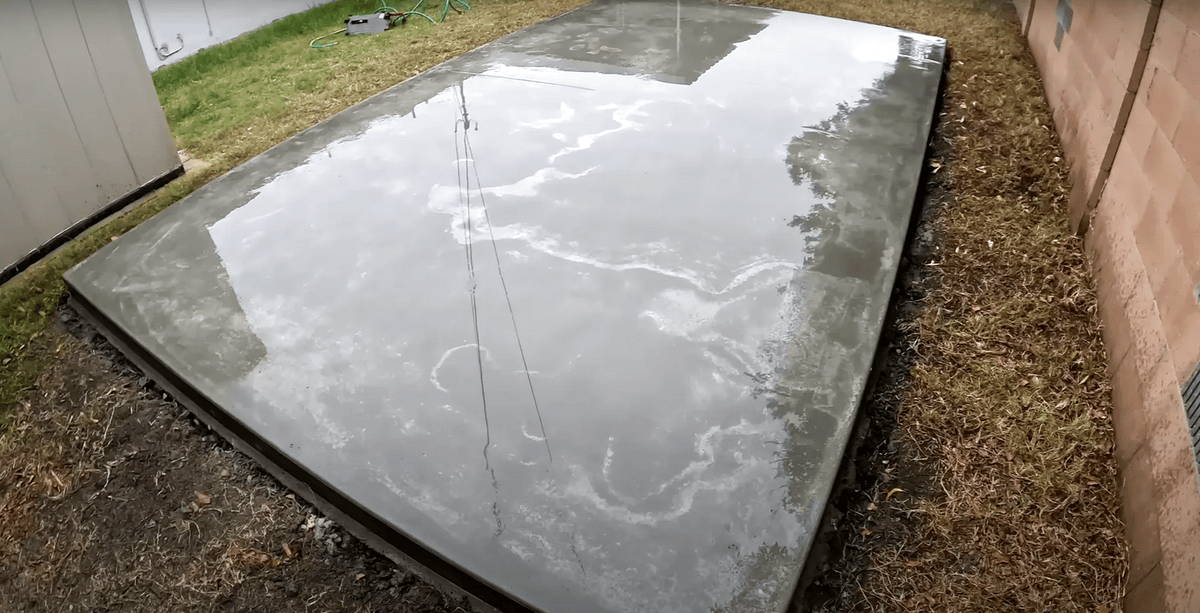
A concrete slab is a flat, horizontal panel of poured concrete that sits on a prepared base of compacted soil or gravel. It works by spreading weight evenly across a wide surface area, which is what gives it its load-bearing capacity. Once it cures, it becomes one of the most solid and reliable surfaces you can put on a piece of property. The thickness, the reinforcement inside it, and the strength of the concrete mix all work together to determine how much weight it can handle and how long it will last.
Common Uses: Garage Floors, Driveways, Patios, Home Foundations, and Slab-on-Grade
Concrete slabs are used for a wide range of projects. We pour them for garage floors, driveways, patios, pool decks, and sidewalks. We also pour concrete slab foundations and slab-on-grade construction for homes, additions, and outbuildings. Each use calls for different slab thickness recommendations, reinforcement, and mix designs. A residential patio might work well at 4-inch slab thickness, while a garage or foundation typically calls for a 6-inch slab thickness with reinforcement bars like #4 rebar at 18 inches on center to handle heavier loads and prevent cracking over time.
Why Concrete Slabs Are a Popular Choice for Mobile, AL Properties
Mobile's climate and soil conditions make concrete slabs a practical choice for local property owners. The area sits on coastal plain sediments, and high water table conditions are common in neighborhoods from Spring Hill to Tillman's Corner and down toward Dog River and Fowl River. These conditions can cause wood structures to rot and gravel surfaces to shift and wash away. Concrete handles moisture far better than most alternatives, especially when it is installed with a proper vapor barrier, correct grading, and solid drainage considerations built into the plan from the start.
We have been working in Mobile County for over 10 years, and we understand how local soils behave under a slab. Mobile Bay Clay and expansive clay soils are known to move with changes in moisture, which is why proper construction site preparation matters so much here. When you skip steps like compaction and subbase work, you often end up with a slab that settles, cracks, or heaves within just a few years. We have seen it happen on properties along Government Street, Old Shell Road, and throughout the Oakleigh Garden District. Doing the groundwork right from the start protects your investment for decades.
Concrete is also low maintenance, resistant to termites and mold, and holds up well against Mobile's heavy rainfall and the occasional tropical storm. It can be finished in a variety of ways to suit the look of your home or business. That combination of durability, practicality, and appearance is a big reason why concrete slabs remain one of the most requested services we handle. To help you find the right fit for your project, the next section covers the specific types of concrete slabs we install across Mobile, AL.
Types of Concrete Slabs We Install in Mobile, AL
With over 20 years of combined experience pouring concrete and more than 10 years working right here in Mobile, we have installed slabs of every kind across neighborhoods like Spring Hill, Midtown Mobile, and Tillman's Corner. Each slab type comes with its own set of requirements, and knowing those differences upfront saves you time, money, and headaches later.
Slab-on-Grade Foundations
A concrete slab foundation sits directly on prepared ground and carries the full weight of your home or structure above it. In Mobile, that means we are working with soils like Mobile Bay Clay and expansive clay soils that shift with moisture changes. We address that by digging to stable bearing soil, compacting a Class 4 base at 6 inches compacted, and laying a 6-mil vapor barrier before any concrete is placed. For residential foundations, we typically pour to a 6-inch slab thickness using a 4000 psi mix with ASTM A615 Grade 60 rebar placed at proper depth and spacing. The high water table throughout much of Mobile County makes vapor barrier placement and proper drainage considerations especially important here.
Garage Floor Slabs
Garage slabs take a lot of punishment from vehicle weight, oil, and foot traffic. We design these with load-bearing capacity in mind, using #4 rebar at 18 inches on center and a 4000 psi compressive strength mix. Proper slab thickness recommendations for a standard two-car garage in Mobile start at 4 inches for light use, though we often recommend 6 inches when heavier trucks or equipment will be parked inside. We also pay close attention to expansion joint installation so shrinkage cracks are managed from the start rather than left to form randomly.
Driveway Slabs
A well-built driveway handles daily traffic, Mobile's frequent rain, and the occasional tropical storm without crumbling or settling. We grade the subbase carefully for drainage away from your home, set slab-edge forms to keep clean lines, and use concrete pouring techniques that avoid cold joints and weak spots. Finishing concrete surfaces with a broomed texture gives your driveway traction in wet weather, which matters in a city that sees over 60 inches of rain most years.
Patio and Outdoor Living Slabs
Outdoor slabs near the coast deal with humidity, salt air, and standing water more than most. We factor those conditions into the concrete mix ratios we use, often incorporating admixtures that improve moisture resistance. You have real choices when it comes to finishing concrete surfaces on a patio, including broomed, stamped, or colored options that hold up in Mobile's heat and humidity without sacrificing appearance. Curing concrete slabs correctly in our hot summers is something we plan for on every pour.
Shed, Workshop, and Equipment Pad Slabs
These slabs are often overlooked, but a poorly built pad can shift, crack, or flood in areas like Eight Mile or along low-lying streets near Dog River. We treat these with the same care as any other pour, including proper site preparation, compaction, and reinforcement sized for what you plan to store or operate on the pad. Fibermesh polypropylene fibers are one option we use to reduce surface cracking on smaller pads where rebar may not be practical.
How We Help You Choose the Right Slab Type for Your Project
Before we recommend anything, we look at your site. Soil conditions, slope, existing drainage patterns, how you plan to use the space, and what loads the slab needs to carry all factor into the decision. We talk through your options honestly, explain the differences in slab thickness, reinforcement, and concrete mix design, and give you a written estimate based on what your project actually needs. Choosing the right slab type from the start also keeps you on the right side of local building requirements, which brings us to what you need to know about permits, codes, and inspections in Mobile County.
A few years back, we took on a concrete slab job for a homeowner over in west Mobile. It was a straightforward project on paper, a 20x30 foot slab for a detached garage. We had done hundreds of jobs like it, so we felt confident going in.
When we started digging out the area and prepping the base, we ran into something we did not expect. The soil underneath was soft and unstable in patches, which is pretty common in parts of Mobile given the clay-heavy ground we have here along the Gulf Coast. Some spots were holding moisture from all the rain we had gotten that season, and a few areas had what looked like old fill dirt that had never been properly compacted.
Pouring concrete over that kind of base would have been a disaster. The slab would have cracked and shifted within a year or two. We stopped, talked it over with the homeowner, and explained exactly what we were seeing. Nobody wants to hear that a project is going to take longer and cost a little more, and we understood that.
We brought in extra gravel, regraded the entire area, and gave the base enough time to settle and compact properly before we ever touched the concrete. We also adjusted our rebar layout to give the slab extra reinforcement.
The finished slab came out level, solid, and built to last. That homeowner has since referred us to three of his neighbors. Doing the job right the first time is always worth it, even when it means slowing down and starting over.
Permits, Codes, and Inspections in Mobile County
Before we pour a single yard of concrete, we make sure the paperwork side of your project is handled correctly. Working in Mobile for over 10 years, we know that skipping permits or cutting corners on code requirements creates real problems down the road. Whether you are in Spring Hill, Tillman's Corner, or anywhere along Cottage Hill Road, the rules are in place for good reason, and we follow them on every job.
When a Permit Is Required for Concrete Slab Work in Mobile, AL
Not every concrete project requires a permit, but many do. In general, a permit is required when you are pouring a concrete slab foundation, building a garage slab, adding a structural patio, or doing any work that affects drainage or load-bearing capacity near your home. The City of Mobile Permits and Inspections Division and the Mobile County Building Department both have thresholds that determine when you need to file. If your project falls in a flood zone near Dog River or Three Mile Creek, FEMA elevation rules may also apply. We review all of this before we schedule your pour.
Mobile County and City of Mobile Building Code Requirements
Mobile follows the International Building Code with local amendments, and the Mobile County Commission enforces additional standards for unincorporated areas. For most residential slabs, code addresses slab thickness recommendations, reinforcement placement, drainage considerations, and setbacks. A 6-inch slab thickness is common for garage and driveway work, while a 4-inch slab may be acceptable for lighter patio applications. Reinforcement like #4 rebar at 18 inches on center or 6x6 W2.9xW2.9 welded wire reinforcement is typically required depending on the slab use and soil conditions. Our work aligns with ACI 301 and ACI 302.1R guidelines, which set the baseline for quality flatwork in residential and light commercial construction.
How We Handle the Permit Process on Your Behalf
We pull permits so you do not have to navigate the process alone. We prepare the required documentation, submit it to the City of Mobile Permits and Inspections Division or Mobile County Development Services depending on your location, and coordinate the inspection schedule around your project timeline. This keeps your project moving without delays tied to missing paperwork or re-submittals. We also stay current on any local code changes that affect concrete work, so you are not caught off guard mid-project.
What to Expect During Inspections and Final Approval
Most permitted slab projects require at least one inspection before the pour and a final inspection after. The pre-pour inspection typically covers formwork, reinforcement bars, and subgrade preparation. Inspectors want to confirm that slab-edge forms are set correctly, that the base is properly compacted, and that vapor barrier placement meets code. The final inspection confirms the finished slab meets the approved plans. We schedule these visits and are on site when inspectors arrive. Once final approval is issued, you have documentation that your slab was built to code, which matters when you sell your home or file an insurance claim.
With permits secured and inspections scheduled, the next step is getting your site ready. How we prepare the ground beneath your slab has just as much impact on the finished product as the concrete itself, and that process starts well before the first truck arrives.
Site Preparation: What Happens Before We Pour
Before a single yard of concrete leaves the truck, the ground beneath your slab has to be ready. In Mobile, that means dealing with conditions you will not find in most other parts of the country. We have over 10 years of experience working on local soils, and that experience shapes every step we take before the pour begins.
Excavation and Grading for Proper Drainage
We start by cutting the site down to the right depth and shaping the ground so water moves away from your structure. Drainage considerations are not an afterthought here. Mobile averages over 65 inches of rain per year, and standing water under a slab is one of the fastest ways to shorten its life. Proper grading at this stage sets the slope that protects your foundation long after we are gone.
Soil Compaction and Subbase Installation
Once the grade is set, we compact the subgrade using a plate compactor or trench roller, then install a compacted base layer. For most residential slabs, we use a Class 4 aggregate base compacted to 6 inches. This layer supports load-bearing capacity by spreading weight evenly and reducing settlement. Skipping or rushing this step is one of the most common reasons slabs crack and sink years down the road.
Addressing Mobile's High Water Table and Drainage Challenges
Mobile County sits on coastal plain sediments and alluvial deposits. In neighborhoods like Spring Hill, Midtown Mobile, and areas near Three Mile Creek or Dog River, you can hit the water table just a few feet down. Hydric soils and silty clay subgrade are common, and both hold moisture in ways that put pressure on slabs from below. We account for these conditions during excavation and factor them into our subbase and vapor barrier decisions. A 6-mil vapor barrier placed directly beneath the slab goes a long way toward controlling moisture migration, especially in our humid Gulf Coast climate.
Elevation Considerations for Flood-Prone Areas in Mobile
Parts of Mobile fall within FEMA-designated flood zones, and concrete slab foundation work in those areas has to meet specific elevation requirements. We work with guidance from the City of Mobile Permits and Inspections Division and the Mobile County Building Department to make sure your slab is poured at the right elevation. Getting this wrong can affect your flood insurance and put your structure at risk during heavy rain events or tropical weather.
Forming the Slab Perimeter and Setting Grades
With the subbase compacted and elevations confirmed, we set the slab-edge forms and establish final grades using a laser level. Accurate forming is what gives your slab clean, straight edges and a consistent thickness across the entire pour. For most residential projects we target a 4-inch slab thickness for patios and light use areas, and a 6-inch slab thickness for garages or slabs that will carry heavier loads. Getting the forms right at this stage also makes expansion joint installation cleaner and more precise.
Once the ground is properly prepared and the forms are in place, the next decision is what goes inside the concrete itself. Reinforcement is what ties everything together and keeps the slab performing for decades to come.
Reinforcement Options for Long-Lasting Slabs
When we pour a concrete slab in Mobile, reinforcement is one of the first things we think through carefully. The soil here tells us a lot. Between Mobile Bay Clay, high water table conditions, and the kind of moisture that never really goes away in a coastal climate, a slab without proper reinforcement is asking for trouble down the road. With over 20 years of combined experience pouring concrete and more than 10 years working right here in Mobile, we've seen what holds up and what doesn't.
Rebar vs. Wire Mesh: Which Is Right for Your Project
Both reinforcement bars and welded wire reinforcement have their place, and the right choice depends on what the slab needs to do. For driveways, garage floors, and anything that carries real weight, we typically reach for #4 rebar at 18 inches on center or #5 rebar for heavier load-bearing situations. Rebar gives you tensile strength across the full depth of the slab and holds up better when soil shifts beneath it. Welded wire reinforcement, like 6x6 W2.9xW2.9 WWR, is a solid option for lighter slabs such as patios or walkways where the load-bearing capacity demands are lower. We follow ACI 318 guidelines when selecting and placing reinforcement so the spacing and concrete cover are done right. We use ASTM A615 Grade 60 Rebar as our standard, and near salt-influenced areas closer to Mobile Bay, we factor in corrosion risk from the start.
Vapor Barriers and Their Role in Mobile's Humid Climate
Mobile gets a lot of rain and sits close to water on multiple sides. That means ground moisture is a constant factor, especially in low-lying areas near Dog River or Three Mile Creek. Before we pour, we place a 6-mil vapor barrier of polyethylene film directly on the prepared subgrade. This keeps ground moisture from wicking up through the slab and causing problems like efflorescence, floor covering failures, or long-term concrete degradation. In areas with hydric soils or Holocene fill, we take extra care to make sure the barrier overlaps correctly and stays intact through the pour.
Footings and Thickened Edges for Load-Bearing Slabs
A concrete slab foundation that carries a home, garage, or heavy equipment needs more than a uniform flat pour. We form thickened edges along the perimeter using slab-edge forms to add depth where loads are highest. This is especially important on expansive clay soils common throughout Mobile County, where edges are the first place you'll see movement if the slab isn't built with proper structural support. We size footings based on the intended use of the slab, local soil conditions, and applicable building codes enforced through the City of Mobile Building Inspections and Mobile County Building Department. Getting this right from the start is what prevents costly repairs later.
Fiber Reinforcement as an Added Layer of Crack Resistance
On many of our pours, we add Fibermesh polypropylene fibers directly into the mix as a secondary line of defense against surface cracking. Fiber reinforcement doesn't replace rebar or wire mesh, but it does help control the fine plastic shrinkage cracks that can show up in the early hours after a pour, particularly during Mobile's hot and humid summers when moisture loss from the surface speeds up. Products like Sika Fiber give the concrete matrix added toughness that holds up well in our climate. It's a straightforward addition that improves performance without complicating the pour.
With reinforcement handled correctly, the next piece of the puzzle is making sure the concrete mix itself is built for the conditions here in Mobile. The strength, additives, and mix design all work together with your reinforcement to give you a slab that lasts.
Experienced Concrete Pros Rooted in Mobile
We are a licensed and insured concrete contractor based right here in Mobile, AL. Our team has over 20 years of combined experience pouring and finishing concrete, and we have spent more than 10 years working specifically in the Mobile area. That means we know this region well, the soil conditions, the humidity, the coastal weather, and the local codes that affect how concrete work gets done here.
When you hire us, you are working directly with experienced tradespeople who have handled concrete projects of all sizes across Mobile County. We have poured driveways in Midtown, built patios in West Mobile, installed commercial slabs in the Port City area, and completed foundation work throughout the surrounding communities. This is our home too, and we take the quality of our work seriously because of that.
Concrete is not a forgiving material. If the subbase is not compacted properly, if the mix is wrong for the conditions, or if the joints are not placed correctly, you will see problems within a few years. Mobile's high humidity, heavy rainfall, and clay-heavy soils make those details even more important. We have seen what happens when those steps get skipped, and we do not skip them.
We carry full licensing and insurance so you are protected throughout the project. We also help you navigate permits and inspections when your project requires them, which takes that burden off your plate. Whether you are planning a new driveway, need a cracked slab repaired, or want to explore stamped or decorative options, we are straightforward with you about what the work involves, how long it will take, and what it will cost.
We offer free on-site estimates so we can look at your specific conditions before we give you a number. Concrete projects vary a lot depending on the site, and an honest estimate needs to account for your actual ground, your actual layout, and your actual goals.
Concrete Mix, Strength, and Additives
Getting the concrete mix right is one of the most important steps in any slab project. The wrong mix can lead to cracking, surface scaling, or a slab that wears out years before it should. With over 20 years of combined experience pouring concrete, including more than 10 years working right here in Mobile, we know how much the local climate, soil, and coastal air affect how a slab holds up over time.
Choosing the Right PSI for Your Slab Type and Use
Not every slab needs the same concrete mix. A basic patio can often work well at 3,000 psi compressive strength, but a garage floor or concrete slab foundation that has to handle vehicles, heavy equipment, or structural loads typically calls for 4,000 psi or higher. We look at what the slab needs to support, factor in the slab thickness we've designed for your site, and then match the mix strength to that specific use. For most residential garage slabs in areas like Spring Hill or Cottage Hill, a 4,000 psi mix with a 0.45 water-cement ratio gives you the load-bearing capacity and long-term durability you need without overbuilding the job.
Moisture-Resistant and Salt-Air-Resistant Mix Options for Coastal Mobile
Mobile sits close to Mobile Bay and the Gulf Coast, and that proximity to salt air and high humidity puts real stress on concrete over time. Moisture working through a slab can corrode reinforcement bars from the inside out, which weakens the structure well before you'd ever notice it on the surface. To counter this, we use mixes built around Type I/II Portland Cement paired with supplemental materials like Class C Fly Ash or Silica Fume, which tighten the pore structure of the concrete and slow moisture penetration. We also use a 6-mil vapor barrier beneath every slab where moisture migration from the ground is a concern, which is common given the high water table and hydric soils found throughout much of Mobile County. For slabs near the water or in areas with salt-influenced air, we select reinforcement like ASTM A615 Grade 60 rebar with adequate concrete cover to reduce corrosion risk.
Admixtures That Improve Workability and Durability in Hot, Humid Weather
Mobile summers are hard on fresh concrete. Heat and humidity speed up how fast concrete sets, which can cause problems with concrete pouring techniques and finishing if the mix isn't managed carefully. We use proven admixtures to stay ahead of those issues. A water reducer like Eucon WR 75 helps us maintain a workable 4-inch slump without adding extra water that would weaken the mix. When temperatures climb and we need more time to place and finish, a retarder like Daratard 17 slows the set just enough to give us a clean working window. For slabs exposed to freeze-thaw cycles or where surface durability is a priority, air entrainment agents such as MasterAir AE 200 help us hit a target of 4 to 7 percent air content, which protects the surface from scaling. These admixture choices follow guidance under ACI 305R for hot-weather concreting and ACI 308R for proper curing, both of which we take seriously on every job.
How We Source and Quality-Check Our Concrete Mix
We work with trusted local suppliers like Gulf Coast Redi-Mix and Mobile Concrete Inc. to get consistent, well-proportioned mixes that meet ASTM C94 standards for ready-mixed concrete. Before any pour, we confirm the mix design meets the project specs, including aggregate gradation per ASTM C33 and cement quality per ASTM C150. On-site, we run concrete leveling methods and quality checks using a Slump Cone to verify workability and an Air Entrainment Meter to confirm air content. Cylinder samples are taken for compressive strength testing under ASTM C39, so we have documentation that the concrete delivered matched what was specified. These aren't extra steps we take to impress anyone. They're standard practice that protects you from getting a slab that looks fine on day one but fails years too soon.
Once the right mix is in place and the slab has cured properly, the next thing most homeowners want to talk about is how the surface is going to look and perform. The finish you choose affects everything from slip resistance and maintenance to how well the slab holds up to foot traffic and weather, which brings us to the finish options available for your concrete slab.
Finish Options for Your Concrete Slab
Once the concrete is placed and leveled, the surface finish is one of the last decisions you make before the slab cures. It affects how the surface looks, how safe it is underfoot, and how long it holds up to weather and use here in Mobile. We work through all the finish options with you before the pour so the right tools and timing are ready when the concrete reaches the right stage.
Broomed Finish for Slip Resistance and Everyday Function
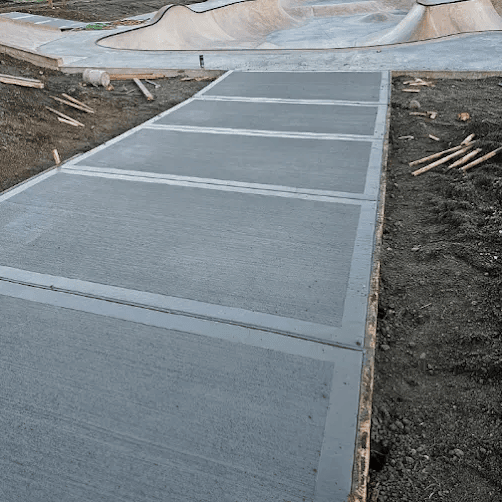
A broomed finish is one of the most common choices for driveways, walkways, and exterior slabs around Mobile homes. After we bull float and fresno trowel the surface smooth, we drag a stiff-bristle broom across it to cut shallow grooves into the concrete. Those grooves give you traction in wet conditions, which matters here because Mobile gets over 65 inches of rain a year on average. The texture is simple, clean, and easy to pressure-wash. For most everyday exterior slabs, this finish does the job well without adding cost or complexity.
Stamped Concrete for Decorative Outdoor Slabs
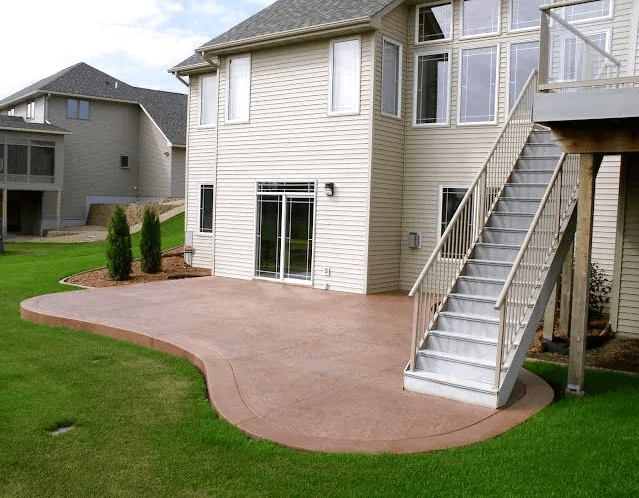
Stamped concrete uses textured mats pressed into the surface before it fully sets, creating patterns that resemble brick, stone, slate, or wood. Timing is critical with stamped work. The slab has to be at just the right stiffness, and in Mobile's heat and humidity, that window can move fast. We monitor the concrete closely and adjust our approach based on conditions that day. Stamped surfaces work well for patios and pool decks, though they do require sealing to hold up against the humidity and salt air that come with living near Mobile Bay.
Colored and Stained Concrete Options
Color can be added to concrete in a few ways. Integral color is mixed directly into the concrete before it is poured, giving you consistent color through the full depth of the slab. Dry-shake color hardeners are broadcast onto the surface after screeding and troweled in. Acid stains and water-based stains are applied after the slab has cured and create a mottled, layered look. Each method has its own maintenance needs. We walk you through what each one looks like over time, especially considering that finishing concrete surfaces in a coastal environment means thinking ahead about UV exposure and moisture.
Smooth Trowel Finish for Garage and Interior Slabs
A smooth trowel finish is what most people picture when they think of a garage floor or an interior concrete slab foundation. We use a ride-on power trowel or a walk-behind power trowel to bring the surface to a tight, hard finish. This compresses the top layer of the slab, which improves surface density and makes it easier to seal or coat later. For garages in areas like Spring Hill or Cottage Hill where homeowners store vehicles, tools, and equipment, a hard trowel finish holds up well under that kind of load-bearing capacity demand and cleans up easily.
Exposed Aggregate and Other Textured Finishes
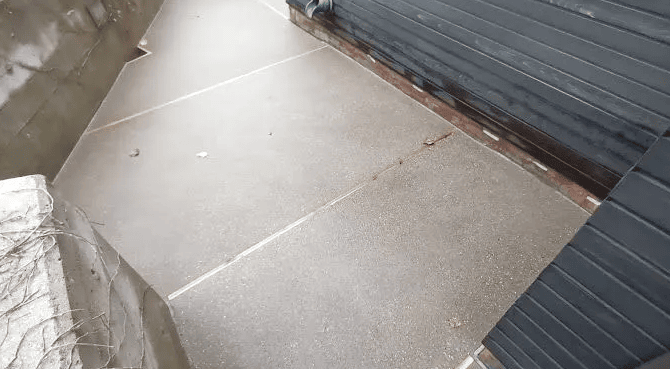
Exposed aggregate finishes are created by seeding decorative stone into the surface or by washing away the top layer of cement paste before it hardens to reveal the aggregate below. When we source material through local suppliers, the aggregate color and texture reflect what is available regionally, giving the finished slab a look that fits well in the Mobile area. Other textured options include salt finish, which creates a pitted pattern by pressing rock salt into the surface and washing it out, and swirl finishes applied by hand for a more custom look on smaller slabs.
After we complete the surface finish, the slab enters its most important phase. How the concrete cures over the next several days determines much of its final strength and durability, and that process in Mobile comes with specific weather-related challenges we plan for in advance.
Curing, Timeline, and Weather Considerations
Why Proper Curing Matters for Slab Strength and Longevity
Once the concrete is placed and finished, the work is not done. Curing concrete slabs is one of the most important steps in the whole process, and it is easy to get wrong. Concrete does not dry the way most people think. It actually gains strength through a chemical reaction called hydration, where water and cement bond together over time. If that moisture escapes too fast, the reaction stops early and you end up with a weaker slab that cracks more easily. For a concrete slab foundation or any slab with a serious load-bearing capacity requirement, cutting curing short can mean real problems down the road.
How Long Curing Takes and When You Can Use Your New Slab
Most residential slabs reach enough strength for foot traffic within 24 to 48 hours. Vehicle traffic typically requires waiting at least 7 days. Full design strength, usually around 4000 psi compressive strength, is reached closer to 28 days. We will give you a clear timeline based on your specific slab before we ever pour, so you know exactly what to expect and can plan around it.
Curing Methods We Use on Mobile Job Sites
We primarily use two approaches depending on the conditions and the slab type. The first is wet curing, where we keep the surface consistently moist using burlap and plastic sheeting for a minimum of 7 days in line with ACI 308R recommendations. The second is applying a liquid curing compound that meets ASTM C309 Type 1-D standards. This compound seals the surface and holds moisture in without requiring constant attention. For certain applications, we also use a Lithium Silicate Densifier or Ashford Formula to strengthen and protect the surface long term. We check concrete temperature throughout using an electronic concrete thermometer to make sure conditions stay within the right range.
How We Work Around Mobile's Heat, Humidity, Rain, and Storm Season
Mobile's climate creates real challenges when pouring concrete. Summers along the Gulf Coast bring intense heat that pulls moisture out of fresh concrete far too quickly, which leads to surface cracking and reduced strength. We follow ACI 305R guidelines for hot weather concreting, which means we monitor air temperature, humidity, wind, and sunlight before and during every pour. On hot days, we may use a retarder like Daratard 17 to slow the set and give us more working time.
Rain is another concern here. Mobile averages over 65 inches of rainfall per year, and afternoon storms can come up fast between spring and fall. We keep weather radar up during every pour and have plastic sheeting staged and ready. Rainwater hitting fresh concrete can weaken the surface and ruin the finish, so we do not leave that to chance. If storm conditions look unfavorable at pour time, we reschedule rather than risk the slab.
We also account for high water table conditions common in low-lying areas near the Mobile River and Dog River corridors. Proper site drainage, a 6-mil vapor barrier, and correct slab elevation all play into this. Areas in flood zones may also require coordination with the City of Mobile Permits and Inspections Division to meet elevation requirements.
Understanding how curing connects to every other part of the job is what separates a slab that lasts 30 years from one that needs repair in five. In the next section, we walk you through our full installation process from start to finish so you can see exactly how we put all of this together on your project.
Our Installation Process Step by Step
Initial Consultation and Site Evaluation
When you reach out to us, we start by visiting your property in person. Mobile's soil conditions vary a lot from neighborhood to neighborhood. Areas near Dog River, Three Mile Creek, and low-lying parts of town often sit on hydric soils or Holocene fill with a high water table. We check for all of that before we ever talk numbers. We look at your drainage, the existing grade, and what the slab needs to do, whether that is supporting a garage, a patio, or a slab-on-grade foundation. This first visit shapes everything that follows.
Written Estimate and Project Planning
After the site visit, we put together a written estimate that covers materials, labor, timeline, and permit costs. We pull permits through the City of Mobile Permits and Inspections Division or the Mobile County Building Department depending on your location. Nothing moves forward until you have a clear document in hand. We also use this stage to confirm slab thickness recommendations, reinforcement type, and the concrete mix that fits your project. A garage slab in Spring Hill has different demands than a patio near the water, and your estimate reflects that.
Site Prep and Forming
Good construction site preparation is what separates a slab that lasts from one that settles and cracks in a few years. We excavate to the right depth, bring in compacted base material, and verify compaction with a plate compactor before we set a single form. We use slab-edge forms to hold your exact dimensions and slope. A 6-mil vapor barrier goes down before any concrete is placed, which matters a great deal in Mobile's humid climate. We position reinforcement bars, typically #4 rebar at 18 inches on center per ACI 318, and set the correct concrete cover so the steel stays protected from moisture. Expansion joint installation is planned at this stage as well, not as an afterthought.
Pouring and Finishing the Concrete
We source ready-mix from local suppliers and spec the mix to match your project. For most residential slabs, we use a 4000 psi compressive strength mix with a 0.45 water-cement ratio and air entrainment between 4 and 7 percent. Mobile's coastal air and frequent rain make those specs important for long-term durability. We monitor slump on delivery using a slump cone, and we use a concrete vibrator to eliminate voids. A laser screed or bull float handles leveling, and concrete leveling methods are chosen based on slab size and use. Finishing concrete surfaces is done with a Fresno trowel or broom finish depending on what you need, and we always account for drainage slope away from your structure.
Curing and Final Inspection
Curing concrete slabs properly is one of the steps that gets skipped most often on poorly managed jobs. In Mobile's summer heat, moisture evaporates fast and surface cracking can start within hours of the pour. We apply a curing compound that meets ASTM C309 Type 1-D standards or use wet curing methods as outlined in ACI 308R, depending on conditions. We monitor concrete temperature with an electronic concrete thermometer throughout the process. Once the slab reaches adequate strength, we schedule the required inspection with the City of Mobile Building Inspections office and walk the job with you before we consider it done.
Cleanup, Debris Removal, and Project Closeout
We haul away all formwork, leftover materials, and jobsite debris before we leave. The area around your new slab is graded and cleared so water drains the way it should. You receive copies of all permits, inspection sign-offs, and any product documentation tied to your slab. We also go over basic care steps with you before we pack up, because how you treat the slab in the first few weeks and years has a direct effect on how long it performs. That conversation leads right into what we cover next regarding warranties, maintenance, and long-term care.
Warranties, Maintenance, and Long-Term Care
What Our Workmanship Warranty Covers
When we finish a concrete slab installation for you, we stand behind the work. Our workmanship warranty covers defects that come from how the slab was poured, finished, and cured. That includes problems like premature cracking that traces back to improper reinforcement bars placement, poor joint layout, or subgrade failures we should have caught during construction site preparation. It does not cover surface wear from heavy use, staining, or damage caused by factors outside our control, like tree root intrusion or flooding from a neighbor's property. We work to ASTM and ACI standards, and we use quality materials like ASTM A615 Grade 60 Rebar and 6-mil vapor barrier, so our slabs are built to last from the start. If something does not look right after we leave, reach out to us and we will come take a look.
How to Maintain Your Concrete Slab in Mobile's Climate
Mobile's heat, humidity, and Gulf Coast salt air are hard on outdoor surfaces. Curing concrete slabs correctly is something we handle on our end, but once the slab is yours, a little routine care goes a long way. Keep expansion joint filler in good shape, since Mobile Bay Clay soils can shift slightly with seasonal moisture changes, and open joints let water in. Rinse the surface after heavy storms to clear debris and salt residue. Avoid letting standing water pool near slab edges, especially in neighborhoods close to Three Mile Creek or Dog River where drainage can back up after rain. Good drainage that we set up during installation will do most of the work, but keeping gutters and downspouts pointed away from the slab helps too.
Sealing, Cleaning, and Preventing Surface Damage
Sealing is one of the most cost-effective things you can do to protect your investment. We recommend a quality penetrating sealer, such as a lithium silicate densifier, applied every two to three years depending on traffic and exposure. For finishing concrete surfaces that see vehicle traffic, like a garage or driveway, a film-forming sealer adds another layer of protection against oil and staining. For cleaning, a standard pressure washer handles most surface dirt well. Avoid harsh chemical cleaners that strip sealers or etch the surface. Do not use de-icing salts in winter, which is rare here but does happen, since salt accelerates surface scaling. Light vehicle fluid spills should be cleaned up promptly before they soak in.
Signs Your Slab May Need Attention and When to Call Us
Some cracking in concrete is normal. Hairline shrinkage cracks that stay narrow and stable over time are generally not a structural concern. What you want to watch for is cracking that grows wider, cracks that run through the full slab thickness, or sections that begin to shift up or down relative to each other. Spalling, which is when the surface flakes or chips away in patches, can signal moisture problems beneath the slab or a mix issue. If you notice soft or hollow-sounding spots when you walk across the slab, that may point to voids forming underneath, something that happens more often with Holocene fill or loose sandy subgrade common in parts of Mobile County. Any of those signs are worth a call to us before the problem grows. Catching issues early keeps repair costs down and protects the load-bearing capacity of the slab over time.
Once you have a clear picture of how your slab holds up long term, the next natural step is understanding what professional installation actually costs and how we handle estimates and payment.
Pricing, Estimates, and Payment
What Affects the Cost of Concrete Slab Installation in Mobile, AL
Several factors shape what you will pay for a concrete slab in Mobile. Slab size and slab thickness recommendations play a big role. A 4-inch slab works for most patios, while a garage or concrete slab foundation typically calls for 6-inch thickness to handle the load-bearing capacity required. The soil under your property matters too. Many areas near Dog River, Three Mile Creek, and through neighborhoods like Spring Hill and Midtown Mobile sit on expansive clay soils or high water table conditions that require extra site preparation, deeper compaction, and sometimes a thicker base. That additional work has a real cost. Reinforcement choices, such as #4 rebar at 18 inches on center or welded wire reinforcement, add to the material total. Concrete mix design matters as well. A 4000 psi mix with a low water-cement ratio built for Mobile's humid, salt-influenced air costs more than a basic mix, but it lasts significantly longer. Finish type, drainage considerations, and expansion joint installation all factor into your final number too. We source ready-mix locally from suppliers like Gulf Coast Redi-Mix and Mobile Concrete Inc, and material prices can shift with market conditions.
How to Get a Written Estimate from Us
Getting a written estimate from us is straightforward. We visit your property, measure the area, check the soil conditions, and talk through what you need the slab to do. From there we put together a line-by-line quote that covers construction site preparation, formwork using slab-edge forms, reinforcement, concrete mix, finishing concrete surfaces, curing, and any permit fees required by the City of Mobile Building Inspections or Mobile County Building Department. We do not give ballpark numbers over the phone for new slab work because site conditions here in Mobile vary too much for that to be fair to you. Written estimates give you something concrete to compare when you are reviewing multiple bids.
Deposit Requirements and Payment Schedule
We typically ask for a deposit before work begins to cover materials and scheduling. The deposit amount depends on the scope of your project. For most residential slab jobs, we structure payments in two or three stages tied to project milestones, such as after site prep and forming, after the pour, and upon final completion and inspection approval. We will walk you through the schedule before you sign anything so there are no surprises.
Financing Options Available for Larger Projects
For larger jobs, such as a full foundation slab or an oversized garage pour, upfront costs can be significant. We work with third-party financing options that can help spread payments over time. If you are interested in financing, let us know when we meet and we can walk you through what is available based on your project size. Approval and terms depend on the financing provider, not on us, but we are glad to point you in the right direction.
With over 20 years of combined experience pouring concrete and more than 10 years working specifically in Mobile, we bring a level of local knowledge to your project that goes beyond just mixing and pouring. In the next section, we will cover what sets our crew apart and why homeowners across Mobile County keep calling us back.
Why Work With Us for Concrete Slab Installation in Mobile
Our Experience: Over 20 Years Pouring Concrete and 10 Years Serving Mobile, AL
We have spent more than two decades working with concrete, and the last ten-plus years of that time has been right here in Mobile. That means we have poured slabs across neighborhoods from Spring Hill to Tillman's Corner, and we understand what the ground here actually does. Mobile Bay Clay and expansive clay soils can shift, swell, and cause slabs to settle if the subgrade is not handled correctly from the start. We know how to read a site, prepare it properly, and choose the right concrete mix ratios and reinforcement bars for conditions that are common to coastal Alabama. That kind of local experience is hard to replace.
Licensed, Insured, and Familiar With Local Codes and Conditions
We carry proper licensing and insurance, and we work directly with the City of Mobile Permits and Inspections Division and the Mobile County Building Department on every permitted project. We handle the paperwork so you do not have to guess what is required. We also follow ACI 301 and ACI 302.1R guidelines for slab construction, which cover everything from slab thickness recommendations to expansion joint installation and drainage considerations. With a high water table affecting many parts of Mobile, getting the grade, vapor barrier, and base compaction right is not optional. We treat it as a baseline.
Portfolio, References, and Reviews From Mobile Homeowners
We can show you real work we have completed for homeowners throughout Mobile County, including projects along Cottage Hill Road, in areas near Langan Park, and out toward Eight Mile. We encourage you to ask for references and look us up online. Hearing directly from people whose driveways, garage slabs, and patios we have poured gives you a much clearer picture than anything we could say about ourselves. We are comfortable with that level of scrutiny.
Our Commitment to Honest Communication and Clean Job Sites
Before we pour anything, we walk the site with you, explain what we plan to do, and put it in writing. That includes construction site preparation steps, the concrete mix we plan to use, curing concrete slabs methods suited to Mobile's heat and humidity, and a realistic timeline. When the job is done, we clean up and haul away debris. You will not be left with leftover forms, rebar scraps, or concrete waste on your property. We also go over what to expect in the weeks after the pour, including joint maintenance and sealing, so your slab holds up for the long run. That straightforward approach is something we carry into every project, and it is how we plan to wrap things up for you here too.
Ready to Get Started on Your Concrete Slab in Mobile?
We have covered a lot of ground in this guide, and by now you probably have a clear picture of what goes into a concrete slab done right. From reading the soil conditions under your property to choosing the correct concrete mix ratios and placing proper reinforcement bars, every step matters. When those steps are followed carefully, you end up with a slab that holds up through decades of Mobile summers, gulf storms, and heavy daily use.
What a Professionally Installed Concrete Slab Offers You
Working with our crew means you are not guessing on any of it. Here is a quick summary of what you get when you choose us:
- A thorough site evaluation that accounts for Mobile Bay Clay, high water table zones, and drainage needs specific to your lot
- Proper construction site preparation including excavation, grading, and compaction so your slab has a stable base from day one
- Correct slab thickness recommendations based on your intended use, whether that is a patio, garage, or full concrete slab foundation
- Quality materials sourced locally through suppliers like Gulf Coast Redi-Mix, with mix designs built around coastal conditions
- Accurate expansion joint installation and control joint layout to keep cracking to a minimum over the life of the slab
- Proven curing concrete slabs methods suited to Mobile's heat and humidity so your concrete reaches full strength
- Professional finishing concrete surfaces for the look, texture, and slip resistance you need
- Full compliance with City of Mobile Building Inspections and Mobile County Building Department permit requirements
- Over 20 years of combined concrete experience and more than 10 years working specifically in Mobile and the surrounding communities
- Clear written estimates, honest timelines, and no surprise costs along the way
Your Next Step Is Simple
Whether your project is in Spring Hill, Midtown Mobile, Tillman's Corner, or anywhere else in the area, we are ready to come out, take a look at your site, and put together a written estimate at no cost to you. You do not need to have everything figured out before reaching out. We are happy to answer questions, walk you through your options, and help you make the right call for your property and your budget. Fill out the form below or give us a call to schedule your free on-site visit and get your written quote.
Mobile AL Concrete
202 Congress St
Mobile, AL 36603
Business Hours
| Mon | 8:00 AM – 7:00 PM |
| Tue | 8:00 AM – 7:00 PM |
| Wed | 8:00 AM – 7:00 PM |
| Thu | 8:00 AM – 7:00 PM |
| Fri | 8:00 AM – 7:00 PM |
| Sat | 10:00 AM – 6:00 PM |