Concrete Staining & Sealing in Mobile
Concrete Staining & Sealing That Holds Up in Mobile
We Serve Mobile, AL and Surrounding Areas
We provide concrete staining and sealing services throughout Mobile, AL and the surrounding communities, including Spring Hill, Midtown Mobile, the Oakleigh Garden District, Cottage Hill, and neighborhoods along Cottage Hill Road, Old Shell Road, and Dauphin Street. With over 10 years working right here in Mobile and more than 20 years of combined experience pouring and finishing concrete, we know this area and its surfaces well. When you reach out, we can usually get eyes on your project quickly and work around your schedule to keep things moving.
Common Problems with Aging or Dull Concrete Surfaces
If your driveway, patio, pool deck, or garage floor looks faded, dusty, or just worn out, you are not alone. Concrete that has been sitting unprotected for years tends to absorb oil and grease, grow surface mold, and lose whatever finish it once had. Staining concrete floors or outdoor slabs is one of the most practical ways to bring life back to a tired surface without tearing it out. A proper concrete sealant application on top locks in that color and shields the slab from whatever comes next. Understanding the concrete stain sealer combo explained in simple terms means knowing that the stain gives you color and character, while the sealer is what actually protects the surface and makes it last.
Local Knowledge: Mobile's Climate, Neighborhoods, and Concrete Conditions
Mobile gets a lot of rain, high humidity year-round, and salt air drifting in off Mobile Bay. That combination is hard on concrete. We have worked on slabs all over the city and seen what happens when surfaces are left unprotected in this climate: efflorescence, surface mold, spalling, and color loss. Homes in areas like the Leinkauf Historic District or along the Dauphin Island Parkway Corridor often sit on expansive clay subgrade or Gulf Coast alluvial soil that shifts with moisture, which can stress concrete over time. We factor all of that into how we prep and seal every surface we work on. Knowing the ground under your slab and the air above it both matter when choosing the right materials and application method for sealing outdoor concrete here in Mobile.
Mobile Homeowner FAQ: Staining and Sealing Basics
Homeowners around Mobile tend to ask a handful of the same questions before getting started. How do you choose between acid stain vs water-based stain options? What concrete sealer types hold up in coastal heat and humidity? How long before you can walk or drive on the surface again? What does it cost per square foot? We will walk you through all of that. People also want to know about decorative concrete finishes, concrete stain colors, and whether outdoor concrete staining near a pool or in full sun will hold its color. These are fair questions, and the answers depend on your specific surface, its condition, and how you use the space. That is exactly what we look at when we come out to take a look before any work begins, which leads right into understanding what the staining and sealing process actually involves.
What Is Concrete Staining and Sealing
How Concrete Staining Works and What It Does to Your Surface
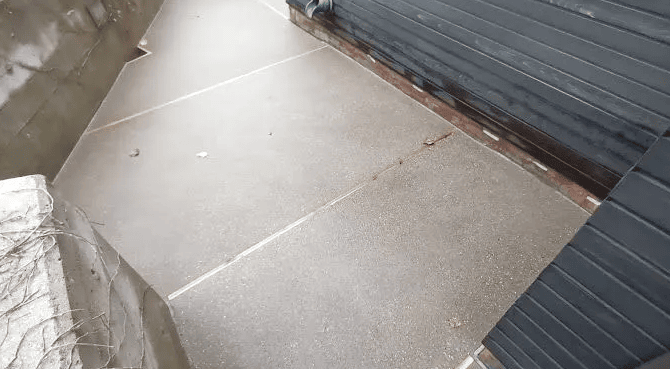
Concrete staining is a process that adds color directly into the surface of existing concrete rather than sitting on top of it like paint. When we apply a reactive acid stain, the iron salts in the product react chemically with the minerals in your slab to create rich, earthy tones that vary naturally across the surface. Water-based stains work differently — they carry pigment into the pores of the concrete without a chemical reaction, giving you more predictable, consistent color. Either way, the color becomes part of the concrete itself, which means it will not peel, chip, or flake the way a surface coating would. For homeowners in areas like Spring Hill or the Oakleigh Garden District, where older slabs often have a lot of character already, staining can bring out texture and variation that looks genuinely unique.
How Sealing Works and Why It Matters After Staining
Once the stain has fully reacted and dried, the concrete is still an open, porous surface. Sealing closes those pores and protects everything underneath. In Mobile, this step is especially important. The humidity coming off Mobile Bay, the salt air along the Dauphin Island Parkway Corridor, and the heavy summer rain we get regularly can all work against an unsealed slab over time. We test for moisture vapor emission before we seal — if a slab reads above the 0.5 lb moisture vapor emission rate threshold, applying a film-forming sealer too soon will cause blistering or delamination down the road. Depending on your surface and how much sheen you want, we choose between penetrating sealers, acrylic concrete sealers, and polyurethane sealers. Each one handles UV exposure and surface traffic differently, and getting that choice right is a big part of what makes a professionally sealed floor last.
Surfaces We Stain and Seal: Patios, Driveways, Pool Decks, Garage Floors, and More
We work on a wide range of outdoor concrete staining and interior projects across Mobile. Patios and pool decks are among the most common — people want color and protection without tearing out a slab that still has good structural life in it. Driveways along roads like Cottage Hill Road or Old Shell Road take a beating from traffic, oil, and heat, and staining paired with a durable sealer extends their life while improving how they look. Garage floors are another area where we see a lot of interest, especially when combined with anti-slip additives for wet days. We also work on commercial floors, walkways, and covered porches. As long as the concrete meets a 3000 psi minimum surface strength and can be properly prepped, it is generally a good candidate for staining and sealing. The surface condition and the type of stain we use will shape how the finished product turns out, which is something we walk through with you before any work begins.
Knowing how staining and sealing work together is a good starting point, but the type of stain we choose has just as much impact on the final result. Each option behaves differently depending on your concrete, your goals, and what the surface will face once the job is done.
Types of Concrete Stains We Use
With over 20 years of combined concrete experience and more than 10 years working across Mobile, we have seen firsthand how much the right stain type matters. Mobile's humidity, heat, and coastal salt air near Mobile Bay all affect how a stain performs over time. Choosing the wrong product for your surface or environment is one of the most common reasons decorative concrete finishes fail early. Here is a breakdown of what we use and why.
Acid Staining: Permanent, Variegated, and Natural-Looking Color
A reactive acid stain works by chemically reacting with the minerals already present in your concrete. The result is a mottled, organic look that mimics stone or slate. Because the color becomes part of the slab itself, it will not peel or flake the way paint does. We use products like Kemiko and L.M. Scofield, and we follow a careful surface prep process to hit an ICRI CSP 1-3 profile before any stain is applied. On the topic of acid stain vs water-based stain, acid staining gives you that antique, lived-in appearance that many homeowners in areas like the Oakleigh Garden District or Spring Hill are looking for. The tradeoff is that the color range is limited to earth tones, and results can vary based on the age and composition of your concrete.
Water-Based Staining: Wider Color Range and More Predictable Results
Water-based stains are non-reactive, meaning they penetrate the surface and deposit pigment rather than triggering a chemical reaction. This gives us much more control over concrete stain colors and produces more consistent, even tones across the slab. If you want a specific shade to match your home exterior along Cottage Hill Road or coordinate with a pool deck finish, water-based staining is usually the better fit. These products also carry lower VOC levels, which matters when we are working in enclosed or partially covered areas.
Concrete Dyes: Vibrant Color Options for Interior and Covered Surfaces
Dyes penetrate deeper and faster than most stains, and they open up a much wider range of vivid colors. However, they are not UV-stable, which means direct sunlight will fade them over time. We typically recommend dyes for staining concrete floors indoors, such as garage floors, basements, or covered patios. For outdoor or sun-exposed slabs common in Mobile's climate, we steer most clients toward acid or water-based options instead.
Choosing the Right Stain Type for Your Project and Goals
When we come out to look at your project, we use a moisture meter to check vapor emission levels, assess the surface condition, and factor in how much sun and weather exposure the slab gets. Outdoor concrete staining in Mobile requires products that can hold up to UV exposure, high humidity, and occasional salt air drift from Mobile Bay. We also confirm whether any existing coatings or sealers are present, since those affect adhesion. Once we have a clear picture of your surface and goals, we can point you toward the stain type that will give you the best long-term result. That decision also ties directly into the colors and finish styles available to you.
A few years back, we took on a concrete staining and sealing job for a homeowner over in west Mobile, near the Tillman's Corner area. It seemed straightforward at first. The client wanted a warm, earthy brown acid stain on their large back patio, and we were confident it would turn out great. We had done dozens of jobs just like it across Mobile County.
What we did not count on was the previous contractor who had worked on that patio. When we started prepping the surface, we discovered that someone had applied a thick layer of acrylic sealer to the concrete years before. The problem is that acid stain needs to soak into the concrete to react with the minerals inside it. With that old sealer sitting on top, the stain had nowhere to go.
We had to stop, talk honestly with the homeowner, and come up with a new plan. We brought in a concrete grinder and carefully removed the old sealer without damaging the slab underneath. That step alone added a full day to the project. After grinding, we tested a small corner with the stain to make sure the concrete was ready to absorb it properly before moving forward.
Once we got the surface right, the stain took beautifully and the final seal gave it a rich, even finish the homeowner loved. That job taught us something we carry into every project now. When you hire us, we always inspect and test the surface before we commit to a plan, because here in Mobile, older concrete slabs can have a lot of hidden history.
Color Options and Finish Styles
Popular Color Choices for Mobile Homes and Commercial Properties
When it comes to concrete stain colors, there is a lot of ground to cover. We work with a wide range of tones, from warm earthy tans and terra cottas to cooler grays and slate blues. In neighborhoods like Spring Hill and the Oakleigh Garden District, warmer browns and amber tones tend to complement the older brick homes and mature tree cover. In newer subdivisions like Heron Lakes or Stone Creek, cooler grays and charcoal tones are a popular pick for driveways and garage floors. For commercial properties along Government Street or Airport Boulevard, neutral tones with a subtle variegation tend to hold up well visually over heavy foot traffic.
We carry color lines from trusted manufacturers like L.M. Scofield and Brickform, so the options go well beyond a basic color chart. Whether you want something that blends into the surroundings or stands out as a design feature, we can help you find a color that fits the property and the climate here in Mobile.
Finish Styles: Antique, Solid, Marbled, and Variegated Looks
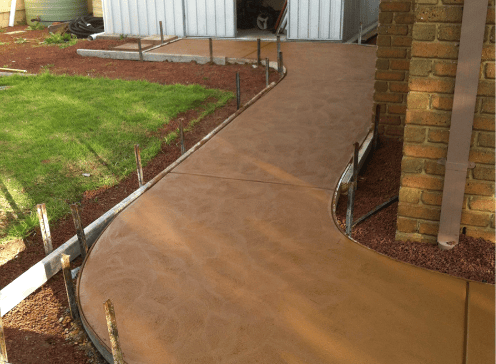
Decorative concrete finishes break down into a few main styles, and the right one depends on the look you are going for and the condition of the existing slab. A solid finish lays down an even, consistent color across the surface. An antique finish uses layered application and light wiping to pull out highs and lows in the concrete texture, giving it an aged, worn look that a lot of homeowners find appealing. Marbled and variegated finishes use multiple colors or dilution variations to create movement across the surface. These work well on patios and pool decks where you want something that looks less like plain concrete without going too bold.
The finish style you choose also affects which staining method we recommend. Some looks are easier to achieve with a reactive acid stain, while others come out better with a water-based product. We will talk through that with you during the estimate.
How Staining Mimics Stone, Slate, or Tile Without Replacement Costs
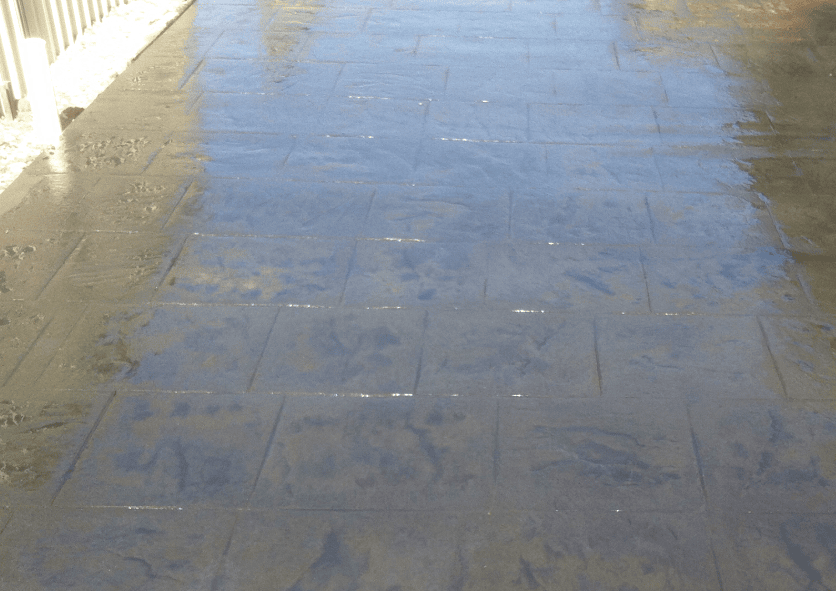
One of the more practical reasons homeowners contact us about outdoor concrete staining is that they want the look of natural stone or slate without tearing out an existing slab. A well-executed stain job on a sound concrete surface can closely replicate the depth and color variation you see in natural stone, at a fraction of the cost of actual tile or slate installation. This is especially true when we use layered color techniques along with the natural texture of the concrete itself.
We have done this kind of work on pool decks near Dog River and on covered patios throughout Cottage Hill, and the results hold up well over time when the surface is properly prepped and sealed. Rather than replacing a structurally sound slab, staining concrete floors or exterior surfaces gives you a renewed look without the demolition and disposal costs. Once the color is set and protected, the next step is choosing the right sealer to lock everything in, which is where finish and sheen come into play.
Types of Sealers and Sheen Levels
Choosing the right sealer is just as important as picking the right stain color. In Mobile, where we deal with coastal humidity, salt air off Mobile Bay, and strong summer sun, the wrong sealer can fail fast. We have spent over 10 years working on concrete surfaces across Spring Hill, Midtown Mobile, and neighborhoods along the Dauphin Island Parkway Corridor, and that experience shapes every product choice we make.
Penetrating Sealers vs. Topical Sealers and When to Use Each
Penetrating sealers, like a penetrating silane sealer or a lithium silicate densifier, soak into the concrete and protect from within without changing the surface appearance much. They work well on driveways and pool decks where you want protection without a film sitting on top. Topical sealers, such as an acrylic concrete sealer or a polyurethane sealer, sit on the surface and are better suited when you want visible sheen and color enhancement after staining concrete floors or other decorative concrete finishes. We match the sealer type to the surface condition, traffic level, and your goals before we ever open a bucket.
Sheen Options: Matte, Satin, and High-Gloss Finishes
Sealer sheen comes down to personal preference and how the space is used. Matte finishes look natural and hide wear marks well, which makes them popular in high-traffic areas. Satin finishes add a soft glow that brings out concrete stain colors without looking too shiny. High-gloss finishes reflect light and can make a garage floor or indoor slab look polished and clean. We help you weigh those options based on where the concrete is located and how much foot or vehicle traffic it sees.
UV-Resistant Sealers for Mobile's Strong Alabama Sun
Alabama sun is hard on sealers. Without UV stability, topical sealers yellow and break down within a season or two, especially on south- and west-facing surfaces. When we are sealing outdoor concrete in Mobile, we use UV-stable formulas that meet standards like ASTM C1315 to hold up under that exposure. This is one area where cutting corners on product quality leads to early recoating costs and faded color.
Salt Air, Humidity, and Moisture Resistance for Coastal Mobile Conditions
Mobile's coastal environment creates challenges that most inland markets never deal with. Salt air from Mobile Bay accelerates surface breakdown, and our high humidity means moisture vapor can push up through slabs built on Gulf Coast alluvial soil or expansive clay subgrade. We use a moisture meter and follow ASTM D4263 testing before sealing so we know what we are working with. Applying a sealer over a slab with high moisture vapor emission leads to blistering and delamination, which is why this step matters. Products we trust for coastal conditions include those that resist chloride intrusion and meet the durability benchmarks set by ASTM C672.
Anti-Slip Additives for Wet Surfaces Like Pool Decks and Driveways
A sealed surface can get slippery when wet, which is a real concern on pool decks and driveways here in Mobile where afternoon rain is common. We add anti-skid aggregate to the topcoat during concrete sealant application to bring the surface to a safe traction level without hurting the appearance. The amount we add depends on the sheen level and how the surface is used, and we balance those factors so the finish still looks intentional rather than rough or patchy.
Before any sealer or stain goes down, the concrete surface itself has to be in the right condition. What we find during surface prep determines which products we use, how we apply them, and whether any repairs need to happen first.
Surface Preparation Before Staining
Why Surface Prep Is the Most Important Step in the Process
Before we apply a single drop of stain, the concrete surface has to be ready to receive it. This is the step most people underestimate, and it is also the step that determines whether your finished floor looks great for years or starts failing within months. With over 20 years of combined experience pouring and finishing concrete, and more than 10 years working right here in Mobile, we have seen what happens when prep gets rushed. It is never good. Getting this part right is not optional.
Cleaning, Grinding, and Opening the Concrete Pores
Concrete has to be clean and open at the pore level before staining concrete floors can produce an even, lasting result. Oil, grease, curing compounds, old paint, and general buildup all block stain penetration. We start by thoroughly cleaning the slab, then assess whether acid etching or mechanical prep is the right call. Most of the time, we use a diamond grinder or planetary grinder to achieve a proper surface profile. We follow ICRI 310.2 guidelines and typically target a CSP 1 to 3 profile depending on the stain type and sealer going on top.
Mobile's humidity and heat can push moisture up through slabs, especially on properties built over Gulf Coast alluvial soil or expansive clay subgrade. We use a moisture meter and follow the ASTM D4263 plastic sheet test before anything goes down. If vapor emission is above the acceptable threshold, sealing over it would cause blistering and delamination. We do not skip this check.
Repairing Cracks, Spalling, and Uneven Areas Before Staining
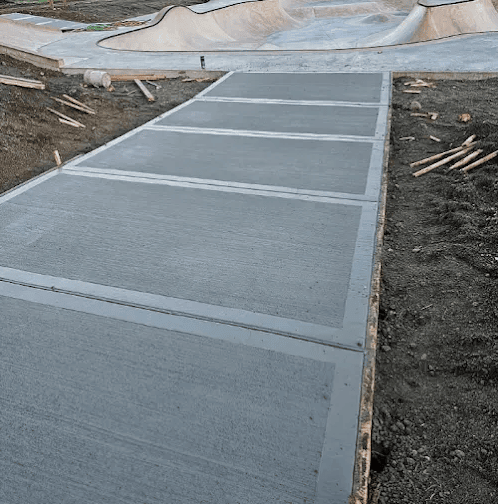
Stain highlights everything on a concrete surface, including damage. Hairline cracks, spalled areas, and low spots that might be easy to ignore on bare gray concrete become very visible once color goes down. We repair structural and cosmetic damage before we ever open a bucket of reactive acid stain or water-based stain. Control joints get cleaned out and filled correctly. Spalled areas get patched using compatible materials so the repaired zones accept stain as close to evenly as possible. Surface leveling is addressed during this stage as well, not after.
What Happens When Prep Is Skipped or Rushed
When prep is skipped, decorative concrete finishes fail in predictable ways. Stain sits on the surface instead of soaking in, which means it peels or wears off unevenly. Blotchy color, streaking, and ghosting from old contaminants are common results. Sealers applied over damp or poorly profiled slabs lift, bubble, or cloud. In a coastal climate like Mobile, where salt air and humidity are constant factors, a poorly prepped surface degrades faster than it would anywhere else. Fixing a bad staining job costs more than doing it right the first time.
Once we confirm the slab is clean, dry, properly profiled, and repaired, we are ready to move into the actual staining and sealing process.
Get to Know Your Mobile Concrete Crew
We are a licensed and insured concrete contractor based right here in Mobile, AL. Our team has over 20 years of combined experience pouring and finishing concrete, and we have spent more than 10 years working specifically in the Mobile area. That means we know this region well, the soil conditions, the humidity, the coastal weather, and the local codes that affect how concrete work gets done here.
When you hire us, you are working directly with experienced tradespeople who have handled concrete projects of all sizes across Mobile County. We have poured driveways in Midtown, built patios in West Mobile, installed commercial slabs in the Port City area, and completed foundation work throughout the surrounding communities. This is our home too, and we take the quality of our work seriously because of that.
Concrete is not a forgiving material. If the subbase is not compacted properly, if the mix is wrong for the conditions, or if the joints are not placed correctly, you will see problems within a few years. Mobile's high humidity, heavy rainfall, and clay-heavy soils make those details even more important. We have seen what happens when those steps get skipped, and we do not skip them.
We carry full licensing and insurance so you are protected throughout the project. We also help you navigate permits and inspections when your project requires them, which takes that burden off your plate. Whether you are planning a new driveway, need a cracked slab repaired, or want to explore stamped or decorative options, we are straightforward with you about what the work involves, how long it will take, and what it will cost.
We offer free on-site estimates so we can look at your specific conditions before we give you a number. Concrete projects vary a lot depending on the site, and an honest estimate needs to account for your actual ground, your actual layout, and your actual goals.
The Staining and Sealing Process Step by Step
Every concrete staining and sealing job we take on in Mobile follows a clear sequence. Skipping steps or rushing the process is one of the main reasons decorative concrete finishes fail early. Here is what you can expect when we work on your property.
Initial Inspection and Surface Assessment
We start by walking the slab with you. We look for cracks, spalling, old coatings, efflorescence, and any signs of moisture coming up through the concrete. We use a moisture meter and follow the ASTM D4263 plastic sheet test to check vapor drive. Mobile sits on Gulf Coast alluvial soil with a high water table in many areas, so moisture testing is not optional. A slab pushing moisture will cause a sealer to blister or delaminate no matter how well everything else is done. We also check surface strength and note the concrete profile so we can match our prep method to the actual condition of the slab.
Surface Preparation and Any Needed Repairs
Good concrete sealant application starts with a clean, open surface. Depending on what the inspection shows, we use a diamond grinder or shot blaster to reach an ICRI CSP 1-3 surface profile. Contamination from oil, grease, or old sealers gets removed before we do anything else. If the slab has cracks or spalled areas, we repair those first. Staining or sealing over structural problems just hides them temporarily and leads to bigger issues later. We also apply a densifier on slabs that need added surface strength before staining concrete floors.
Applying the Stain and Allowing Proper Reaction or Drying Time
The right stain choice depends on the concrete and the look you want. A reactive acid stain, such as those from Kemiko or L.M. Scofield, creates natural variation in tone by reacting chemically with the concrete itself. Outdoor concrete staining in Mobile often calls for UV-stable water-based stains when color consistency matters more than a variegated look. The difference between acid stain vs water-based stain comes down to the surface condition, the desired finish, and how much color control you need. We apply stain with a pump-up sprayer and microfiber roller depending on the area and let it react or dry fully before moving on. Rushing this step causes uneven color.
Neutralizing and Cleaning After Acid Stain Application
After an acid stain has reacted, the surface needs to be neutralized. We use a sodium bicarbonate solution to stop the chemical reaction, then rinse thoroughly. Any residue left behind will interfere with sealer adhesion. This step is one area where DIY concrete staining frequently goes wrong. Incomplete neutralization leaves a hazy or sticky film under the sealer that does not show up right away but causes problems within a few months.
Applying the Sealer and Finishing Coats
Once the stain is fully dry and the surface is clean, we apply the sealer. The sealer type depends on where the concrete is and how it gets used. An acrylic concrete sealer works well for patios and pool decks. A polyurethane sealer or polyaspartic topcoat holds up better in garages and driveways with vehicle traffic. For slabs near Mobile Bay or Dog River where salt air is a regular factor, we use UV-stable, moisture-tolerant formulas that meet ASTM C309 or ASTM C1315 standards. We apply sealer at the correct coverage rate, typically around 200 square feet per gallon, and build to a dry film thickness of around 1.5 mils. Anti-slip additives go in where needed, especially on pool decks and exterior stairs. Sheen level, whether matte, satin, or gloss, is your choice and gets locked in at this stage.
Cure Time and When You Can Return to Using the Surface
Light foot traffic is usually possible within 24 hours on most sealers. Vehicle traffic on driveways and garage floors typically needs 48 to 72 hours. Full cure for harder topcoats can take longer depending on temperature and humidity. Mobile summers bring both heat and moisture, so we watch ambient conditions closely. Application is not done below 50 degrees F or above 90 degrees F. We will give you a specific timeline before we start so you can plan around it.
Once your surface is fully cured and back in use, how long it stays looking good depends on the products used, the traffic it sees, and how it is maintained over time.
Durability, Lifespan, and Maintenance
How Long Stained and Sealed Concrete Lasts in Mobile's Climate
Mobile's heat, humidity, and salt air from Mobile Bay are hard on outdoor surfaces. When we properly prep and seal your concrete, a stained surface can hold up for 10 to 25 years before it needs anything beyond routine maintenance. That said, the lifespan depends a lot on what type of sealer we use, how much foot or vehicle traffic the surface gets, and whether the concrete was in good condition to start with. Outdoor concrete staining on a patio in Spring Hill or a driveway along Cottage Hill Road faces a different set of stressors than an interior garage floor, and we choose products accordingly. We test surface moisture using a moisture meter and follow ASTM D4263 before sealing, because applying sealer over a slab with high vapor emission leads to blistering and early failure. The concrete also needs to meet a 3000 psi minimum surface strength before we stain or coat it.
Routine Maintenance to Keep Your Surface Looking Its Best
Keeping a stained and sealed surface in good shape does not take much effort. Regular sweeping and occasional rinsing with a garden hose handles most of what nature throws at it. For tougher buildup, a mild cleaner and a microfiber mop or soft brush work well without damaging the sealer. Avoid using harsh degreasers or pressure washing at high intensity, since that can break down the sealer film over time. In areas like the Oakleigh Garden District or Old Dauphin Way, where tree debris and organic material collect on patios and walkways, a quick rinse after storms goes a long way. One of the more useful concrete maintenance tips we pass along to our customers is to clean up oil or chemical spills quickly, since sealers slow penetration but do not stop it entirely if a spill sits for hours.
When to Reseal and What That Process Looks Like
How often you reseal depends on the sealer type and how the surface is used. An acrylic concrete sealer on a busy driveway may need recoating every two to three years. A penetrating silane sealer on a pool deck near Fowl River or Dog River, where moisture and UV exposure are constant, can go five years or more between applications. We check for signs that it is time to reseal: water no longer beads on the surface, the color looks dull or faded, or the surface feels rough to the touch. The resealing process involves cleaning the surface, lightly abrading any worn film areas with a diamond grinder if needed, and applying a fresh coat at the right coverage rate. We stay within the 50 degrees F to 90 degrees F application temperature window and avoid humid mornings to make sure the new coat bonds correctly.
How Staining Compares to Paint in Terms of Longevity
Paint sits on top of concrete and eventually peels, chips, and flakes, especially in a climate as wet and warm as Mobile's. Staining concrete floors or outdoor slabs works differently. Whether we use a reactive acid stain or a water-based acetone stain, the color penetrates into the concrete rather than forming a film on top of it. That means it cannot peel. The color becomes part of the surface. When we talk about acid stain vs water-based stain with customers, the short version is that acid stains create a mottled, variegated look by reacting chemically with the concrete, while water-based stains give more consistent, predictable color. Both outlast paint by a wide margin when properly sealed. For anyone who has repainted a garage floor or patio more than once, switching to a professionally applied stain and sealer is usually the last finishing decision they need to make for years.
That kind of lasting performance brings real value to homeowners and business owners across Mobile, and the benefits go well beyond just how the surface looks.
Benefits for Mobile, AL Homeowners and Businesses
Protection from Mold, Mildew, and Efflorescence in Humid Conditions
Mobile's heat and humidity put concrete surfaces under constant stress. Between the moisture coming off Mobile Bay and the clay-heavy soil common across areas like Spring Hill and the Oakleigh Garden District, unsealed concrete tends to absorb water, grow mildew, and develop the white chalky deposits known as efflorescence. When we apply a quality sealer, it blocks water from working into the slab. That means less surface breakdown, less biological growth, and a surface that holds up through Mobile's long, wet summers. For coastal properties near Dog River or Fowl River, sealing outdoor concrete also helps resist the salt air that accelerates surface wear over time.
Curb Appeal and Property Value Improvements
A plain gray slab does nothing for the look of your home or business. Stained and sealed concrete is a different story. With decorative concrete finishes and a wide range of concrete stain colors, we can give your driveway, patio, or garage floor a finished look that fits your property. Whether you prefer the natural variation of a reactive acid stain or the consistent color of a water-based stain, the result is a surface that looks intentional and well-kept. For homeowners along Cottage Hill Road or in subdivisions like Heron Lakes, that kind of upgrade tends to stand out and adds to the overall impression your property makes.
Cost Savings Compared to Full Concrete Replacement
Tearing out and replacing concrete is expensive and disruptive. Staining and sealing an existing slab costs a fraction of that, and when the surface prep is done right, the results last for years. We check for structural issues before we start, so you are not covering up problems that will come back later. For most residential surfaces in good condition, enhancing the concrete you already have makes far more financial sense than starting over. That holds true for commercial properties as well, where downtime and replacement costs add up quickly.
Low-Maintenance Surface That Stays Cleaner Longer
Once your concrete is stained and properly sealed, day-to-day upkeep becomes much simpler. A sealed surface resists oil, grease, and common spills, which means cleanup usually takes little more than a rinse or a light scrub. Concrete maintenance tips for sealed surfaces in Mobile mostly come down to keeping the surface clean and watching for areas that may need a fresh coat of sealer after a few years of heavy use or weather exposure. We walk you through what to expect before we leave the job so you know exactly what to do to keep the surface looking good. That kind of straightforward upkeep is one reason so many homeowners prefer staining and sealing over other surface options.
Understanding what these services can do for your property is a good starting point. The next natural question is what it all costs, and that depends on a few factors specific to your concrete and your location in Mobile.
Pricing and Cost Per Square Foot in Mobile, AL
We get asked about pricing on almost every call, and that makes sense. Before you commit to anything, you want to know what you're looking at. We'll break it down as clearly as we can, but keep in mind that concrete work isn't one-size-fits-all. Your cost depends on several real factors, and we'll walk through each one.
What Affects the Cost of Concrete Staining and Sealing
The condition of your slab matters more than most people expect. If your concrete needs repairs, crack filling, or mechanical prep before we can stain it, that adds to the total. We use a diamond grinder or shot blaster to profile the surface properly, and that step alone takes time and equipment. Surface contamination from oil, old coatings, or efflorescence also affects how much prep work goes into your project.
The stain type you choose plays a role too. A reactive acid stain like those from Kemiko or L.M. Scofield creates a variegated, natural look that reacts chemically with your concrete. Water-based stains give you more consistent, predictable color with a wider range of concrete stain colors to choose from. Each requires different handling and neutralization steps. Mobile's humidity and heat also affect timing, which means we schedule around weather windows to protect the finished result.
Average Price Ranges Per Square Foot for Staining Services
For most residential projects in Mobile, concrete staining runs between $2 and $6 per square foot depending on complexity. A basic single-color water-based stain on a clean, prepped patio typically sits on the lower end of that range. Decorative concrete finishes that involve acid staining, multiple colors, or saw-cut patterns move toward the higher end. Commercial work along Airport Boulevard or Cottage Hill Road can vary further based on square footage and traffic demands.
Average Price Ranges Per Square Foot for Sealing Only
If your concrete is already stained and you just need sealing, you're generally looking at $1 to $3 per square foot for sealing outdoor concrete. A penetrating silane sealer runs on the lower end and works well for driveways and pool decks in our coastal climate. Film-forming options like an acrylic concrete sealer or polyurethane sealer cost a bit more but add visible sheen and surface protection. We always apply sealers within the 50°F to 90°F temperature window and verify moisture levels with a moisture meter before we start, following ASTM D4263 to avoid blistering or delamination down the road.
How Project Size, Surface Condition, and Stain Type Affect Your Total
Larger projects usually bring the per-square-foot cost down because setup, equipment, and travel time get spread across more area. A 150-square-foot patio in the Oakleigh Garden District and a 600-square-foot driveway in Spring Hill will land at different per-foot rates even if the same stain and sealer are used. Surface condition is the other big variable. A slab that needs significant crack repair or shows spalling from Mobile's humidity and clay-heavy soil movement will take longer to prep, and that's reflected in the quote. We don't skip that step because staining over a compromised surface leads to early failure.
The relationship between acid stain vs water-based stain also affects your cost. Acid staining involves a neutralization and rinse process using sodium bicarbonate that adds labor time. Water-based options dry faster and have lower VOC levels, which can simplify disposal and cleanup, but the application still requires controlled technique to avoid uneven color.
Getting an Accurate Onsite Estimate in Mobile
We don't give firm quotes over the phone, and we'd encourage you to be cautious of any contractor who does. To give you an accurate number, we need to see the slab. We check the surface profile, look for existing coatings or sealers, test moisture levels, and assess any repairs needed before staining or sealing begins. That's the only way to avoid surprises for both of us.
We serve neighborhoods across Mobile, from Midtown and Downtown to Cottage Hill and Heron Lakes. Scheduling an onsite visit is straightforward, and we work around your availability. Once we've walked the job, we provide a written estimate that breaks down labor, materials, and any prep work so you know exactly what you're paying for and why.
Before we get into the estimate, though, a lot of our customers want to know about our credentials and what protections are in place if something doesn't go as planned. That's a fair question, and it leads us right into licensing, insurance, and the warranties we stand behind.
Licensing, Insurance, Warranties, and Our Work Guarantee
Our Licensing and Insurance Credentials
We are a licensed concrete contractor operating in Mobile, AL, and we carry both general liability insurance and workers' compensation coverage on every job we take on. That means if something unexpected happens on your property during a concrete sealant application or staining project, you are not left holding the bill. We also follow ASTM standards including ASTM D4263 for moisture testing before we seal any slab, because Mobile's high water table substrate and coastal humidity make vapor testing a non-negotiable step. Our team has over 20 years of combined experience pouring and finishing concrete, with more than 10 years working specifically in and around Mobile neighborhoods like Spring Hill, Midtown Mobile, and the Oakleigh Garden District. We know the local conditions, and our credentials back that up.
What Our Workmanship Warranty Covers
Our workmanship warranty covers defects in application, including peeling, delamination, blotchy color, and premature sealer failure that result from how we did the work. If we applied a penetrating silane sealer or an acrylic concrete sealer to your patio or driveway and it begins failing under normal conditions within the warranty period, we come back and make it right. Our warranty does not cover damage caused by vehicle fluids, physical impact, or surface prep issues that were pre-existing and outside our scope. We walk through all of that with you before the contract is signed so there are no surprises later.
How We Handle Issues If Something Does Not Meet Your Expectations
If you notice something that does not look right after we finish, the first step is a straightforward conversation. We will schedule a time to come back out, assess the surface, and determine whether the issue falls under our warranty or requires a separate discussion. We have the equipment and experience to diagnose problems accurately, including testing with a moisture meter or surface profile comparator to understand what is happening beneath the finish. Most issues, when caught early, are far easier to correct than homeowners expect. We would rather resolve a concern quickly and keep a good reputation in the communities we serve along Government Street, Cottage Hill Road, and throughout Mobile County than leave a job with unresolved problems.
Once you feel confident in how we stand behind our work, the next natural step is seeing that work for yourself. Our portfolio and local references give you a real look at what we have done for other Mobile-area property owners.
Our Portfolio and Local References
Photos of Past Staining and Sealing Projects in Mobile and Surrounding Areas
We have worked on concrete surfaces across Mobile for over a decade, from patios in Spring Hill to garage floors in Cottage Hill and pool decks along the Dauphin Island Parkway Corridor. Our project photos show a wide range of decorative concrete finishes, including acid-stained floors with an earthy, variegated look and water-based stained driveways with cleaner, more uniform tones. You can see how different concrete stain colors perform on real slabs in real Mobile conditions, not just studio samples. We are happy to share photos when you reach out and can also walk you through what was done on each project, including the prep work, the products used, and how the surface has held up over time.
References from Local Mobile Homeowners and Businesses
We have completed projects for homeowners in neighborhoods like Oakleigh Garden District and Old Dauphin Way, as well as commercial properties near Government Street and Airport Boulevard. When you ask for references, we connect you with past customers who can speak to what the process was actually like, from our arrival on site to cleanup and final walkthrough. They can tell you how we handled surface prep, what the timeline looked like, and whether the finished concrete has held up to Mobile's humidity and heat. We do not offer references as a formality. We offer them because our past customers are our best proof of work.
Reviews and Ratings from Mobile-Area Customers
Our reviews come from people in the same communities you live in, dealing with the same Gulf Coast conditions. Customers mention things like how well sealing outdoor concrete has protected their surfaces from mold and salt air, or how a stained patio has kept its color through several Alabama summers. You can find our reviews on Google and ask us directly for written feedback from specific project types if you want to compare. Reading what a neighbor in Midtown Mobile or Heron Lakes has said about their experience gives you a clearer picture than any description we could write ourselves.
Once you have looked through our work and talked with past customers, the next step is straightforward. We will cover how to get on our schedule, what to expect with deposits, and how we structure our contracts so there are no surprises when the work begins.
Scheduling, Deposits, and Contract Terms
How to Request a Free Onsite Estimate in Mobile
Getting started is straightforward. Reach out to us by phone or through our contact form, and we will set up a time to come out and look at your concrete in person. We serve neighborhoods across Mobile including Spring Hill, Midtown Mobile, the Oakleigh Garden District, and areas along Cottage Hill Road and Old Shell Road. During the visit, we check the condition of your slab, test for moisture using a moisture meter, and talk through your goals for color, finish, and use. There is no charge for this visit, and we will not pressure you into anything on the spot.
Our Current Availability and Typical Project Timelines
Most residential staining and sealing projects take one to three days depending on square footage, surface condition, and the number of coats involved. We also need to account for dry time between steps, especially when applying a reactive acid stain or layering an acrylic concrete sealer over a freshly stained surface. Mobile's coastal humidity plays a real role here. We schedule around weather windows carefully because applying sealer in high humidity or outside the 50 to 90 degree temperature range can cause adhesion problems. We will give you a realistic start date when you book, and we keep you updated if anything shifts.
Payment Options and Deposit Requirements
We collect a deposit before work begins, typically around 30 to 50 percent of the total project cost depending on scope and materials. The remaining balance is due upon completion. We accept check, cash, and most major credit cards. We do not ask for full payment upfront, and we do not require you to pay in full before you have had a chance to walk through the finished work with us.
What to Expect in Your Written Contract
Before any work starts, we put everything in writing. Your contract will spell out the scope of work, the products we plan to use, the project timeline, total cost, deposit amount, and payment schedule. It will also cover our workmanship warranty and confirm that we carry liability insurance. If surface prep reveals issues like spalling or cracks that need repair before we can move forward with outdoor concrete staining or sealing, we will document those separately so there are no surprises. Once you sign off, we can get on the schedule and start planning the concrete sealant application around the right weather conditions for Mobile.
Once the contract is in place and the work is scheduled, we also want you to know exactly how we handle the job site itself, including how we protect your property, manage chemical waste, and leave the area when we are done.
Cleanup, Disposal, and Site Protection
When we work on your concrete in Mobile, protecting your property is part of the job from start to finish. Whether we're staining a patio in Spring Hill or sealing a driveway in the Oakleigh Garden District, we take the same care every time.
How We Protect Your Landscaping, Structures, and Property During the Job
Before we apply any stain or sealer, we cover nearby plants, grass, and garden beds. Reactive acid stain and chemicals like muriatic acid can harm vegetation and stain adjacent surfaces if they're not properly contained. We use plastic sheeting and tape to protect your home's foundation, siding, and any decorative elements near the work area. If we're running a diamond grinder or shot blaster, we connect a HEPA vacuum to keep concrete dust from spreading across your yard or into your home.
Safe Disposal of Staining and Sealing Materials
Mobile's Gulf Coast location means whatever we put down can eventually find its way toward Dog River, Mobile Bay, or local drainage systems. We follow VOC-compliant solvent handling and disposal practices, and we never pour chemical waste into storm drains. Neutralized rinse water from acid etching is properly managed before disposal. Leftover materials like acetone, xylene, or sealer waste are contained and disposed of according to local and state guidelines. We're familiar with what the City of Mobile Building Permits and Inspections office and local environmental standards expect from contractors working in residential and commercial areas here.
What the Site Looks Like When We Leave
When we're done, your property should look better than when we arrived, aside from the finished concrete itself. We collect all sheeting, tape, and debris. Equipment gets loaded and removed the same day in most cases. Any overspray is cleaned from adjacent surfaces before we leave. We walk the site with you to confirm the finished staining and sealing meets what we agreed on. You'll also get guidance on concrete maintenance tips specific to your surface type and how Mobile's humidity and heat affect your resealing schedule going forward.
By the time we wrap up, you have a clean site, a protected finish, and a clear picture of how to care for your concrete over the years ahead.
Ready to Move Forward with Concrete Staining and Sealing in Mobile
Once cleanup is complete and your property is back in order, you are left with something that makes a real difference. Stained and sealed concrete is not just cleaner to look at. It holds up better against Mobile's heat, humidity, and salt air. It protects your investment and makes everyday maintenance easier.
What Staining and Sealing Can Do for Your Mobile Property
Whether you have a driveway off Cottage Hill Road, a back patio in Spring Hill, or a pool deck near Dog River, the right finish changes how your concrete looks and how long it lasts. Here is a quick look at what you gain:
- Rich, permanent color that does not peel or flake the way paint does
- A sealer that blocks water, oil, mold, and Mobile's coastal salt air from breaking down your surface
- UV resistance that fights fading from Alabama's strong sun
- Slip-resistant options for wet surfaces like pool decks and garage floors
- Finishes that mimic stone, slate, or tile without the cost of tearing out existing concrete
- A cleaner surface that stays that way longer with less effort
- Better curb appeal and added resale value for your home or business
Why Working with an Experienced Local Contractor Matters
Mobile's climate is not forgiving. High moisture vapor in slabs, expansive clay subgrade common across the area, and coastal humidity all affect how stain absorbs and how sealer bonds. A job that skips moisture testing with a moisture meter, skips proper surface prep, or uses the wrong sealer for our climate will fail early. We have over 20 years of combined concrete experience and more than 10 years working right here in Mobile. We know which products perform and which ones do not hold up once summer heat and afternoon thunderstorms arrive. We carry liability insurance, stand behind our work with a written warranty, and handle everything from surface repairs to final sealer coat.
Next Steps: Contact Us to Schedule Your Free Estimate
Getting started is simple. We come to your property, look at your concrete, talk through your options for staining concrete floors, driveways, patios, or any other surface, and give you a straight quote with no pressure. You will know what the work involves, what it costs, and how long it takes before anything begins. To schedule your free on-site estimate, give us a call or fill out the contact form below.
Mobile AL Concrete
202 Congress St
Mobile, AL 36603
Business Hours
| Mon | 7:00 AM – 10:00 PM |
| Tue | 7:00 AM – 10:00 PM |
| Wed | 7:00 AM – 10:00 PM |
| Thu | 7:00 AM – 10:00 PM |
| Fri | 7:00 AM – 10:00 PM |
| Sat | 7:00 AM – 10:00 PM |
| Sun | 7:00 AM – 10:00 PM |