Concrete Driveway in Mobile
Concrete Driveways That Work for Mobile Soil and Rain
We provide concrete driveway services throughout Mobile, AL and the surrounding areas, including West Mobile, Springhill, Midtown Mobile, Tillmans Corner, and neighborhoods along Cottage Hill Road, Schillinger Road, and Old Shell Road. Whether you need a new installation, a repair, or a full replacement, we are available for both residential and commercial projects. With over 10 years working specifically in Mobile and more than 20 years of combined experience pouring concrete, we are ready to help you move forward quickly.
If your driveway is cracking, sinking, pooling water after every rain, or just worn down from years of use, you are not alone. Mobile homeowners deal with these problems regularly, and they rarely fix themselves. Cracks grow wider. Low spots collect standing water. Surfaces that were once smooth become rough and uneven underfoot. A deteriorating driveway can also affect how water drains toward your foundation, which is a bigger issue than most people realize. We can assess what is happening, walk you through the concrete driveway repair options that make sense for your situation, and help you decide whether a repair or a full replacement is the right call.
Mobile's soil is a different challenge than most places. Much of the area sits on Gulf Coast alluvial soil and expansive clay, including the shrink-swell clay common near Mobile Bay and along low-lying corridors near Dog River and Three Mile Creek. These soils shift with moisture changes, which puts real stress on concrete slabs that were not built with the right base preparation. Add in Mobile's high annual rainfall, humid summers, and coastal conditions, and you have an environment that punishes shortcuts fast. Homes in areas like the Oakleigh Garden District and Leinkauf Historic District often have older driveways that were never designed for today's vehicle loads. We know these conditions well, and we build our work around them from the ground up. That is exactly why choosing a concrete driveway contractor with genuine local experience makes a difference that shows up years down the road.
Who We Serve and Where We Work in Mobile, AL
We work across Mobile County, including subdivisions like Cottage Hill, Hunters Chase, Plantation Hills, and Carriage Hills. We serve homeowners on major corridors like Airport Boulevard and Dauphin Street, as well as commercial properties near the Airport Boulevard Corridor and Downtown Mobile. If you are not sure whether we cover your area, just reach out. We are a local crew, not a call center, so you will get a straight answer quickly.
Common Driveway Problems Mobile Homeowners Face
The most frequent issues we see are cracking from soil movement, surface spalling caused by moisture and heat cycling, and poor drainage that leaves water sitting on the slab or running toward the house. Concrete driveway repair covers a wide range of fixes, from filling isolated cracks with a polyurethane joint sealant to grinding down uneven sections or replacing panels that have settled too far to save. We also see a lot of driveways that were poured too thin, often just 3 inches, without proper reinforcement like rebar or wire mesh. Those slabs break down faster under the weight of trucks, SUVs, and trailers. Concrete driveway thickness is one of the first things we evaluate on any site visit, and for most residential driveways we recommend a minimum 4-inch slab, with a 6-inch slab for heavier loads.
Local Knowledge: Mobile Soil, Weather, and Neighborhood Context
Mobile averages over 65 inches of rain per year, one of the highest totals of any city in the country. That moisture, combined with high water table conditions in many parts of the county and the shrink-swell behavior of local clay soils, means that subgrade preparation is not a step you can rush or skip. We compact the base carefully, typically using a crushed stone or compactible gravel base at 6 to 12 inches depending on conditions, and we check grade and slope before any concrete is placed. A 2% slope for drainage is a standard we hold to on every project so water moves away from the structure, not toward it. In some areas near Fowl River or Chickasaw Creek, where hydric soils and high water tables are more common, we adjust our base design accordingly. This is the kind of site-specific knowledge that only comes from years of working in one place.
Frequently Asked Questions from Mobile Homeowners About Concrete Driveways
Why choose a concrete driveway over asphalt or gravel? Concrete holds up better over time in Mobile's heat and humidity, requires less ongoing maintenance, and handles heavy vehicle loads without rutting or softening the way asphalt can. It also gives you more finish options, from a simple broom finish to a stamped concrete driveway with color and texture. The concrete driveway advantages are most visible over a 10 to 20 year span, where the lower repair frequency and longer lifespan make the initial cost easier to justify.
How much does a concrete driveway cost in Mobile? Concrete driveway cost varies based on size, thickness, finish type, and site conditions. We provide written estimates after a site visit so you know exactly what you are paying for before any work begins. We are happy to walk through pricing per square foot and explain what drives the number up or down.
How long does installation take? Most residential concrete driveway installation projects take one to three days for the pour and finish work, plus a curing period before you can drive on it. We will give you a clear timeline when we assess your project, including how Mobile's weather forecast factors into the schedule.
The next step is understanding what a concrete driveway actually is, how it is built, and what sets a well-installed slab apart from one that fails early. That foundation of knowledge will help you ask the right questions and make a more confident decision for your property.
What Is a Concrete Driveway
A concrete driveway is a paved surface made by pouring a mixture of cement, aggregate, and water into a formed area, then finishing and curing it to create a hard, load-bearing slab. Once cured, it becomes one of the most durable paved surfaces you can put on a residential or commercial property. We have seen concrete driveways across Mobile last 30 years or more when they are built correctly from the start.
How Concrete Driveways Differ from Asphalt and Gravel
Asphalt and gravel are common alternatives, but each has real trade-offs compared to concrete. Asphalt softens in heat, and Mobile summers are no joke for blacktop surfaces. It also requires sealcoating every few years to slow down deterioration. Gravel shifts, spreads into the yard, and needs ongoing top-offs to stay usable. Concrete holds its shape, handles heavy loads without rutting, and does not soften under the Gulf Coast sun the way asphalt does. Among the most practical concrete driveway advantages is the lower long-term cost. You spend more upfront, but you avoid the repair and resurfacing cycles that come with other materials.
Why Concrete Is a Practical Choice in Mobile's Climate
Mobile gets more rainfall than most cities in the country. Dog River, Three Mile Creek, and other waterways already deal with heavy runoff, and your driveway contributes to that picture. A properly graded concrete surface, sloped at about 2% away from your home, channels water away from your foundation instead of letting it pool. For properties where drainage is a bigger concern, a permeable concrete driveway allows water to filter through the slab rather than run off the surface entirely.
Mobile Bay clay and the Gulf Coast alluvial soil found throughout areas like Springhill, West Mobile, and Tillmans Corner are known for their shrink-swell behavior. Soil expands when wet and contracts when dry, and that movement can crack a slab that was not built to handle it. Using a compactible gravel base, proper concrete driveway thickness, and a reinforced concrete driveway design with rebar or wire mesh helps the slab handle that ground movement without falling apart. We factor all of that into every project we take on here in Mobile.
Residential vs. Commercial Concrete Driveways
Residential driveways and commercial driveways share the same basic process, but they are not built the same way. A standard home driveway for everyday passenger vehicles is typically designed with a 4-inch slab thickness and 3000 psi concrete. If you park trucks, trailers, or heavy equipment regularly, we move up to a 6-inch slab and often specify 4000 psi or higher mix designs. Commercial work, such as loading areas or fleet parking, follows stricter load requirements and may need to meet Alabama DOT Standard Specifications depending on the project.
Whether you are a homeowner near Cottage Hill Road looking to replace an old cracked slab or a business owner along Airport Boulevard needing a new entrance, the right approach starts with understanding what the surface needs to do and what the ground beneath it is actually like. That is exactly what the concrete driveway installation process is designed to address.
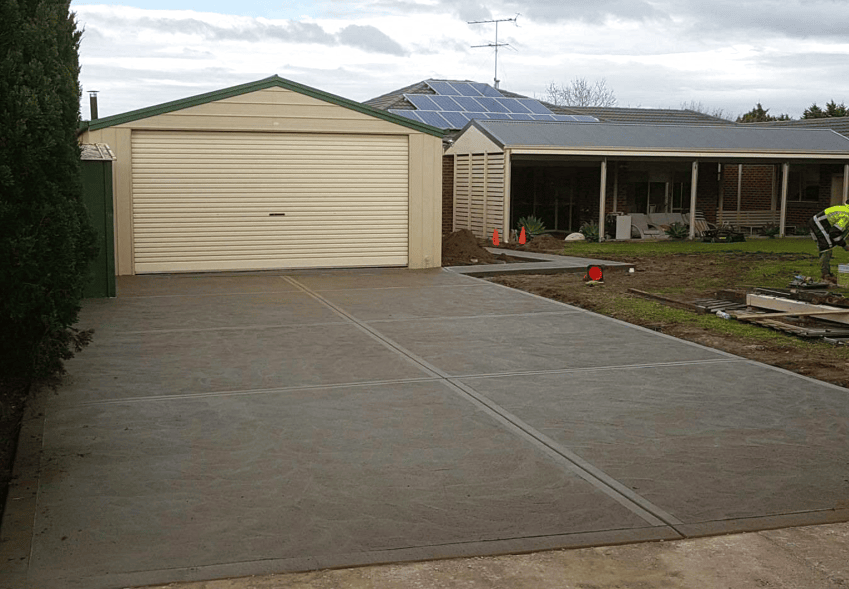
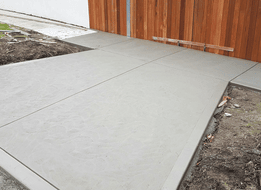
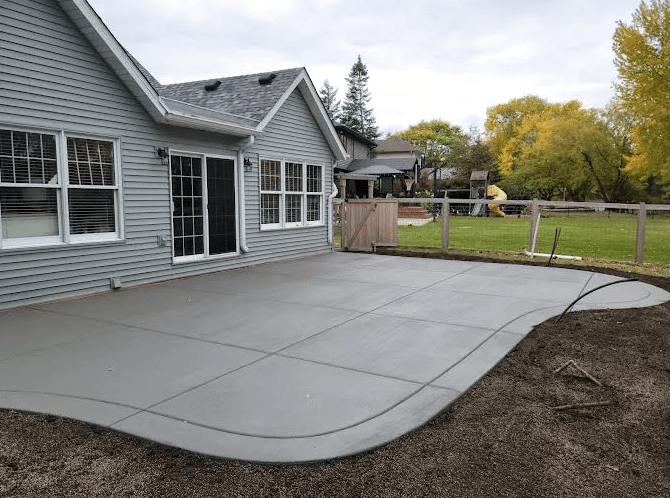
Concrete Driveway Installation
Getting a concrete driveway right starts long before the first truck pulls up. We follow a clear process on every job, and understanding each step helps you know what to expect from start to finish.
Site Evaluation and Measurements
Before we write up any numbers or schedule a pour, we walk the site with you. We check the existing surface, look at how water moves across your property, and take careful measurements. We also look at what vehicles will use the driveway. A standard car puts very different demands on concrete than a loaded pickup, trailer, or RV. Getting the measurements right at the start keeps the rest of the project on track.
Subgrade Preparation and Grading
In Mobile, the soil under your driveway matters more than most people realize. Mobile Bay clay and Gulf Coast alluvial soil are both common here, and both are known to expand and shrink with moisture changes. That movement is one of the leading causes of cracked and sunken driveways in this area. We remove soft or unstable material, compact the subgrade using a plate compactor, and bring in a crushed stone base, typically at least 6 inches deep, to give the slab a stable foundation. We check compaction against standard specs so the base performs the way it should over time.
Forming, Reinforcement, and Concrete Mix Selection
We set forms to the correct grade and check everything with a transit level before any concrete arrives. For most residential driveways, we pour a 4-inch slab thickness, stepping up to a 6-inch slab thickness when heavier loads are expected. We use #4 rebar or wire mesh depending on the load requirements and soil conditions, and we place control joints at proper spacing to manage where cracking occurs.
The concrete mix also matters a great deal in Mobile's hot, humid coastal climate. We typically specify a 4000 psi mix with a 0.45 water-cement ratio to limit permeability. Mixes sourced from local suppliers like Ready Mix USA Mobile or CEMEX Mobile are batched to meet ASTM C94 standards. In warm weather, we often use a retarder admixture to keep the mix workable during placement. Fly ash is sometimes added to improve long-term strength and reduce heat of hydration during summer pours.
Pouring, Finishing, and Curing
Concrete placement moves quickly once the truck arrives, so having an experienced crew matters. We use a power screed or laser screed to level the surface, then work it with bull floats and hand floats before applying the final finish. A broom finish is the most common choice for driveways because it gives good traction when wet, which is important here given how often it rains. If you want a stamped concrete driveway or other decorative concrete driveway options like exposed aggregate or integral color, those steps happen during this phase.
After finishing, curing is one of the most important parts of concrete driveway installation. We apply a curing compound to slow moisture loss and help the slab reach its full 28-day compressive strength. Proper curing in Mobile's heat is something we pay close attention to, because rushing it leads to surface defects that show up later.
Drainage and Slope Planning for Mobile's Heavy Rainfall
Mobile averages around 67 inches of rain per year, which is among the highest of any city in the country. That volume of water has to go somewhere, and if your driveway is not graded correctly, it often goes toward your foundation. We design every driveway with a minimum 2% slope for drainage to move water away from the structure. We also look at how the driveway connects to the street and whether a channel drain or other drainage feature is needed. In some situations, a permeable concrete driveway is worth considering to reduce runoff directly.
Timeline from Site Visit to Completed Driveway
After the initial site visit, most residential projects in areas like West Mobile, Springhill, or Cottage Hill take one to two weeks to get scheduled depending on our current workload and the time of year. The pour itself typically takes one day. We ask that you stay off the surface for at least seven days, and full strength takes around 28 days. We also handle any permitting coordination needed through the City of Mobile Building Permits and Inspections office so you are covered before work begins.
Once you understand the installation process, the next natural question is what it all costs. Pricing depends on size, thickness, reinforcement, finish type, and site conditions, and we break that down in detail in the next section.
Concrete Driveway Costs in Mobile, AL
Understanding what a concrete driveway costs before you call anyone is a smart move. Prices vary depending on your property, the work involved, and the materials used. We have been pouring concrete driveways across Mobile for over 10 years, and we can walk you through what to expect so there are no surprises.
Average Cost Per Square Foot in the Mobile Area
In the Mobile area, concrete driveway installation typically runs between $6 and $12 per square foot for a standard residential pour. A basic two-car driveway covering around 400 to 600 square feet will usually fall somewhere between $2,400 and $7,200 depending on the scope of work. Decorative options like a stamped concrete driveway or integral color can push that number higher, sometimes reaching $15 to $18 per square foot or more. Those are real-world figures we see on jobs throughout West Mobile, Springhill, and Cottage Hill.
Factors That Affect Your Total Project Cost
Several things will move your final number up or down. Soil conditions here in Mobile play a big role. Mobile Bay clay and other shrink-swell soils are common throughout the area, and they often require a thicker aggregate base or additional subgrade work before we pour. A standard residential slab is typically 4-inch slab thickness, but driveways handling trucks, trailers, or RVs usually need a 6-inch slab thickness along with #4 rebar or wire mesh for a proper reinforced concrete driveway. Concrete mix strength matters too. We commonly use 4000 psi mixes for driveways, which holds up well against Mobile's heat and humidity. Old driveway removal, grading, drainage slope, and permitting through the City of Mobile Building Permits and Inspections office can all add to the total. Decorative finishes, sealers, and control joint layout also factor in.
Getting an Accurate Estimate and What to Expect
The only way to get a number you can rely on is to have someone walk the site. We look at the existing surface, soil conditions, drainage, access for a ready-mix truck, and what finish you have in mind. From there we put together a written estimate that breaks down concrete driveway cost by line item so you know exactly what you are paying for. Most site visits take less than an hour. We also check whether your project needs a permit, since some jobs along Airport Boulevard or in older neighborhoods like the Oakleigh Garden District do require one. We handle that coordination for you.
Financing and Payment Options
We understand that a new driveway is a real investment. We offer straightforward payment terms and can discuss phased work if your project is large or your budget needs some flexibility. We do not require full payment upfront, and we are happy to talk through what works for your situation before any work begins.
Once your new driveway is in place, keeping it in good shape over time is simpler than most people expect. But if you already have an existing driveway showing cracks, surface scaling, or low spots, the next thing to look at is what your repair options actually are.
Concrete Driveway Repair
After more than 10 years working on driveways across Mobile, we have seen just about every type of damage that shows up on residential and commercial slabs. The good news is that concrete driveway repair is often a straightforward process when the damage is caught early. Knowing what you are dealing with helps us put together an honest repair plan so you are not paying for more work than you need.
Common Types of Driveway Damage We See in Mobile
Mobile sits on Gulf Coast alluvial soil and expansive clay that shifts with moisture changes. After a heavy rain along Dog River or through the Springhill area, soil under your driveway can move. That movement puts stress on concrete slabs and leads to several common problems. We regularly see cracking, surface deterioration, settled panels, and joint failure on driveways throughout West Mobile, Midtown Mobile, and surrounding neighborhoods.
Crack Repair and Joint Sealing
Hairline cracks and working cracks are two different things, and they need different fixes. Small surface cracks with no movement can often be cleaned out and filled with a polyurethane joint sealant. Wider cracks or cracks that have shifted vertically usually point to a deeper soil or drainage issue underneath. We also see a lot of failed control joints where the original backer rod and sealant have dried out and pulled away. Resealing those joints on time is one of the best things you can do to hold off bigger problems.
Spalling, Pitting, and Surface Deterioration
Spalling is when the top layer of concrete flakes or peels away. In Mobile's hot, humid climate, this often happens when the surface cured too fast or when water repeatedly works into the slab and then dries out. We sometimes see it on older driveways where the original mix did not include air-entraining admixture or where the water-cement ratio was too high. Depending on how deep the damage goes, we can grind the surface, apply an epoxy bonding agent, and resurface with a compatible overlay. In cases where the spalling covers a large area or goes deep, replacement may be a better long-term value than repeated patching.
Settlement and Slab Lifting
Settlement is common on Mobile driveways built over compressible fill or hydric soil with a high water table. When one panel drops lower than another, it creates a trip hazard and redirects water toward your foundation. Depending on the severity, we can evaluate slab lifting options or assess whether the subgrade needs to be regraded and recompacted before any repair will hold. A 6-inch aggregate base and proper compaction matter a great deal in this area, and repairs that skip that step tend to fail again.
When Repair Makes Sense vs. Full Replacement
Repair works well when damage is limited, the subgrade is stable, and the existing slab still has good structural integrity. We look at factors like concrete driveway thickness, the extent of cracking, how many panels are affected, and whether drainage or soil issues have been corrected. If more than a third of your driveway has significant damage or the base has failed in multiple spots, repair costs can climb close to what a full replacement would run. In those cases, we will walk you through an honest comparison of your options so you can make the call that fits your budget and your long-term plans. That conversation about what stays and what goes leads naturally into a look at full concrete driveway replacement and removal.
A few years back, we took on a concrete driveway job for a homeowner over in West Mobile. It seemed straightforward at first, but it turned into one of those projects that really tested everything we knew about working with concrete in this area.
We had the forms set, the base graded, and the ready-mix truck was on its way. Then the sky opened up. If you've lived in Mobile long, you know our Gulf Coast weather doesn't give much warning. A heavy rain system rolled in off the bay faster than the forecast predicted, and we had wet soil conditions almost immediately.
The real problem was that the ground beneath the driveway had shifted just enough from the rain to create soft spots in the subbase. If we had poured on top of that, you would have ended up with a driveway that cracked and sank within a couple of years. We weren't willing to let that happen.
We made the call to stop the pour, send the truck back, and spend two extra days regrading and compacting the subbase properly. We brought in additional crushed stone to stabilize the weak areas before we ever let concrete touch the ground. You can imagine the homeowner was frustrated about the delay, and honestly, we understood that completely.
When we finally did the pour, everything went smoothly. That driveway has now been in place for several years with no cracking or settling. Taking the time to do it right, even when it cost us extra days and materials, was the only real option. That's just how we approach every job here in Mobile.
Concrete Driveway Replacement and Removal
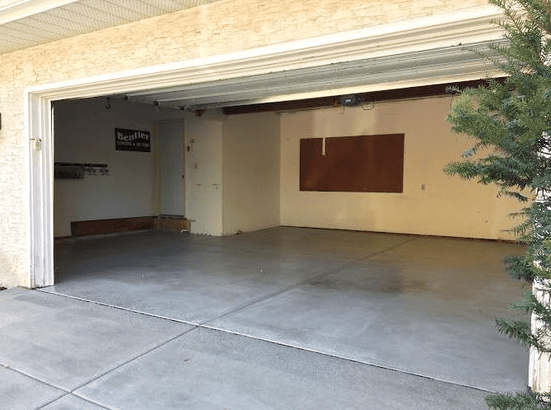
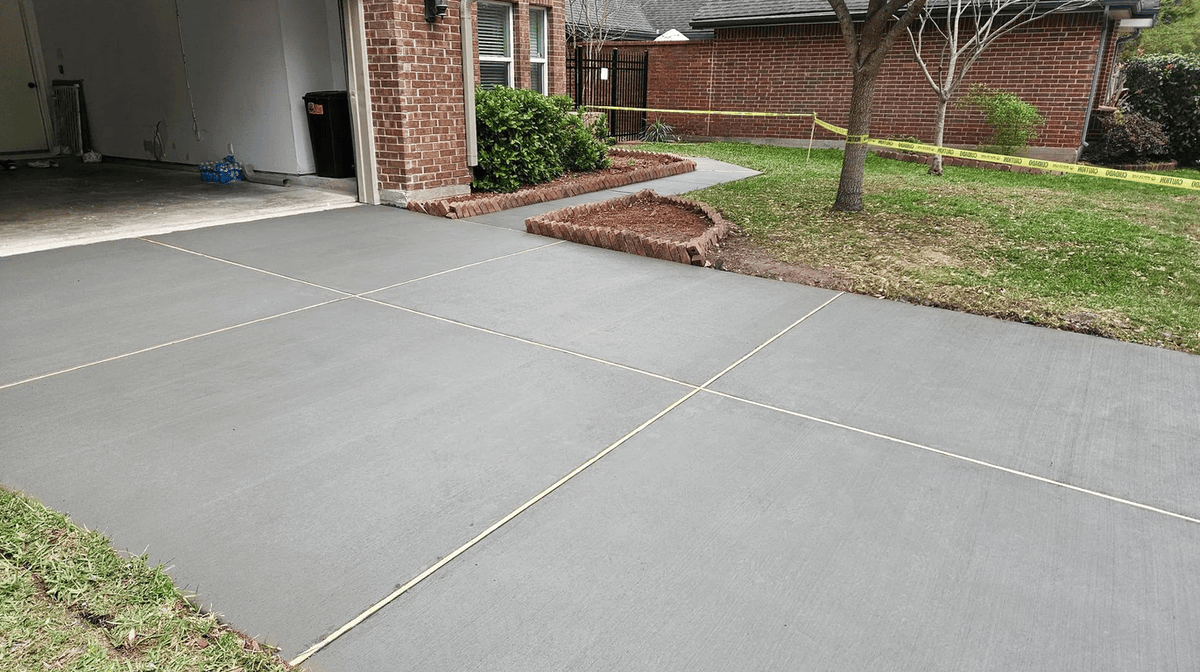
When an existing driveway has reached the end of its useful life, replacement is often the most practical path forward. Patching and resurfacing can only go so far. If the subgrade has shifted, if cracking is widespread, or if the slab has settled unevenly, starting fresh with proper concrete driveway installation will serve you better in the long run. We have handled replacement projects across Mobile neighborhoods from Springhill to Tillmans Corner, and the process follows a clear sequence every time.
Breaking Out and Removing the Old Driveway
Demolition starts with cutting the slab into manageable sections using a concrete saw, then breaking it apart with a jackhammer or skid steer equipped for the job. Concrete driveway thickness affects how much time and effort removal takes. A standard residential slab runs about 4 inches thick, while older driveways built to handle heavier loads may be 6 inches or more. Reinforced slabs with rebar or wire mesh take additional time to cut and separate. We use a plate compactor and appropriate equipment to avoid disturbing the surrounding yard more than necessary.
Debris Hauling and Disposal
Broken concrete adds up quickly. A typical two-car driveway can produce several tons of rubble. We load the broken material and haul it away as part of the project. Disposal follows local guidelines, and in some cases broken concrete can be recycled rather than sent to a landfill. If your project requires a permit through the City of Mobile Building Permits and Inspections office, debris handling and site restoration may be part of the review requirements.
Site Preparation Before Pouring New Concrete
This step is where long-term performance is either built in or left out. Mobile's soil presents real challenges. Gulf Coast alluvial soil and expansive clay common throughout the area can shift with moisture changes, which puts stress on slabs over time. We grade and compact the subgrade carefully, checking for soft spots or compressible fill that need to be addressed before any base aggregate goes down. A properly compacted gravel base, typically 6 inches for standard driveways, gives the new slab stable support. We use a grade laser and transit level to establish correct slope, usually around a 2% grade, so water drains away from your home rather than pooling near the foundation. Getting this right matters especially in areas near Dog River or Three Mile Creek where drainage and high water tables are regular concerns.
Protecting Your Landscaping and Yard During Removal
Demolition work can be rough on the surrounding area. We take steps to protect your lawn, tree roots, and garden beds before equipment moves in. Barriers and plywood can be placed to distribute equipment weight and reduce turf damage. After hauling is complete, we rake and grade any disturbed soil and restore the area as closely as possible to its original condition. If irrigation lines or landscape edging run along the driveway, we identify those beforehand to avoid unnecessary damage.
Once the site is properly cleared and prepared, the next step is deciding what the new driveway will look like. Concrete offers far more options than most people expect, from basic broom finishes to stamped concrete driveway patterns that add real visual interest to your property.
Decorative and Specialty Concrete Driveway Options
A concrete driveway does not have to look plain. Whether you are in Springhill, the Oakleigh Garden District, or out in West Mobile, there are finish options that fit the look of your home and hold up to Mobile's heat and humidity. We have worked with homeowners and commercial property owners across the area to find the right combination of function and appearance. Here is a closer look at what is available.
Stamped Concrete Driveways
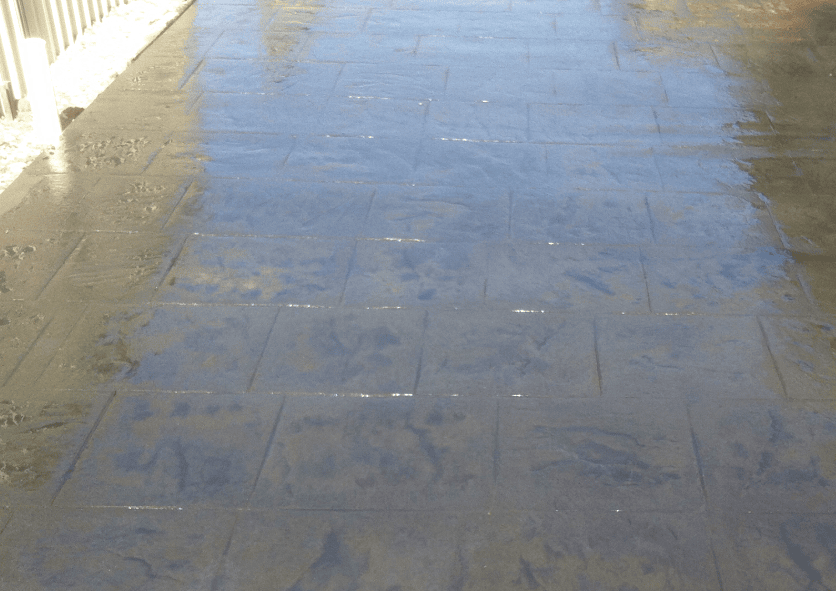
A stamped concrete driveway uses textured mats pressed into fresh concrete to create patterns that look like brick, stone, slate, or tile. The pattern is set before the slab cures, so it becomes part of the surface rather than a coating on top. This works well in neighborhoods like the Leinkauf Historic District or Cottage Hill, where curb appeal matters and a standard gray slab would feel out of place. We use integral color pigment and release agents to add depth and contrast to the pattern. Stamped surfaces do benefit from sealing to protect color and texture over time, which we cover later in this guide.
Colored and Stained Concrete
Color can be added to concrete in a few different ways. Integral color is mixed directly into the concrete before the pour, so the color runs through the full depth of the slab. Acid stains and water-based stains are applied after curing and react with or penetrate the surface to create a more varied, natural look. Both methods hold up well in Mobile's sun and humidity when sealed properly. Staining is also a practical option for existing driveways that are structurally sound but have faded or discolored over the years.
Exposed Aggregate and Broom Finishes
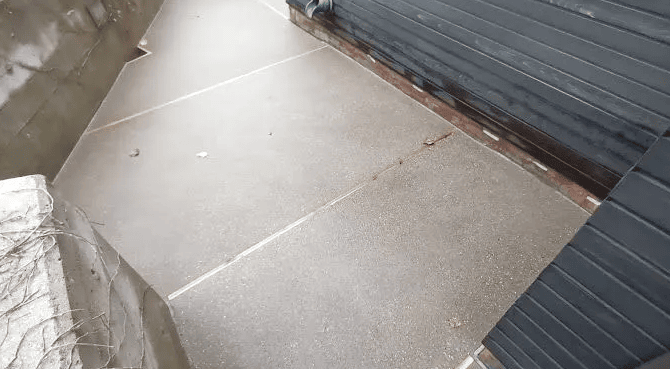
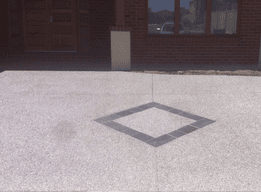
Exposed aggregate concrete is made by washing away the top layer of cement paste before it fully sets, leaving the coarse aggregate visible at the surface. Depending on the mix, that aggregate might include river gravel, colored stone, or #57 limestone. The result is a textured surface with natural variation in color and appearance. It also gives better traction when wet, which matters during Mobile's rainy seasons. A standard broom finish is a simpler, more economical option that still improves grip and gives the surface a clean, professional look. Both are solid choices for residential and commercial concrete driveway installation.
Resurfacing and Overlay Options for Existing Driveways
If your existing driveway is structurally stable but has surface wear, staining, or minor cracking, a concrete overlay may be a practical alternative to full replacement. We apply a thin bonded layer of polymer-modified concrete over the prepared surface, sometimes using an epoxy bonding agent to ensure adhesion. Overlays can be stamped, textured, or stained to update the look entirely. This option does have limits. If the slab has significant settlement, deep cracking, or subgrade problems, an overlay will not fix the underlying issue. We always evaluate the condition of the existing slab before recommending this route, and we are straightforward about when concrete driveway repair or full replacement makes more sense.
Permeable Concrete for Stormwater Management
Mobile gets significant rainfall, and drainage is a real concern in many parts of the city. A permeable concrete driveway is designed with a more open aggregate structure that allows water to pass through the surface and into a prepared base below, rather than running off into the street or toward your foundation. This can help reduce pooling near Three Mile Creek drainage areas and alleviate runoff issues in low-lying parts of town. It also aligns with stormwater requirements that the City of Mobile Building Permits and Inspections office may apply to certain projects. Pervious concrete requires a different mix design and a properly engineered base, and our team includes NRMCA Pervious Concrete Technician training to handle those specifications correctly.
Whichever finish or specialty option fits your project, the performance and longevity of your driveway still depend on what goes into the concrete itself and how the slab is built from the ground up. That brings us to the technical side of the work.
Mobile Concrete Contractors You Can Count On
We are a licensed and insured concrete contractor based right here in Mobile, AL. Our team has over 20 years of combined experience pouring and finishing concrete, and we have spent more than 10 years working specifically in the Mobile area. That means we know this region well, the soil conditions, the humidity, the coastal weather, and the local codes that affect how concrete work gets done here.
When you hire us, you are working directly with experienced tradespeople who have handled concrete projects of all sizes across Mobile County. We have poured driveways in Midtown, built patios in West Mobile, installed commercial slabs in the Port City area, and completed foundation work throughout the surrounding communities. This is our home too, and we take the quality of our work seriously because of that.
Concrete is not a forgiving material. If the subbase is not compacted properly, if the mix is wrong for the conditions, or if the joints are not placed correctly, you will see problems within a few years. Mobile's high humidity, heavy rainfall, and clay-heavy soils make those details even more important. We have seen what happens when those steps get skipped, and we do not skip them.
We carry full licensing and insurance so you are protected throughout the project. We also help you navigate permits and inspections when your project requires them, which takes that burden off your plate. Whether you are planning a new driveway, need a cracked slab repaired, or want to explore stamped or decorative options, we are straightforward with you about what the work involves, how long it will take, and what it will cost.
We offer free on-site estimates so we can look at your specific conditions before we give you a number. Concrete projects vary a lot depending on the site, and an honest estimate needs to account for your actual ground, your actual layout, and your actual goals.
Concrete Mix, Reinforcement, and Technical Specifications
When we pour a concrete driveway in Mobile, the mix design and structural details matter just as much as the finish on top. Mobile Bay clay, high water tables, and the Gulf Coast's heat and humidity all put extra stress on concrete over time. Getting the specs right from the start is what separates a driveway that lasts decades from one that starts cracking within a few years.
Choosing the Right PSI for Your Driveway
Most residential concrete driveway installation projects in Mobile call for a mix with a 4000 psi 28-day compressive strength. That gives you enough density to resist surface wear, moisture, and the shrink-swell movement common in our local expansive clay soils. For commercial work or driveways that see heavier loads, we typically step up to 5000 psi. We source ready-mix from suppliers like CEMEX Mobile and Ready Mix USA Mobile, and we keep the water-cement ratio at 0.45 or below to limit porosity. A lower water content means fewer pathways for moisture to work into the slab and cause scaling or corrosion over time.
Rebar vs. Wire Mesh Reinforcement
Both rebar and wire mesh have a place in a reinforced concrete driveway, but they serve somewhat different purposes. Wire mesh, such as 10x10 W1.4xW1.4, helps control minor surface cracking as the slab cures and shrinks. Rebar, typically #4 or #5 at 6-inch spacing, adds tensile strength across the full depth of the slab and is better suited for areas with soft subgrade, heavy vehicle traffic, or large pour sections. In many parts of West Mobile and Tillmans Corner where Gulf Coast alluvial soil and compressible fill are common, we lean toward rebar to give the slab more structural support. Polypropylene fiber reinforcement is sometimes added to the mix as a secondary measure to further reduce surface cracking during the early curing period.
Thickness Recommendations for Residential and Commercial Use
Concrete driveway thickness is one of the most important factors affecting long-term performance. For standard residential driveways with passenger vehicles, a 4-inch slab thickness over a properly compacted base is generally adequate. If you park a truck, SUV, or trailer regularly, we recommend stepping up to a 6-inch slab thickness for added load capacity. Commercial driveways or any surface that sees delivery trucks or heavy equipment should be designed at 6 inches or more, often with closer rebar spacing and a thicker aggregate base. We compact the subgrade to meet AASHTO T99 standards and typically install a 6-inch to 12-inch compactible gravel base, depending on soil conditions found during our site evaluation.
Heavy Vehicle and Load-Bearing Considerations
If you need a driveway that can handle an RV, a loaded work trailer, or commercial delivery traffic, the design has to account for that from the beginning. Bearing capacity starts at the subgrade. Mobile's silty clay and hydric soils can lose strength when wet, so proper drainage grading and base preparation are critical before a single yard of concrete is poured. We use a grade laser and transit level to establish the right slope, targeting roughly a 2% slope for drainage away from your structure. Control joints are cut at no more than 10-foot spacing and sealed with polyurethane joint sealant to manage where cracking occurs and keep moisture out of the base. All of this groundwork connects directly to how well the surface holds up over the years, which brings us to what you can do after installation to protect that investment.
Sealing, Finishing, and Long-Term Maintenance
Why Sealing Your Concrete Driveway Matters in Mobile
Mobile's climate is tough on concrete. Between the heat, heavy rain, high humidity, and salt air blowing in off Mobile Bay, an unsealed driveway takes a beating faster than it would in a drier part of the country. A good sealer closes the small pores in the concrete surface, which slows down moisture getting in and reduces the chance of surface scaling, staining, and erosion over time. For concrete driveway maintenance in this part of Alabama, sealing is not optional if you want the slab to hold up for decades. We typically recommend a penetrating silane sealer or a siloxane sealer for driveways here because they work below the surface without changing the look of the concrete. For decorative work like a stamped concrete driveway, an acrylic topical sealer is usually the right choice since it also enhances color depth.
How and When to Reseal
Most driveways in Mobile should be sealed for the first time after the concrete has fully cured, which generally means waiting at least 28 days after the pour. After that, plan on resealing every two to three years depending on traffic and exposure. A simple way to check if it is time: pour a small amount of water on the surface. If it soaks in instead of beading up, the sealer has worn down and it is time to reapply. Before resealing, we clean the surface thoroughly, look for any concrete driveway repair needs like cracks or joint sealant that has dried out, and address those first. Using a polyurethane joint sealant to refill control joints before sealing helps prevent water from working its way under the slab.
Routine Cleaning and Upkeep Tips
Day-to-day concrete driveway maintenance does not have to be complicated. A pressure wash once or twice a year removes mold, mildew, and staining that build up in Mobile's humid conditions. Avoid using harsh chemicals like muriatic acid unless you really need it and know how to dilute it safely. Oil and grease stains should be treated as soon as possible before they work deeper into the surface. Tree roots, standing water, and heavy vehicle loads are the most common causes of early damage we see here, especially in older neighborhoods like Springhill and Midtown Mobile where mature tree canopies are common. Keeping joints clean and sealed goes a long way toward preventing water from undermining the base.
How Long a Properly Maintained Concrete Driveway Lasts
A well-installed, properly sealed, and routinely maintained concrete driveway in Mobile can last 30 to 40 years or more. The key phrase there is well-installed. Concrete driveway installation done with the right subgrade preparation, proper concrete driveway thickness for the load, good drainage grading, and quality mix design will far outlast a job where corners were cut. We have seen slabs poured with a 4000 psi mix, adequate rebar, and a solid compacted base still performing well after 30 years. We have also seen cheaper jobs crack and settle within five. Regular maintenance stretches the life of any driveway, but it cannot make up for poor work at the start. That connection between initial quality and long-term performance is exactly why permitting, contractor licensing, and code compliance in Mobile matter as much as they do.
Permitting, Licensing, and Code Compliance in Mobile, AL
When a Permit Is Required for Driveway Work in Mobile
Not every driveway project in Mobile requires a permit, but many do. Through the City of Mobile Building Permits and Inspections office, permits are typically required when you are installing a new driveway, replacing an existing one in full, or making changes that affect stormwater flow or your connection to a public street. If you are in an unincorporated part of the county, that process runs through Mobile County Permits and Inspections instead. We handle the permit research and application for you so nothing gets missed before we break ground. Skipping a required permit can lead to fines, required removal of the work, and problems when you sell the property.
Local Code Requirements and ADA Considerations
Mobile's codes address things like driveway width, setbacks from property lines, drainage, and how your driveway connects to the public right-of-way. A minimum 2% slope for drainage is a standard requirement that keeps water moving away from your foundation and off the street in a controlled way. This matters a lot here given how much rain Mobile receives and the Gulf Coast alluvial soil that sits under many neighborhoods from Springhill to Tillmans Corner. If your project involves a commercial property or a driveway that serves the public, ADA guidelines on slope, width, and surface texture also come into play. We account for all of that during the design and layout phase before any concrete is poured.
Our Licensing, Insurance, and What That Means for You
We carry an Alabama Contractor License and maintain full liability insurance and workers' compensation coverage. With over 20 years of combined experience pouring concrete and more than 10 years working specifically in Mobile, we understand both the technical side and the local requirements. When you hire a licensed and insured crew, you are protected if something unexpected happens on your property during the job. You also have a contractor who stands behind the work with a real warranty. That kind of accountability is hard to get from an unlicensed or out-of-area crew, and it is one of the clearest concrete driveway advantages of working with someone local who knows Mobile codes and conditions well.
Once permits are in place and the project is planned to code, the next big factor is timing. Mobile's heat, humidity, and rain patterns have a real effect on how and when we schedule your pour and manage the curing process.
Scheduling, Curing Time, and Weather Considerations
Best Time of Year to Pour Concrete in Mobile, AL
Mobile's climate plays a big role in how we plan concrete driveway installation projects. The most reliable windows for pouring are spring (March through May) and fall (September through November). During these months, temperatures are moderate and the chance of heavy afternoon rain is lower than in summer. That said, we work year-round here and adjust our approach based on the forecast. With over 10 years working in Mobile, we know how quickly weather can shift along the Gulf Coast, and we plan our pours around it.
How Heat, Humidity, and Rain Affect the Curing Process
Mobile averages around 65 inches of rain per year, and summer heat regularly pushes into the 90s. Both factors affect how concrete sets and gains strength. High heat speeds up the curing process too fast, which can cause surface cracking and reduce the 28-day compressive strength of the slab. Excess humidity slows evaporation unevenly, and rain on fresh concrete can weaken the surface and wash out the mix design. We use a retarder admixture in hot conditions and apply an acrylic curing compound to lock in moisture and keep the cure rate consistent. On days where rain is likely, we hold the pour or have protection ready to cover fresh concrete quickly.
How Long Before You Can Use Your New Driveway
Most residential concrete driveways are ready for foot traffic within 24 to 48 hours. Vehicle traffic is a different story. We typically recommend waiting at least 7 days before driving a standard passenger car on the slab, and closer to 28 days before parking heavy trucks or equipment on it. That 28-day mark is when concrete reaches its full designed strength under standard curing conditions. Rushing this timeline is one of the more common causes of surface damage on new driveways, and it is something we walk every customer through before we finish the job.
Emergency and Insurance-Related Driveway Repair Scheduling
Storm damage, flooding near Dog River or Three Mile Creek, and vehicle impacts can all create urgent concrete driveway repair needs. We work with homeowners and commercial property owners in situations where the damage is tied to an insurance claim. We can document the damage, provide a written estimate, and coordinate with your adjuster on scope and timing. For emergencies, we do our best to get out for a site visit quickly and give you a clear picture of what needs to happen and how soon we can schedule it.
If you are thinking about who to trust with a project like this, the next section covers what we bring to the table as your local concrete driveway contractors in Mobile.
Why Choose Us for Your Concrete Driveway in Mobile
When you are looking for concrete driveway contractors in Mobile, it helps to work with someone who already knows the ground beneath your feet. Mobile Bay clay, high water tables, and the kind of heavy rain that rolls in off the Gulf are not things you want to learn about on the job. We have spent over 10 years working in this area, and our crew brings more than 20 years of combined concrete experience to every pour.
Our Experience Pouring Concrete in Mobile, AL
We have worked on driveways across West Mobile, Springhill, Midtown, and neighborhoods like Cottage Hill and Ashland Place. That range of work means we have dealt with the shrink-swell soil and compressible fill that shows up in many parts of Mobile County. We understand how Gulf Coast alluvial soil behaves through wet seasons and dry ones, and we prepare each subgrade accordingly. Our mix designs account for Mobile's heat and humidity, using materials that meet ASTM C150 standards and hold up over time. We also coordinate with the City of Mobile Building Permits and Inspections office so your project meets local code from day one.
Past Projects, References, and What Our Customers Say
We can show you photos of completed driveways, including stamped concrete driveway work, standard broom finishes, and reinforced concrete driveway installations built to handle heavy loads. When you ask for references, we provide them. Our past customers are the most straightforward way to understand how we work, how we communicate, and what the finished product looks like after a few years.
Our Warranty and What We Stand Behind
We stand behind our concrete driveway installation with a written warranty. If something fails due to our workmanship or materials within the warranty period, we come back and make it right. We carry liability insurance and hold an Alabama Contractor License, so you are not taking on risk by hiring us. That coverage matters whether the job is a standard concrete driveway design or a more involved decorative pour.
How to Get a Quote and What Happens Next
Getting a quote starts with a site visit. We look at your existing driveway or bare ground, check drainage and slope, and talk through your goals, including concrete driveway cost, timeline, and any concrete driveway maintenance or concrete driveway repair needs you already know about. After that, we put together a written estimate with clear line items so you know what you are paying for and why. From there, we schedule the work around Mobile's weather patterns and your availability. By the time we break ground, you will know exactly what to expect at each step.
Ready to Get Started on Your Concrete Driveway in Mobile
You now know what sets us apart from other concrete driveway contractors in the Mobile area. We have spent over a decade working with the specific soil and weather conditions here, from the expansive Mobile Bay clay in Midtown Mobile to the high water table issues common near Dog River and Fowl River. That local experience shapes every decision we make on your job, from subgrade prep to joint placement to finish.
Choosing us means you get a team that treats your project the way we would want our own driveway handled. Here is a quick look at what that means for you:
- Proper subgrade evaluation and compaction using a plate compactor and grade laser so your slab sits on a stable, well-drained base
- Concrete driveway thickness sized for your actual needs, whether that is a standard 4-inch slab for everyday vehicles or a 6-inch reinforced concrete driveway for heavier loads
- Mix designs using quality materials from local suppliers like CEMEX Mobile or Ready Mix USA Mobile, matched to Gulf Coast heat and humidity
- Correct control joint spacing and sealing to manage cracking before it becomes a problem
- A full range of finishes, from a simple broom finish to a stamped concrete driveway or decorative concrete driveway with integral color
- Drainage grading built to a minimum 2% slope to protect your foundation and keep water moving away from your home
- Permit coordination through the City of Mobile Building Permits and Inspections office so your project meets local code
- Concrete driveway repair and long-term concrete driveway maintenance guidance so your investment lasts for decades
- Clear, honest answers on concrete driveway cost with no hidden fees or vague estimates
- Liability coverage and a written warranty on our work, giving you real protection if anything falls short
We are proud of the driveways we have poured across West Mobile, Springhill, Cottage Hill, and neighborhoods throughout the city. We would like to add yours to that list. Get your free quote today by calling us directly or completing the form below, and we will set up a site visit at a time that works for you.
Mobile AL Concrete
202 Congress St
Mobile, AL 36603
Business Hours
| Mon | 8:00 AM – 7:00 PM |
| Tue | 8:00 AM – 7:00 PM |
| Wed | 8:00 AM – 7:00 PM |
| Thu | 8:00 AM – 7:00 PM |
| Fri | 8:00 AM – 7:00 PM |
| Sat | 10:00 AM – 6:00 PM |