Concrete Pouring & Finishing in Mobile
Local Concrete Pouring & Finishing Done to Code in Mobile
Where We Work in Mobile, AL and Surrounding Areas
We provide concrete pouring and finishing services throughout Mobile, AL and the surrounding communities. Whether your project is in Spring Hill, Tillmans Corner, Midtown Mobile, or out toward Eight Mile and Cottage Hill, we work across the area regularly. We also serve neighborhoods along major corridors like Airport Boulevard, Cottage Hill Road, and Old Shell Road, as well as communities in Daphne and the surrounding Baldwin County area. If you are not sure whether we cover your location, just reach out and we can confirm quickly. We keep our schedule organized so we can give you a realistic start date rather than a vague window.
Most people contact us because something has gone wrong with an existing surface or because they want a new one done right the first time. Cracked driveways, slabs that have settled unevenly, patios with standing water after every rain, and sidewalks that have heaved up from root pressure or soil movement are all situations we hear about regularly. Some homeowners have already had work done by someone else and are now dealing with the results. Spalling surfaces, joints that were never cut properly, or concrete that dusted and scaled within the first year are signs of a pour that was rushed or mixed incorrectly. We handle concrete work start to finish, which means we are involved from site prep and formwork all the way through curing and sealing, so nothing gets skipped.
Mobile sits on the Gulf Coastal Plain, and that geology matters a great deal when you are placing concrete. Soils here range from loose sandy soil near low-lying areas and creek drainages to expansive Mobile Bay Clay and residual clay further inland. Both create movement under slabs when they are not properly addressed during subgrade preparation. Add in the high water table in many parts of the city, heavy seasonal rainfall, high humidity, and the heat that runs from spring through fall, and you have conditions that will expose every shortcut a crew takes. We have been working in Mobile for over 10 years and have more than 20 years of combined experience pouring and finishing concrete, so we understand how to spec a mix and time a pour for what this area actually throws at you.
Common Problems That Bring Homeowners to Us
The calls we get most often fall into a few categories. Driveways and slabs that have cracked, shifted, or developed surface scaling are at the top of the list. In many cases, the original concrete was placed without proper compaction of the subgrade, without adequate reinforcement, or with a mix that was too wet when it was poured. A high-slump mix might be easier to place, but it gives up strength and durability in exchange. We typically work with mixes in the 3000 PSI to 4000 PSI range for residential flatwork, with a target slump around 4 inches and materials sourced from suppliers like CEMEX or Vulcan Materials Mobile. For areas with more ground movement or heavier loads, we step up to 5000 PSI with tighter water-to-cement ratios.
Drainage is another recurring issue. Mobile gets a significant amount of rainfall each year, and concrete that was poured without the right slope will hold water. That standing water does not just create a nuisance. It accelerates surface wear, promotes moss and algae growth, and in some cases worsens erosion around the slab edges. Dog River, Three Mile Creek, and other waterways in the area flood their surrounding neighborhoods periodically, so properties near those zones need even more attention to how water moves across and away from a concrete surface. We address slope, edge drainage, and in some cases permeable concrete options depending on the site.
We also get calls from homeowners who are trying to decide between repairing an existing surface and replacing it entirely. That decision depends on how deep the damage goes, whether the subgrade is still stable, and how old the concrete is. Surface cracks that have not shifted vertically and show no sign of base movement can sometimes be addressed without full replacement. But if the slab has settled, if there is significant scaling across most of the surface, or if the reinforcement has corroded, repair work is usually a short-term fix at best. We will look at what you have and give you an honest read on which direction makes more sense for your situation.
What We Know About Pouring Concrete in Mobile
Pouring concrete in Mobile is not the same as pouring it in a dry inland climate. The combination of heat, humidity, and rainfall creates conditions that affect how concrete sets, how it should be finished, and how long the curing window actually is. When air temperatures are high and humidity is low, the surface can dry faster than the interior, which leads to plastic shrinkage cracking before the slab has even hardened. When humidity is high, finishing can be tricky because bleed water takes longer to leave the surface. We use admixtures to manage set times, including retarders in hot weather to keep the mix workable and allow proper finishing. Products from Sika Corporation and Euclid Chemical give us reliable control over workability and set.
Reinforcement placement is something we take seriously because of the coastal air environment. Salt air accelerates corrosion in steel, and if rebar or welded wire reinforcement does not have adequate concrete cover, rust will eventually crack the slab from the inside. We follow cover requirements that account for exposure conditions, and we use fiber mesh polypropylene as a secondary reinforcement in many residential flatwork applications to control early shrinkage cracking. For structural work or slabs with heavier loads, we use #4 rebar or #5 rebar placed and tied according to the project requirements.
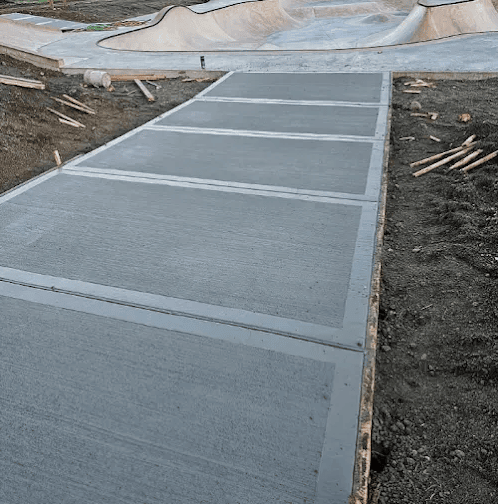
Joint placement is one of the most overlooked parts of any concrete pour, and it is where a lot of DIY and low-bid work falls apart. Control joints need to be placed at the right spacing and cut to the right depth within a specific time window after the pour. Cut too late and the concrete has already cracked on its own. Cut too shallow and the joint does not function as intended. We use a diamond blade saw and follow spacing guidelines based on slab thickness and mix design. For a standard 4-inch slab, joints are typically placed no more than 10 to 12 feet apart in each direction. This is not guesswork. It follows established guidance under ACI 302.1R, which covers the design and construction of concrete floor and slab systems.
Frequently Asked Questions from Mobile Homeowners
Do you pull permits for concrete work in Mobile? Yes. Depending on the scope of the project, permits may be required through the City of Mobile Building Inspection Department or Mobile County Inspection Services. We handle that process and make sure the work is inspected and documented correctly. Working without a required permit can create problems when you sell your property, and it removes any inspection layer that protects you if something goes wrong.
How long before we can use the surface after the pour? Foot traffic is typically safe within 24 to 48 hours, but vehicle traffic should wait at least 7 days, and full design strength develops at 28 days. Curing is active during that entire period, and we use a curing compound to retain moisture in the slab during that window. Rushing traffic onto fresh concrete, especially in hot weather, is one of the most common causes of surface damage on new pours.
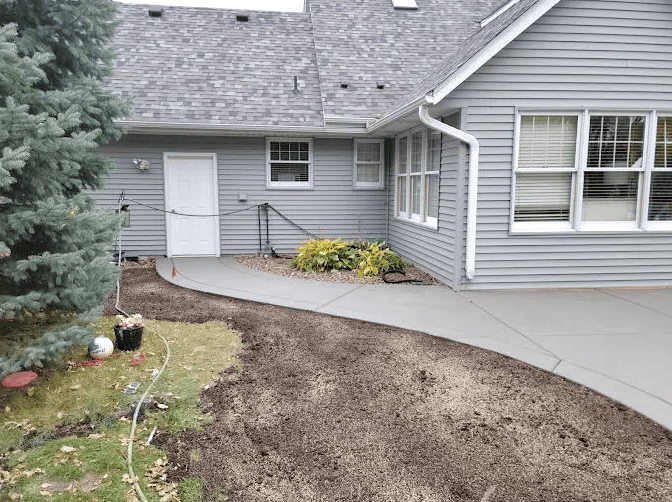
What finish options are available? We offer broom finishes for slip resistance, smooth trowel finishes, stamped patterns, exposed aggregate, and decorative concrete options including integral color and applied stains. The right finish depends on how the surface will be used, the look you want, and how much texture is needed for safety. We can walk you through what each finish involves and show you photos of past work we have done around Mobile before you make a decision.
Can you match existing concrete on my property? We can get close in terms of texture and general appearance, but a perfect color match to weathered concrete is rarely possible. New concrete will always look different initially, and it will age and tone over time. If matching matters to you, we will be upfront about what is realistic rather than tell you what you want to hear. Understanding that ahead of time helps avoid disappointment after the pour.
What Concrete Pouring and Finishing Involves
When we talk about concrete work in Mobile, we mean a process that starts well before the truck arrives and ends well after the pour is done. Understanding what goes into a proper job helps you know what to expect and why each step matters for how long your surface will last.
The Basic Steps from Ground Prep to Finished Surface
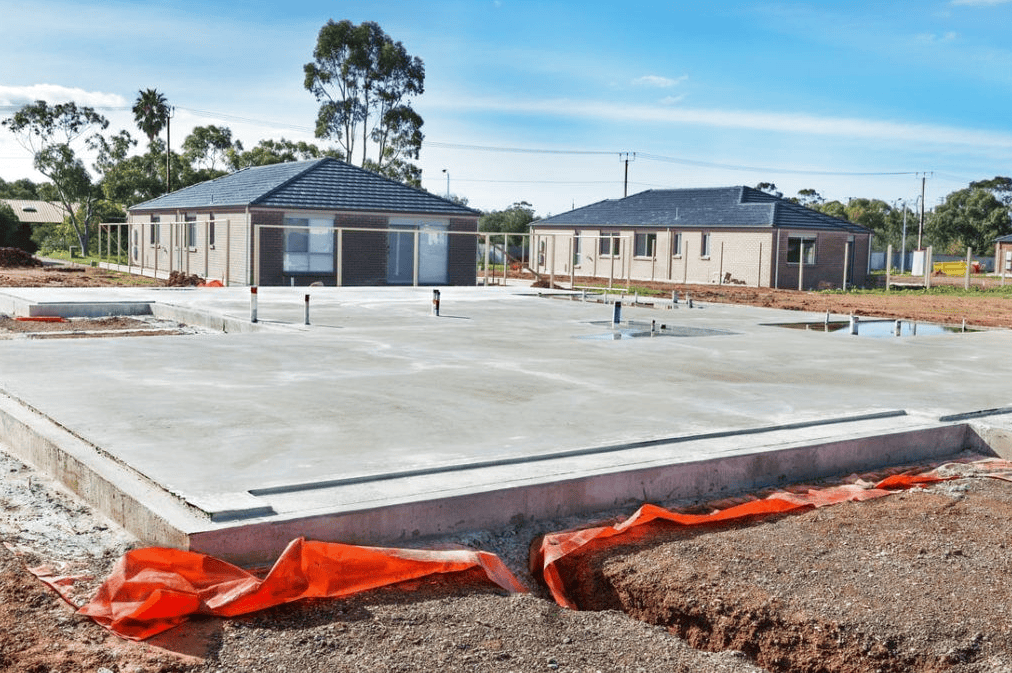
Every concrete project we take on follows a clear sequence. We start with slab preparation, which means grading and compacting the subgrade so you have a stable base. Mobile sits on Gulf Coastal Plain soils that often include Mobile Bay Clay, expansive soil, and alluvial deposits near waterways like Dog River and Three Mile Creek. These soil types can shift and settle if they are not handled correctly before a single yard of concrete is placed.
After the ground is ready, we set up formwork to define the shape and depth of the slab. Then we place reinforcement such as #4 rebar or welded wire reinforcement to give the concrete internal strength. Once the mix is placed, surface leveling begins using a screed board or laser screed, followed by finishing techniques like bull floating, troweling methods, and broom or decorative texturing. After finishing, proper curing processes begin to protect the surface while it gains strength.
How Pouring Differs from Other Concrete Work
Pouring and finishing flatwork, meaning driveways, patios, sidewalks, and slabs, is different from structural or vertical concrete work. Flatwork demands very precise surface leveling, careful joint placement to control cracking, and finishing that matches both your intended use and the look you want. It also requires specific mix designs for our climate. We typically work with mixes in the 4000 PSI range and a controlled water-to-cement ratio to handle Mobile's heat and humidity without the surface setting too fast or too slow.
Why Finishing Matters as Much as the Pour Itself
A good pour can still result in a failed surface if the finishing is rushed or done at the wrong time. Troweling methods, timing, and texture choices all affect how the surface wears over the years. In a coastal environment with heavy rain, humidity, and occasional hurricane conditions, decorative concrete finishes and proper concrete sealing also play a real role in how well your surface holds up. Getting the finishing right the first time means fewer repairs and a surface that still looks good years down the road.
All of this starts with what happens before the concrete ever arrives on site, which is why ground preparation and formwork installation are the foundation of every project we do.
Site Preparation and Formwork
Before any concrete is mixed or poured, the ground beneath it has to be ready. Good slab preparation is what separates a surface that lasts decades from one that cracks and settles within a few years. We take this stage seriously on every job, whether we're working in Spring Hill, Tillmans Corner, or anywhere else in the Mobile area.
Grading, Compacting, and Clearing the Area
We start by removing grass, roots, debris, and any loose or soft material from the work area. From there, the subgrade gets graded to the correct elevation and compacted in lifts. We use mechanical compactors to reach consistent density across the entire footprint. Skipping this step leads to uneven settling, and no amount of good concrete will fix a soft base.
Building Forms That Hold Their Shape During the Pour
Formwork installation has to be precise. If a form moves or flexes during the pour, the slab edge ends up uneven and finishing becomes harder. We stake and brace forms to hold under the weight and pressure of fresh concrete. A form release agent is applied so the boards strip cleanly without pulling at the slab edge. We also check for level and grade along every run before the truck backs in.
How Mobile's Clay-Heavy Soil Affects Site Prep
Mobile sits on the Gulf Coastal Plain, and a lot of properties here have Mobile Bay Clay, Residual Clay, or Expansive Soil beneath the surface. These soils shift when they get wet and shrink when they dry out. That movement puts stress on concrete from below. We account for this by removing problem material where needed, bringing in compacted #57 stone or a stable base fill, and in some cases placing a polyethylene vapor barrier to manage moisture migration. With over 10 years working in Mobile specifically, we've learned where the problem soils tend to show up and how to address them before formwork installation even begins.
Drainage Planning Before the First Bag Is Mixed
Mobile gets a lot of rain. Dog River, Three Mile Creek, and the low-lying areas near Mobile Bay make standing water a real concern on many residential and commercial lots. We plan the slope and drainage direction during the prep phase, not after the pour. Proper pitch built into the subgrade and confirmed through the forms means water moves away from the slab and toward an outlet. This also reduces erosion under the edges and limits the moisture cycling that wears on concrete over time. Where needed, we discuss channel drains or French drain integration before any concrete pumping or placement begins.
Once the subgrade is solid, the forms are set, and drainage is accounted for, the next decision is how to reinforce the slab. The right reinforcement strategy depends on the load the surface will carry, the soil conditions below it, and the finish you're planning on top.
A few years back, we took on a concrete pouring and finishing job for a homeowner over in west Mobile. The plan was straightforward: pour a large backyard patio slab, smooth it out, and apply a brushed finish. We had done this kind of work hundreds of times, so we felt confident going in.
What we did not count on was the weather turning on us mid-pour. If you have spent any time in Mobile, you know our Gulf Coast humidity and afternoon storms do not follow a schedule. We were about halfway through the pour when the sky opened up. A heavy rainstorm rolled in off the bay faster than the forecast had predicted.
Rain hitting fresh concrete is a serious problem. The water dilutes the surface, weakens the mix, and makes it nearly impossible to get a clean finish. We had to think fast. Our crew covered as much of the fresh pour as we could with plastic sheeting while a few of us worked to redirect the water runoff away from the slab using sandbags we keep on the truck for situations like this.
Once the rain passed, we carefully assessed the damage. Fortunately, because we moved quickly, the core of the slab held up well. We did have to rework a section of the surface, removing the compromised layer and refinishing it to match the rest of the patio.
The homeowner was understandably worried when they saw the rain hit. But by the end of the project, the slab looked great and has held up beautifully since. That day reminded us why experience matters. When you hire us, you get a team that knows how to handle what Mobile's weather can throw at a job site.
Reinforcement Options
When it comes to concrete in Mobile, getting the reinforcement right from the start is one of the most important decisions we make on any job. The Gulf Coastal Plain soils here, including expansive clays, Mobile Bay Clay, and loose sandy soils common near Dog River and Eight Mile Creek, can shift, settle, or heave with moisture changes. Without proper concrete reinforcement, even a well-poured slab can crack or drop. We have spent over ten years working in Mobile neighborhoods from Spring Hill to Tillmans Corner, and we know firsthand how the local ground behaves.
When We Use Rebar Versus Wire Mesh
The choice between rebar and wire mesh depends on what the slab needs to carry and what sits beneath it. For driveways, thicker slabs, and anything near areas with compressible fill or high water table conditions, we typically reach for #4 rebar at 18-inch OC or #5 bar at 12-inch OC. These give the concrete real tensile strength and hold sections together if the ground moves. Rebar is also our go-to when local soil testing points to expansive or residual clay beneath the pour.
Welded wire reinforcement, like 6x6 W1.4xW1.4 WWR, works well for lighter-duty flatwork such as sidewalks, patios, and garage floors on stable, well-compacted subgrade. It is faster to place and still adds meaningful crack control. We sometimes combine fiber mesh polypropylene into the mix alongside either option to reduce plastic shrinkage cracking during the early stages of the curing processes. The right choice is not one-size-fits-all, and we always evaluate your specific site before making a call.
How Reinforcement Affects Strength and Crack Resistance
Concrete is strong in compression but weak in tension. That means when the ground shifts or a load bends the slab, the bottom of the slab wants to pull apart. Reinforcement sits inside the slab to resist that pull. To do its job correctly, the steel needs proper concrete cover. We follow ACI 318 guidelines and typically maintain 1.5-inch to 2-inch cover depending on exposure conditions. In Mobile's coastal air, corrosion is a real concern, so getting that cover right during slab preparation and formwork installation matters more than many homeowners realize.
Properly placed reinforcement also works alongside well-timed joint placement and correct curing to keep cracks from forming or spreading. Reinforcement does not eliminate cracking entirely, but it controls where and how cracks develop so they stay tight and do not compromise the surface.
Load Requirements for Driveways, Slabs, and Foundations
Different projects carry different loads, and we size the reinforcement to match. A standard residential driveway in areas like Cottage Hill or Carriage Hills typically calls for a 4-inch slab thickness with rebar or mesh and a 3000 PSI to 4000 PSI mix. If you park heavy trucks or equipment, we move to a 6-inch slab with heavier bar spacing and often a 4000 PSI or higher mix. Foundations and load-bearing slabs follow ACI 301 and ACI 318 requirements and may call for an 18-inch deep footing with #5 bar depending on what the structure above demands. We also pull the required permits through the City of Mobile Building Inspection Department so every job meets local code before we pour.
With reinforcement selected and planned, the next key factor in a durable pour is the concrete mix itself. The strength, water-to-cement ratio, and admixtures we choose have a direct effect on how the finished slab holds up to Mobile's heat, rain, and humidity over time.
Concrete Mix Specifications
PSI Ratings and What They Mean for Your Project
Not every concrete job calls for the same mix. The PSI rating tells you how much compressive strength the concrete reaches after it fully cures, typically measured at the 28-day compressive strength mark. For a standard residential driveway or patio, we usually specify a 4000 PSI mix. Sidewalks and light-duty slabs can work well at 3000 PSI, while structural foundations and load-bearing surfaces often call for 5000 PSI. We match the mix to what your surface actually needs to handle, whether that is daily vehicle traffic, foot traffic, or heavier equipment loads common around properties near Brookley Aeroplex or along busy corridors like Airport Boulevard.
Additives That Improve Performance in Humid Coastal Climates
Mobile sits close to Mobile Bay, and that coastal air carries moisture and salt that can work against a concrete surface over time. To fight that, we use admixtures that tighten the mix and reduce permeability. Products like Sika ViscoCrete and MasterGlenium help us hit a low water-to-cement ratio, often at 0.45 or lower, without making the mix too stiff to place and finish properly. We also use Fly Ash Class F as a partial cement replacement, which reduces heat during the pour and improves long-term durability. For slabs where moisture vapor is a concern, a polyethylene vapor barrier under the slab goes a long way. Air entrainment in the 4 to 7 percent range helps the surface handle freeze-thaw cycles during the occasional cold snap Mobile sees in January and February.
How Heat and Humidity in Mobile Affect the Mix and Pour Timing
The weather effects on concrete performance are something we take seriously here. Hot, humid summers in Mobile can speed up the set time in ways that catch less experienced crews off guard. When concrete sets too fast, you lose your finishing window and end up with a surface that looks rough or develops surface cracks. We track air temperature, humidity, and concrete temperature on the job using a thermocouple temperature probe, and we adjust accordingly. That might mean scheduling the pour early in the morning, using a retarder like Daratard to slow the set, or sourcing a mix from CEMEX Mobile Plant or Ready Mix USA Mobile that accounts for ambient conditions that day. Following ACI 308 curing guidelines, we apply a quality curing compound or Concrete Cure and Seal to slow moisture loss and protect the surface during those critical first days after the pour.
Permeable and Recycled Aggregate Options
If drainage is a concern on your property, especially in lower-lying areas near Dog River or Three Mile Creek where standing water is common after heavy rain, permeable concrete is worth considering. It allows water to pass through the surface and into the subgrade below rather than pooling or running off. We can also incorporate recycled aggregate into certain mixes where it fits the project specs, which reduces material costs without sacrificing the performance you need. Every aggregate we use meets ASTM C33 gradation requirements, and we commonly work with materials like #57 stone and washed river sand sourced through local suppliers.
Once the right mix is dialed in for your project, the next decision is how the finished surface looks and performs underfoot or under tire. The finish type plays a big role in both the appearance and the long-term function of your concrete.
Finish Types We Offer
Once the concrete is placed and leveled, the finish we apply shapes how your surface looks, feels, and holds up over time. Mobile's humidity, heat, and heavy rainfall all affect how different finishes perform, so we match the right finishing techniques to your project conditions and how you plan to use the surface.
Broom Finish for Slip Resistance and Everyday Use
A broom finish is one of the most practical choices for driveways, sidewalks, and outdoor slabs across neighborhoods like Spring Hill and Tillmans Corner. After we screed and float the surface, we drag a stiff-bristled broom across it in one direction. The result is a lightly textured surface that gives your shoes and tires something to grip, even when wet. It works well in Mobile's rainy seasons and holds up under everyday traffic without much fuss.
Smooth and Trowel Finishes for a Clean Polished Look
When you want a flat, dense surface, we use a power trowel to work the concrete in overlapping passes. Our crew uses both walk-behind and ride-on trowels depending on the slab size. These troweling methods compress the surface and close the pores, giving you a tight, hard finish well-suited for garages, interior slabs, and commercial floors. The tradeoff is that smooth surfaces can be slippery when wet outdoors, so we talk through placement with you before choosing this option.
Stamped Concrete Patterns and What They Cost
Stamped concrete uses textured mats pressed into the surface while the mix is still workable. We can replicate the look of brick, slate, flagstone, or wood plank in your patio or pool deck. Stamping adds labor and material time compared to a basic broom finish, so you can expect the cost to run noticeably higher per square foot. The range depends on pattern complexity, the number of colors used, and whether we apply a release agent for contrast. We walk you through options and give you a clear number before anything gets poured.
Exposed Aggregate for Texture and Curb Appeal
With exposed aggregate, we seed or use a mix that contains coarse stone and then wash and brush the top layer of cement paste away before it fully sets. What remains is a surface with visible stone texture that looks natural and handles foot traffic well. In areas like the Oakleigh Garden District where curb appeal matters, this finish blends nicely with landscaping and older architectural styles. The surface texture also offers good grip without needing a broom drag.
Colored Concrete Options and How They Hold Up Over Time
We offer integral color mixed directly into the batch, as well as surface-applied color hardeners and stains. Integral color runs all the way through the slab, so chips and wear do not expose a gray core underneath. Surface stains and hardeners give you more design flexibility but need periodic resealing to stay looking sharp. In Mobile's UV exposure and humidity, concrete sealing after a colored pour is not optional. We use quality sealers and let you know what maintenance schedule keeps your color looking consistent year after year.
ADA-Compliant Finishes for Safe Accessible Surfaces
For walkways, ramps, and public-facing surfaces, we follow ADA guidelines on surface texture, slope, and joint placement. A broom finish or light exposed aggregate typically meets slip-resistance requirements without adding complexity. We also make sure our surface leveling leaves no lips or edges that could become a tripping hazard. If your project near a commercial space on Airport Boulevard or Government Boulevard requires inspection sign-off, we handle the documentation and work to City of Mobile Building Inspection Department standards from the start.
No matter which finish you choose, the work does not stop once the trowel lifts off the slab. How we cure the concrete in the hours and days after finishing is just as important as the pour itself, and that process is where long-term durability is either built or lost.
Concrete Work Done Right in Mobile
We are a licensed and insured concrete contractor based right here in Mobile, AL. Our team has over 20 years of combined experience pouring and finishing concrete, and we have spent more than 10 years working specifically in the Mobile area. That means we know this region well, the soil conditions, the humidity, the coastal weather, and the local codes that affect how concrete work gets done here.
When you hire us, you are working directly with experienced tradespeople who have handled concrete projects of all sizes across Mobile County. We have poured driveways in Midtown, built patios in West Mobile, installed commercial slabs in the Port City area, and completed foundation work throughout the surrounding communities. This is our home too, and we take the quality of our work seriously because of that.
Concrete is not a forgiving material. If the subbase is not compacted properly, if the mix is wrong for the conditions, or if the joints are not placed correctly, you will see problems within a few years. Mobile's high humidity, heavy rainfall, and clay-heavy soils make those details even more important. We have seen what happens when those steps get skipped, and we do not skip them.
We carry full licensing and insurance so you are protected throughout the project. We also help you navigate permits and inspections when your project requires them, which takes that burden off your plate. Whether you are planning a new driveway, need a cracked slab repaired, or want to explore stamped or decorative options, we are straightforward with you about what the work involves, how long it will take, and what it will cost.
We offer free on-site estimates so we can look at your specific conditions before we give you a number. Concrete projects vary a lot depending on the site, and an honest estimate needs to account for your actual ground, your actual layout, and your actual goals.
Curing the Right Way
Once the pour is done and the finishing is complete, the work is not over. Curing is one of the most important steps in any concrete project, and it is also one of the most overlooked. We take curing seriously on every job we do in Mobile, whether it is a driveway in Spring Hill, a patio slab near Dog River, or a foundation pour off Cottage Hill Road.
What Curing Actually Does to Your Concrete
Concrete does not dry the way most people think. It actually goes through a chemical process called hydration, where water and cement react to form the hard, durable surface you see when it is finished. Curing is the process of keeping enough moisture and the right temperature in the slab so that hydration can continue long enough to reach full strength. A mix designed for 4000 PSI 28-day compressive strength will fall short of that target if the slab dries out too fast. Proper curing is what closes the gap between a slab that performs and one that scales, dusts, or cracks prematurely.
How Long Curing Takes in Mobile's Climate
Mobile's heat and humidity create a tricky environment for curing processes. High temperatures speed up hydration, which sounds helpful but actually leads to weaker concrete if the surface loses moisture too quickly. On a hot summer day in Mobile, surface evaporation can outpace the bleed water rising from the slab, which causes plastic shrinkage cracks before the concrete even sets. On the other end, heavy rain during hurricane season can wash out the surface if the concrete has not had enough time to gain early strength. We monitor weather conditions closely and adjust our approach accordingly. A standard residential slab typically needs a minimum of seven days of controlled curing, with a 7-day break test used on some jobs to verify early strength gain. Structural work may require the full 28-day window before loading.
Curing Methods We Use and Why They Matter
We select curing methods based on the job type, the weather, and the finish that was applied. On most flatwork, we apply a liquid curing compound such as MasterKure or Eucon Integral Cure directly after finishing. These products seal the surface and hold moisture in the slab without requiring constant attention. For slabs where a sealer will be applied later, we use a cure-and-seal product that handles both steps at once. On larger pours or jobs with decorative concrete finishes, we may use wet burlap or plastic sheeting to maintain consistent moisture. The goal with any method is to follow ACI 308 guidelines and keep the slab from losing moisture unevenly, which is what causes surface curling and cracking along poorly timed joints.
What Happens When Concrete Is Not Cured Properly
Skipping or rushing curing is one of the most common reasons concrete fails ahead of schedule. In Mobile's coastal environment, where Mobile Bay Clay and loose sandy soils are already a challenge for subgrade stability, a weak slab surface makes everything worse. Uncured or undercured concrete dusts underfoot, scales after the first freeze or pressure wash, and develops fine surface cracks that let in moisture. Once moisture gets in, it works against the concrete reinforcement over time, corroding the rebar and weakening the slab from the inside out. Repairs are possible in some cases, but often the damage runs deep enough that full replacement is the only real fix. That costs far more than doing the curing right the first time.
With curing handled correctly, your slab is ready to perform for decades with very little maintenance. That same attention to detail carries through to every type of project we take on, and in the next section we will walk through the most common pours we complete for homeowners and property owners throughout Mobile.
Common Projects We Pour and Finish
We work on a wide range of concrete projects across Mobile, from Spring Hill and Midtown Mobile to Tillmans Corner and beyond. Each job comes with its own set of conditions, and after more than 20 combined years pouring concrete and over 10 years working specifically in this area, we know what it takes to get each type of pour right the first time.
Driveways
A driveway takes a beating from vehicle weight, heat, and Mobile's heavy rainfall. We typically pour driveways at a 4-inch slab thickness for standard passenger vehicles, stepping up to 6 inches for heavier loads. Reinforcement with #4 rebar at 18-inch OC or welded wire reinforcement helps keep the slab intact over time, especially on lots with loose sandy soil or expansive clay common across the Gulf Coastal Plain. Proper joint placement controls where the concrete relieves stress, which keeps cracking predictable and manageable. We also pitch the surface away from your home to move water toward the street or a drainage channel, which matters a great deal in a high-rainfall city like Mobile.
Patios and Outdoor Living Surfaces
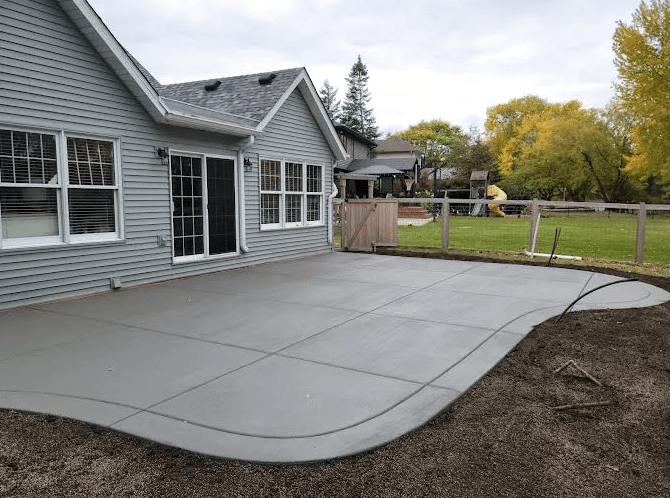
Patios give us more room to work with finish options. You might want a broom finish for slip resistance, or you might be interested in decorative concrete with stamped patterns or exposed aggregate. Either way, the slab preparation underneath is just as important as what goes on top. Mobile's humidity and heat affect how fast concrete sets, so we time our pours carefully and use the right finishing techniques to avoid surface defects. A vapor barrier polyethylene layer under the slab also helps manage moisture coming up from the ground, which is a real concern on properties near Dog River or in areas with a high water table.
Sidewalks and Walkways
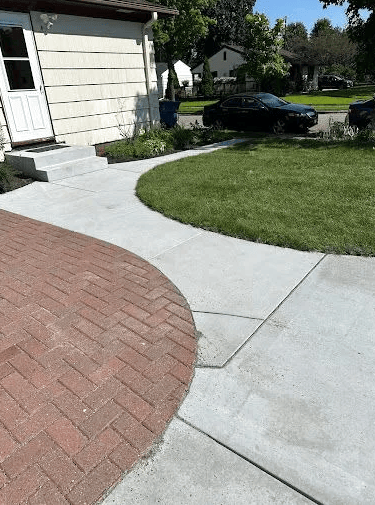
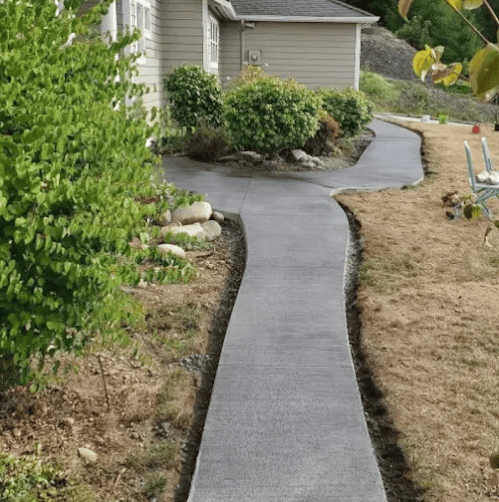
Sidewalks need to be safe, level, and durable. We handle everything from short connecting walkways to longer runs along properties in neighborhoods like Oakleigh Garden District and Cottage Hill. Surface leveling is done carefully so you do not end up with lips or dips that become trip hazards. For ADA-compliant work, we follow the correct slope requirements and finish specifications. Control joints are cut at the right intervals so the concrete can move slightly with temperature changes without cracking randomly across the surface.
Slabs for Sheds, Garages, and Additions
A slab for a detached garage or shed addition needs solid subgrade preparation before any concrete goes down. On many Mobile-area lots, we run into compressible fill or residual clay that has to be addressed before formwork installation begins. We compact the base, set forms with a form release agent for clean stripping, and place fiber mesh polypropylene or rebar depending on the load requirements. For garage slabs, a 4000 PSI mix with a low water-to-cement ratio gives you a surface that holds up under vehicle traffic and resists surface dusting over time.
Foundations and Load-Bearing Pours
Foundation work carries the most structural responsibility of any concrete project. We follow ACI 318 guidelines and use mix designs appropriate for Mobile's coastal environment, including mixes with Fly Ash Class F to reduce permeability and improve long-term strength. In areas with sulfate-bearing soils, we may specify Type V Sulfate Resistant Cement. Reinforcement placement and concrete cover are done to spec, and we use an internal vibrator during placement to eliminate voids. Curing processes are managed carefully after the pour because foundation concrete that cures too fast in summer heat can lose significant strength before it reaches its 28-day compressive strength target.
Every one of these project types involves work that has to meet local building requirements. That brings us to the permits, licensing, and code compliance side of what we do here in Mobile.
Permits, Licensing, and Code Compliance in Mobile
Concrete work in Mobile, AL is not just about pouring and finishing. There are rules, permits, and local codes that apply to most projects, and getting them right from the start protects you from fines, failed inspections, and costly rework. We have been working in Mobile for over 10 years, and we know exactly what the City of Mobile Building Inspection Department and Mobile County Inspection Services expect on a job like yours.
When a Permit Is Required for Concrete Work in Mobile, AL
Not every concrete job requires a permit, but many do. In general, if you are pouring a new driveway approach that connects to a city or county road, adding a foundation or structural slab, or building a patio that is attached to your home, a permit is likely required. Work in areas near Dog River, Three Mile Creek, or other flood-prone zones around Mobile Bay may also trigger additional review. We always check with the City of Mobile Planning and Zoning Department and Mobile County Inspection Services before work begins so nothing catches you off guard later.
How We Handle the Permit Process for You
We take care of pulling the permit on your behalf. That includes submitting the right documentation, coordinating any required inspections, and making sure slab preparation, formwork installation, and reinforcement are all ready for review before concrete is placed. If your project falls under City of Mobile Public Works Department guidelines, such as work along Airport Boulevard or Cottage Hill Road, we know what those submittals look like and how to move them through the process without delays holding up your schedule.
Our Licensing and Insurance as a Mobile Contractor
We carry an Alabama Contractor License and maintain general liability insurance and workers' compensation coverage on every job. Our crew holds certifications including ACI Flatwork Technician and OSHA 30 Construction. That means you are not taking on risk by hiring us. If something unexpected happens on your property during the pour, you are covered. We are also familiar with the standards that govern our work, including ACI 301 and ACI 302.1R, which set the guidelines for concrete placement and finishing on flatwork projects like yours.
Local Code Requirements That Affect Your Pour
Mobile's Gulf Coastal Plain geology brings real challenges. Expansive soil, high water table conditions, and hydric soil in low-lying areas near Fowl River or Eight Mile Creek mean your subgrade preparation has to meet a higher standard. Local codes often dictate minimum slab thickness, which is commonly a 4-inch slab thickness for residential flatwork and a 6-inch slab thickness for heavier loads. Reinforcement requirements such as #4 rebar at 18-inch OC or 6x6 W1.4xW1.4 welded wire reinforcement are also part of what we specify based on your soil conditions and intended use. Joint placement, slope for drainage, and concrete cover over rebar all factor into whether your project passes inspection the first time.
Understanding what goes into a code-compliant pour is also useful when you are weighing whether your existing concrete needs a full replacement or whether a repair or resurfacing approach could meet the same standard at a lower cost.
Repair and Resurfacing Versus Full Replacement
When your concrete starts showing wear, the first question is whether you need a full replacement or whether repair and resurfacing can do the job. We have seen both situations many times across Mobile, from older driveways in Spring Hill to patios near Dog River. The right answer depends on what is actually wrong with the slab, not just how it looks on the surface.
Signs That Repair or Resurfacing Is Enough
Surface-level problems are usually good candidates for repair or resurfacing. Shallow scaling, minor surface cracks, and worn finishing techniques that have dulled over time can often be addressed without tearing out the slab. If the concrete beneath is structurally sound and the slab preparation was done correctly the first time, a bonded overlay or resurfacer can extend the life of the slab by several years.
Hairline cracks that have not shifted or widened, small spalled areas, and surfaces that have lost their broom texture are common in Mobile's climate. The heat, humidity, and heavy rainfall we deal with here put real stress on concrete year after year. If the subgrade beneath the slab is stable and there is no sign of settlement or heave from the underlying soil, repair is a reasonable path forward.
When Full Replacement Is the Better Choice
There are situations where patching or resurfacing only delays the inevitable. If the slab has shifted, cracked through at multiple points, or settled unevenly due to Mobile Bay Clay or expansive soil movement underneath, the structural problem will not be fixed by a surface treatment. We have pulled up slabs across Midtown Mobile and Tillmans Corner where poor concrete reinforcement or missing vapor barriers allowed moisture from a high water table to weaken the slab from below over many years.
Full replacement is also the right call when the existing concrete does not meet current load requirements, when drainage has failed and water is pooling against foundations, or when the original mix did not reach adequate 28-day compressive strength. In those cases, resurfacing adds cost without solving the root problem.
Cost Comparison Between Repair and Replacement
Repair and resurfacing cost less upfront, but the gap narrows when the underlying issues are significant. A basic resurfacing job may run a fraction of a full pour, but if the work has to be redone within a few years because the base was not addressed, the total cost ends up higher. Full replacement with proper formwork installation, correct joint placement, and reinforced concrete poured to 4000 PSI or better costs more at the start and holds up far longer.
We always walk the site before recommending one over the other. That assessment drives an honest cost conversation, which brings us to what you can expect to pay and what factors move that number up or down.
What Things Cost and What Affects the Price
We know that price is one of the first things on your mind when you're planning a concrete project. Whether you're looking at a new driveway in Spring Hill, a backyard patio near Cottage Hill Road, or a foundation slab in Tillmans Corner, the total cost depends on several moving parts. We want to be straightforward with you about how we arrive at a number.
How We Break Down Labor, Materials, and Disposal
Every quote we give you includes three main categories: labor, materials, and disposal. Labor covers our crew's time for slab preparation, formwork installation, concrete pumping, placement, and finishing. Materials include the concrete mix itself, reinforcement like #4 rebar or welded wire reinforcement, vapor barriers, expansion joint filler, and any curing compound we apply after the pour. Disposal covers the cost of hauling off form lumber, leftover concrete washout, and any demo debris if we're replacing an existing slab. We source ready-mix from local suppliers including CEMEX and Vulcan Materials Mobile, and we use mixes that meet ASTM C94 standards and are suited to Mobile's coastal conditions.
Factors That Raise or Lower the Cost of Your Project
Several things affect what your project ends up costing. Slab thickness matters. A standard 4-inch slab costs less than a 6-inch slab with #5 bar at 12-inch OC for heavier loads. Site conditions play a role too. Mobile Bay Clay, expansive soil, and high water table areas common along Dog River and Three Mile Creek corridors may require additional base preparation or geotextile fabric before we can even begin formwork. Concrete pumping adds cost when a boom pump is needed to reach areas a truck can't access directly. The finish type also changes the price. A basic broom finish costs less than decorative concrete with stamped patterns or exposed aggregate. Finally, permits pulled through the City of Mobile Building Inspection Department carry their own fees, and we always include those in your quote so there are no surprises.
How to Get an Accurate Quote from Us
The most reliable way to get a solid number is to have us come out and look at your site in person. We'll check the subgrade, measure the area, talk through your finish preferences, and note anything that could affect the pour, including weather effects on concrete placement given Mobile's heat and humidity. We'll ask about your timeline, confirm what permits are needed, and give you a written breakdown covering all costs. With over 20 years of combined concrete experience and more than a decade working right here in Mobile, we've priced jobs across neighborhoods from Midtown Mobile to Eight Mile, and we know what honest, realistic numbers look like in this market.
Once you have a clear picture of the cost, the next step is seeing the quality of work behind those numbers. In the following section, we'll walk you through what our past projects in Mobile look like and what you can expect from start to finish when you work with us.
Our Work in Mobile and What to Expect
We have spent over 10 years working across Mobile, from driveways in Spring Hill and Cottage Hill to commercial slabs near Brookley Aeroplex and patios in the Oakleigh Garden District. That hands-on local experience matters because Mobile's Gulf Coastal Plain soils, including expansive clays and loose sandy soil near Dog River and Mobile Bay, behave differently than what you find inland. We know how to read a site, prep the subgrade, and choose the right mix before a single yard of concrete gets poured.
Photos and Examples of Past Jobs in the Mobile Area
We keep a current photo portfolio of completed work throughout Mobile County. You can see broom-finished driveways in Midtown Mobile, stamped decorative concrete patios in Stone Creek, and reinforced slabs along Airport Boulevard. If you want to see work that matches your project type and neighborhood, just ask. We are happy to share photos that reflect the finish, thickness, and site conditions closest to what you have in mind.
References from Local Homeowners and Businesses
We can connect you with past customers in areas like Tillmans Corner, Eight Mile, and Daphne Road Corridor who have agreed to speak about their experience working with us. These are real people whose driveways, patios, and slabs we poured. They can speak to how we handled slab preparation, joint placement, and cleanup, and how the finished surface has held up through multiple storm seasons.
Our Warranty and Quality Guarantee
Our work meets or exceeds ACI 301 and ACI 302.1R standards for flatwork. We use properly tested mixes, place concrete reinforcement to spec, time our control joints with a Diamond Blade Saw, and follow ACI 308 curing processes to protect the surface during Mobile's hot and humid summers. If a problem develops that traces back to our workmanship, we stand behind it. Before we leave your property, we walk the job with you, go over post-pour care, and make sure you understand what to expect as the concrete reaches its full 28-day compressive strength.
What the Project Timeline Looks Like from Start to Finish
Most residential projects move through a predictable sequence. We start with a site visit and estimate, then handle any needed permits through the City of Mobile Building Inspection Department. Formwork installation, subgrade compaction, and vapor barrier placement typically take one to two days depending on the size of the pour. The pour itself, including concrete pumping if access requires it, finishing, and initial joint placement, is usually completed in a single day. After that, curing processes take over. We apply a curing compound and give you a clear timeline for when the surface can handle foot traffic, vehicles, and full loads. That careful handoff sets the stage for what comes next in caring for your new concrete.
After the Pour: Care and Cleanup
How We Clean Up the Site When the Job Is Done
Once the concrete is placed and finished, we don't just pack up and leave. Cleanup is part of the job. We remove all formwork carefully to avoid chipping or disturbing the fresh edges. Leftover concrete, washout water, and any debris are contained and hauled off the property. We never allow washout to drain into a yard, storm drain, or anywhere near Dog River, Three Mile Creek, or other local waterways. Any temporary site protection we put down to protect your landscaping, driveway, or neighboring surfaces gets removed and the area is restored. Before we go, we walk the site with you so you can see exactly what was done and ask any questions you have.
Post-Pour Care Instructions for the First 30 Days
The first 30 days are when your new concrete surface builds most of its strength. We apply a quality curing compound right after finishing to slow moisture loss, which is especially important given Mobile's heat and humidity. Avoid walking on the surface for at least 24 to 48 hours, and keep vehicles off it for a full seven days. For slabs mixed to 4000 PSI, the 28-day compressive strength target won't be reached if the slab dries out too fast or gets overloaded too soon. Keep the surface clear of sharp tools, heavy equipment, and standing water during this window. The curing processes we use follow ACI 308 guidelines to give you the best result possible.
Long-Term Maintenance Tips for Your New Surface
Once your concrete has fully cured, routine care is straightforward. We recommend sealing the surface every two to three years using a quality concrete cure and seal product, which helps protect against Mobile's humidity, heavy rain, and the salt air that comes off Mobile Bay. Avoid using harsh deicing chemicals, especially in the first winter after the pour. Clean oil or fuel spills promptly to prevent staining. If you notice small cracks forming along a control joint, that's usually the joint doing its job. However, if you see wider cracks or settling, contact us before the problem grows. A surface that was poured and finished correctly, with proper concrete reinforcement and joint placement, should give you many years of low-maintenance use.
Ready to Get Started on Your Concrete Project in Mobile
Once the pour is done, the forms are pulled, and the surface has cured, you will have a finished product that is built to last. But getting to that point the right way takes planning, experience, and the kind of local knowledge that only comes from working in Mobile for years. That is exactly what we bring to every job.
Why Working with a Local Mobile Contractor Makes a Difference
We have poured and finished concrete all across Mobile County, from driveways in Spring Hill to slabs near the Oakleigh Garden District and patios off Cottage Hill Road. We know the soil conditions here, including Mobile Bay Clay, expansive subgrades, and areas with a high water table that can shift a slab if the base is not prepared correctly. We know when the heat and humidity on the Gulf Coast will affect your set time, and we adjust our mix and finishing schedule accordingly.
Here is what you get when you hire us for your concrete project in Mobile:
- Over 20 years of combined concrete experience and more than 10 years working right here in Mobile, AL
- Proper slab preparation and subgrade compaction suited to local soil conditions
- Correct concrete reinforcement placement, including rebar and wire mesh with proper cover to resist corrosion in coastal air
- Mix designs that hold up to Mobile's heat, heavy rain, and storm seasons, using quality materials from local suppliers
- Accurate joint placement and saw-cut timing to control cracking before it starts
- Finishing techniques matched to your surface needs, whether that is a broom finish, troweled surface, stamped pattern, or exposed aggregate
- Sound curing processes that protect your slab during the critical early days after the pour
- Concrete sealing options to protect your finished surface from staining, moisture, and wear
- Full permit handling through the City of Mobile Building Inspection Department so your project is code-compliant from start to finish
- Licensed, insured work that protects you and your property
- Thorough site cleanup and washout containment after every job
- References and photos from past projects across Mobile neighborhoods, available on request
- Honest cost breakdowns covering labor, materials, disposal, and permits with no hidden fees
- Long-term durability that saves you money compared to patching or replacing a poorly poured slab down the road
How to Reach Us and Get Started
Getting a quote from us is straightforward. We will talk through your project, take a look at the site, and give you a clear picture of what the work involves, what it will cost, and when we can get started. Whether you are planning a new driveway, a backyard patio, a foundation slab, or a sidewalk, we are ready to help you do it right the first time.
Call us directly or complete the quote form below to get your free estimate. We serve homeowners and property owners throughout Mobile County and surrounding areas, and we look forward to hearing about your project.
Mobile AL Concrete
202 Congress St
Mobile, AL 36603
Business Hours
| Mon | 7:00 AM – 10:00 PM |
| Tue | 7:00 AM – 10:00 PM |
| Wed | 7:00 AM – 10:00 PM |
| Thu | 7:00 AM – 10:00 PM |
| Fri | 7:00 AM – 10:00 PM |
| Sat | 7:00 AM – 10:00 PM |
| Sun | 7:00 AM – 10:00 PM |