Concrete Walkways & Sidewalks in Mobile
Mobile Concrete Walkway and Sidewalk Services
Service Area Coverage in Mobile, AL and Surrounding Communities
We provide concrete walkway and sidewalk services throughout Mobile, AL and the surrounding communities. Our crews work across Spring Hill, Midtown Mobile, the Oakleigh Garden District, Semmes, Saraland, Tillmans Corner, and many other areas in between. Whether your property sits just off Old Shell Road or out near Schillinger Road, we can get to you without a long wait. We also serve commercial properties near Government Boulevard, Airport Boulevard, and Downtown Mobile.
Common Walkway and Sidewalk Problems Mobile Property Owners Face
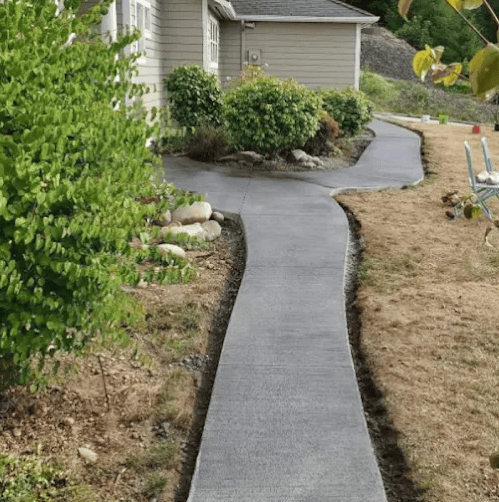
If you have cracked, sunken, or uneven concrete around your property, you already know the problem gets worse over time. What starts as a small crack or a slightly raised edge can quickly become a trip hazard, a drainage issue, or a costly repair. Sidewalk repair is one of the most common calls we get, and it usually comes after a small problem was left alone too long. We handle everything from patching and concrete resurfacing to full replacement when a section is beyond saving. We also install new concrete pathways from scratch, whether you need a simple front walkway or a longer route connecting buildings on a commercial property.
Local Knowledge: Mobile Soil, Weather, and Neighborhood Considerations
One thing that sets us apart is that we have spent over 10 years working right here in Mobile. We know this area's soil. Much of Mobile sits on expansive clay and silty clay, including Oktibbeha clay in some parts of the county, which shrinks and swells with moisture changes. That movement puts stress on concrete slabs over time. We account for that by properly compacting the subgrade, using the right base materials, and selecting a concrete mix suited for the conditions, often a 4000 psi mix with fiber mesh reinforcement and careful joint spacing. Mobile also gets heavy seasonal rainfall, and neighborhoods near Dog River, Three Mile Creek, and other low-lying areas need proper slope and drainage solutions built into every walkway. We factor all of that in before the first truck arrives. If you are in a historic district like Leinkauf or near a landmark corridor like Government Street, we also understand the aesthetic expectations that come with those areas, and we can match or complement the existing look with decorative finishes or perimeter edging that ties everything together.
Frequently Asked Questions from Mobile Homeowners and Business Owners
Most people want to know a few basic things before they call: How long will it take? How much will it cost? And why choose concrete for walkways instead of pavers, gravel, or wood? We answer all of that in detail throughout this page. Concrete is one of the most durable walkway materials available, and it holds up especially well against Mobile's humidity, salt air, and the kind of heavy foot traffic you see near schools, churches, and commercial properties. It also gives you flexibility in how it looks, with options like stamped concrete, colored finishes, exposed aggregate, and slip-resistant surfaces that meet ADA requirements. We carry our Alabama Contractor License and Mobile County Business License, and we handle permitting through the City of Mobile Building Permits Office when a project requires it. As you keep reading, we will walk you through exactly what falls under our walkway and sidewalk services so you know what to expect.
What We Mean by Concrete Walkways and Sidewalks
When people contact us about concrete pathways, they sometimes use the words walkway, sidewalk, and pathway to mean the same thing. In practice, there are small but useful differences. Understanding those differences helps us give you a more accurate quote and plan the right approach for your project.
Difference Between Walkways, Sidewalks, and Pathways
A sidewalk typically runs along a public street or road. In Mobile, sidewalks along streets like Government Boulevard or Old Shell Road are often subject to standards set by the Mobile Department of Public Works and must meet requirements such as a 2% maximum cross slope and ADA Standards for Accessible Design. A walkway generally refers to a paved surface on private property that connects two points, such as a front door to a driveway. A pathway is a broader term that can include either of those, and sometimes refers to a less formal route through a yard or garden. We work on all three.
Residential vs. Commercial Applications
On a residential property, concrete walkways are usually narrower and focus on function and curb appeal. Homeowners in neighborhoods like Spring Hill, the Oakleigh Garden District, or Cottage Hill often want a clean, durable walkway installation that also looks good from the street. On commercial properties, the priorities shift toward handling heavier foot traffic, meeting ADA ramp and detectable-warning requirements, and coordinating with the City of Mobile Building Permits Office for inspections. We have worked on both residential and commercial projects across Mobile County for over a decade, so we understand what each type of job requires.
Where Concrete Walkways Are Typically Installed on a Property
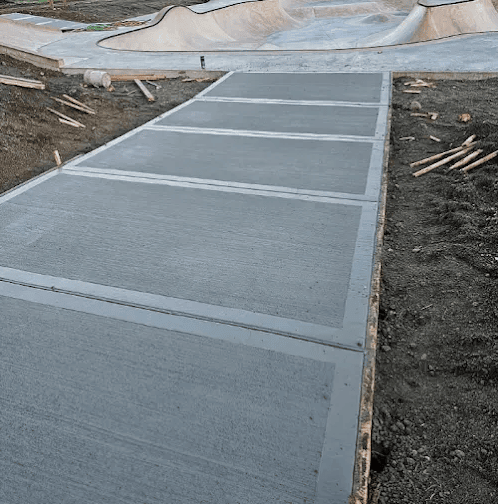
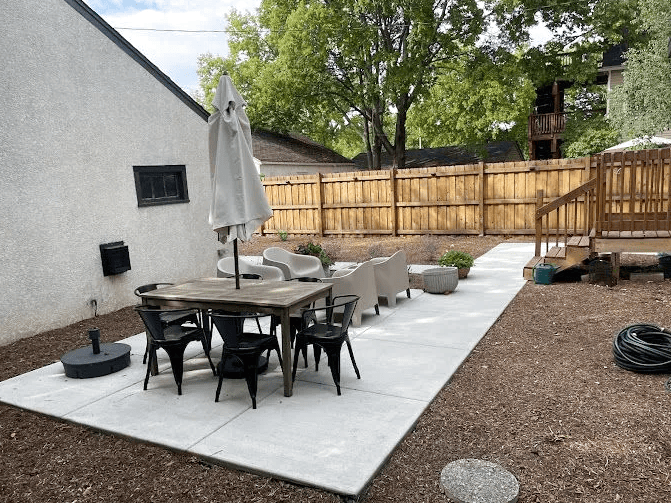
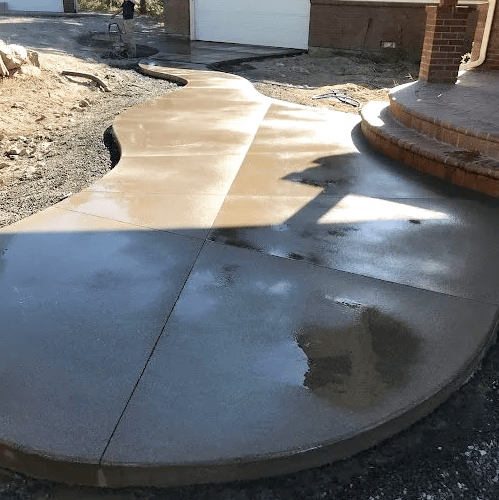
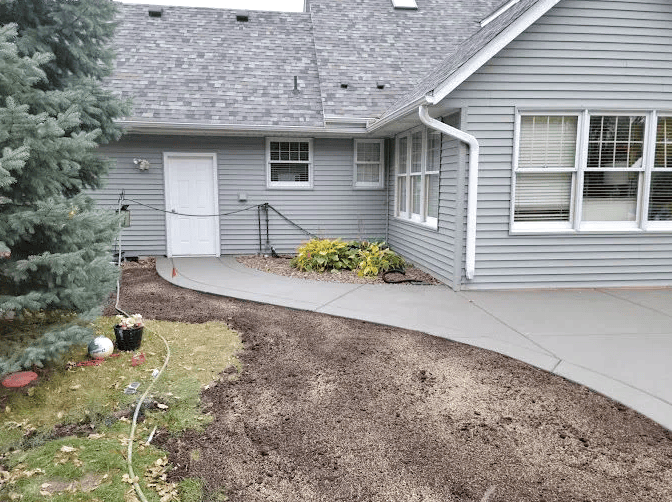
The most common locations we pour concrete on a residential property include the front entry walkway from the street or driveway to the front door, side-yard passages between a house and a fence, rear patio connections, and pool surrounds. On commercial properties, we commonly handle outdoor paving around building entrances, service corridors, and parking lot pedestrian crossings. In both cases, proper drainage solutions and subgrade preparation matter just as much as the finished surface. Mobile's expansive clay soils and heavy seasonal rainfall mean that a walkway poured without adequate base work is likely to settle or crack within a few years.
Whether you are dealing with a short front entry path or a long commercial corridor, the basics of good concrete work stay the same. And if you already have an existing walkway on your property, it may be showing signs that it needs attention sooner than you think.
Signs You Need a New or Repaired Walkway
After more than 20 years of pouring concrete and over a decade working specifically in Mobile, AL, we have seen walkways in just about every condition you can imagine. From Spring Hill to Semmes and along corridors like Old Shell Road and Cottage Hill Road, the signs of a failing walkway tend to look the same. The good news is that catching problems early usually means simpler, less expensive fixes. Here is what to watch for.
Cracks, Spalling, and Surface Deterioration
Small hairline cracks are common and do not always mean trouble. But when cracks grow wider than about a quarter inch, run in multiple directions, or start flaking and pitting at the surface, that is a different story. Mobile's heat, heavy seasonal rains, and coastal humidity accelerate surface breakdown. Concrete resurfacing can address shallow surface damage, but deeper cracks often signal a problem with the base underneath. We look at both the surface and what is below it before recommending a path forward.
Settling, Heaving, and Uneven Sections
Mobile sits on soils that include expansive clay and silty clay, particularly around areas near Three Mile Creek and Dog River. These soils shift and compress with changes in moisture, which causes concrete slabs to sink on one side or push upward on another. When sections no longer sit at the same level, you end up with gaps, lips, and joints that are completely out of alignment. That kind of movement is a structural issue, not just a cosmetic one, and it needs to be addressed at the subgrade level to stay fixed.
Trip Hazards and Liability Concerns
A vertical lip of just half an inch between two concrete sections is enough to catch a foot and cause a fall. For commercial properties or any walkway that sees regular foot traffic, that creates real liability exposure. We have worked alongside requirements set by the ADA Standards for Accessible Design and PROWAG on projects ranging from private driveways to commercial entrances near the Mobile Convention Center and Bishop State Community College. If your walkway has raised edges, sunken sections, or crumbling borders, it is worth getting it evaluated before someone gets hurt.
Drainage Problems and Water Pooling on Walkway Surfaces
Mobile averages over 60 inches of rain per year, which is well above the national average. Walkways that pool standing water are a problem in any city, but here it is a near-constant issue if the slope is wrong. A properly installed walkway should carry water away from your home or building at a cross slope of no more than 2%, keeping it off the surface and out of your foundation zone. We use a survey level and string line during every install to set accurate pitch. When we see pooling on an existing walkway, it usually means the original grade was off or the slab has shifted enough to reverse the intended slope. Either way, it does not fix itself, and sitting water speeds up the deterioration process significantly.
When Repair Makes Sense vs. Full Replacement
Not every damaged walkway needs to come out. Sidewalk repair works well when damage is limited to the surface, when cracks are isolated, or when only one or two sections have shifted. Concrete resurfacing can give an older walkway a fresh, durable finish without full removal. But when more than a third of the walkway is compromised, when the base has failed, or when repeated repairs have not held, replacement is usually the more cost-effective choice over time. We give you an honest assessment of both options, including what each will realistically cost and last, so you can decide what fits your property and your budget. That leads right into how we handle a full installation when that is the right call.
We've been pouring concrete in Mobile for over 10 years, and if there's one thing this Gulf Coast weather has taught us, it's that you have to stay ready for anything. A few years back, we were hired to install a new concrete walkway for a homeowner over in West Mobile. The job seemed straightforward at first. We had our materials staged, our forms set, and our crew ready to go bright and early on a Monday morning.
Then the rain came. And it kept coming. Anyone who lives in Mobile knows how fast the weather can turn on you, especially in the summer months. We had to pull back and wait it out, but that wasn't even the biggest problem we ran into. Once the rain cleared and we got back on site, we discovered that the soil underneath where the walkway was going to run had shifted and softened up more than we expected. The ground just wasn't stable enough to pour on top of without making some corrections first.
We knew that if we rushed ahead and poured anyway, that walkway would start cracking within a year or two. That wasn't something we were willing to put our name on. So we took the extra time to regrade the base, bring in proper fill material, and compact everything down the right way before we ever mixed a single bag of concrete.
The homeowner was patient with us, and we kept them updated every step of the way. When we finally finished the walkway, it came out level, solid, and built to hold up through whatever Mobile's weather decides to throw at it. That job is a good reminder of why doing things right from the ground up matters more than doing things fast.
Our Concrete Walkway and Sidewalk Installation Process
We follow a straightforward, step-by-step process on every walkway and sidewalk job we take on in Mobile. Whether you are in Spring Hill, the Oakleigh Garden District, or out in Semmes, the same care goes into each project. Here is what you can expect when you work with us.
Site Evaluation and Project Planning
Before any digging starts, we walk the site with you. We look at the existing grade, soil conditions, and how water moves across your property during Mobile's heavy rains. Our crews are familiar with the expansive clay and silty soils common throughout Mobile County, so we know what to watch for before we ever break ground. We also review any permit requirements with the City of Mobile Building Permits Office and confirm whether ADA Standards for Accessible Design apply to your project. From there, we put together a realistic plan covering layout, drainage, and finish options.
Grading, Excavation, and Soil Preparation
Good drainage solutions start with proper grading. We excavate to the correct depth and shape the subgrade so water moves away from your home or building rather than pooling near the foundation. We set a cross slope of no more than 2% where ADA compliance is needed, and we use a survey level and string line to keep everything accurate. If we find soft or compressible soil underneath, we address it before moving forward rather than burying a problem.
Base Material and Sub-base Compaction
A solid base is what separates a durable walkway from one that cracks and settles within a few years. We bring in crushed limestone and compact it in lifts using a plate compactor or jumping jack compactor depending on site conditions. This step matters especially in Mobile, where shrink-swell soils can shift with seasonal moisture changes. Skipping or rushing base compaction is one of the most common reasons sidewalks develop trip hazards over time.
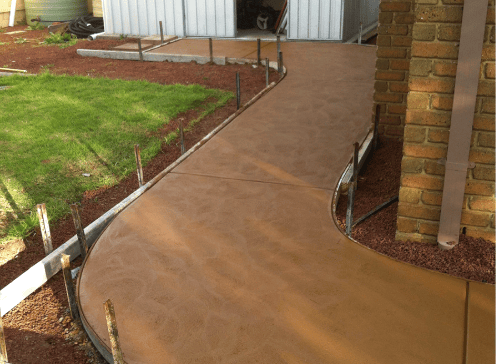
Forming, Pouring, and Finishing the Concrete
We set wood or steel forms carefully before the pour so edges stay clean and slab thickness stays consistent, typically a 4-inch slab thickness for pedestrian walkways or 6-inch where heavier loads are expected. We use concrete mixes meeting 3000 to 4000 psi compressive strength, sourced locally from suppliers like ReadyMix USA Mobile or CEMEX Mobile, and we choose the right admixtures for Mobile's humid coastal environment. Reinforcement with #4 rebar or fiber mesh reinforcement is placed before the pour based on the project design.
Once the concrete is placed and screeded, we finish the surface with a broom finish for a slip-resistant surface that holds up to foot traffic in wet conditions. If you have chosen stamped concrete or other decorative sidewalks options, that work happens during this stage as well. Control joints are cut at proper spacing to manage where cracking occurs naturally, keeping the concrete pathways looking clean for years.
Curing Time and What to Expect After the Pour
Curing is where a lot of the long-term strength comes from. We apply a concrete curing compound to slow moisture loss and help the slab reach its intended strength over the 7-day and 28-day cure periods. During this time, you should keep foot traffic off the fresh concrete. We will give you a clear timeline based on weather conditions and mix design. Mobile's heat and humidity can affect curing, so we plan pours around the forecast when possible.
Cleanup and Site Restoration After the Project
When the work is done, we clean up the site and restore disturbed areas around the new walkway. That includes removing forms, hauling off leftover debris, and cleaning concrete splatter from surrounding surfaces. We also look at the perimeter edging and transitions back into landscaping or existing outdoor paving to make sure everything looks finished. We take concrete maintenance seriously from day one, so before we leave we will walk you through how to care for the new surface, including when sealing makes sense for your situation.
Even with the best installation, older sidewalks and walkways across Mobile eventually show wear from heavy rains, shifting soils, and years of use. If you have an existing surface that is cracking, spalling, or becoming a safety concern, our concrete walkway repair services can help.

Concrete Walkway Repair Services
Over time, even well-built walkways in Mobile start showing wear. Between the heavy seasonal rains, the humidity off Mobile Bay, and the expansive clay soils common throughout areas like Spring Hill and Midtown Mobile, concrete takes a beating. We have been working on concrete pathways across Mobile for over 10 years, and we know what causes most of the problems homeowners and property managers run into. Whether you have a single crack or a section that has shifted enough to create a trip hazard, we can assess what is going on and give you a repair plan that actually holds up.
Crack Filling and Joint Repair
Small cracks and failing joints are worth addressing early. Left alone, water gets in, the subgrade softens, and the problem grows. Depending on the crack type and location, we use polyurethane joint sealant or epoxy filler to seal the opening and keep moisture out. For control joints that have deteriorated, we clean out the old material and repack with backer rod before sealing. This kind of concrete maintenance is straightforward but makes a real difference in how long your walkway lasts.
Grinding and Leveling Uneven Sections
When one slab panel rides higher than the next, it becomes a trip hazard fast. We use a concrete saw and grinding equipment to knock down raised edges and bring surfaces back into a safe, walkable plane. This approach works well when the underlying slab is still structurally sound and the height difference is manageable. It is a quicker fix than full replacement and keeps your curb appeal intact without a major project.
Mudjacking and Slab Lifting
Settled slabs are common in Mobile because of the silty clay and compressible soils found throughout much of the county. When a section has dropped but is not cracked through, mudjacking can bring it back up. We drill small holes through the slab and pump a slurry mixture underneath to fill voids and lift the concrete back to grade. It is a cost-effective option compared to tearing out and replacing a full section, and it addresses the void rather than just covering over the surface problem.
Resurfacing and Overlay Options for Worn Surfaces
When a walkway is structurally intact but the surface is worn, pitted, or showing spalling, concrete resurfacing is often the right call. We apply a bonded overlay that gives the slab a fresh surface without the cost of full removal. This is also a good time to change the look of the walkway. We can apply a broom finish for slip-resistant surfaces, or work in stamped concrete patterns and color to update the appearance entirely. Any overlay we place follows proper bonding and curing procedures so it does not delaminate down the road.
Once the existing walkways on your property are in good shape, the next consideration is often accessibility. Whether you need to meet city requirements or simply make your property easier to navigate, ADA-compliant sidewalks, ramps, and curb cuts are the logical next step.
ADA-Compliant Sidewalks, Ramps, and Curb Cuts
When a sidewalk or ramp does not meet accessibility standards, it creates real problems for property owners and real barriers for the people who use them. We have been pouring concrete across Mobile for over ten years, and ADA compliance is something we take seriously on every job, whether we are working on a small ramp in Spring Hill or a full sidewalk system near the Mobile Convention Center.
What ADA Compliance Means for Walkways and Sidewalks
The ADA Standards for Accessible Design and PROWAG set the rules for how walkways, ramps, and curb cuts must be built on both public and private properties. These standards cover surface texture, width, cross slope, and how the walkway connects to other surfaces. A 2% maximum cross slope is required on accessible routes, and we use a survey level and string line on every pour to confirm we hit that target. Getting these numbers right during the pour is far easier than fixing them after the concrete has cured.
Curb Cuts, Detectable Warning Surfaces, and Slope Requirements
Curb cuts need to be placed correctly, graded properly, and finished with detectable warning surfaces, the textured raised dome patterns you see at crosswalks. We follow the slope requirements under ADA and Alabama DOT Standard Specifications, keeping running slopes within allowable limits and making sure the transition from ramp to road is smooth and stable. On properties near areas like Bienville Square or along Government Boulevard, where foot traffic is heavy and public access is expected, getting these details right matters both for safety and for code.
Commercial Properties and ADA Accessibility Standards
Commercial property owners in Mobile face more scrutiny when it comes to accessible routes. Parking areas, building entrances, and connecting concrete pathways all need to work together as a system. We assess the full route from the public right-of-way to the building entrance and plan the layout so every section meets the standard. We also account for Mobile's soil conditions, including areas with expansive clay or silty subgrade, which can cause settling that throws off slopes over time. Proper subgrade preparation and a 4-inch or 6-inch slab thickness, depending on the load requirements, help keep the surface stable and compliant long after the pour.
How We Handle Compliance Documentation and Coordination
We manage the permit process through the City of Mobile Building Permits Office and coordinate with the Mobile Department of Public Works when work touches the public right-of-way. If inspections are required, we schedule and attend them. We keep records of the concrete mix used, including compressive strength and slope measurements, so you have documentation if questions come up later. Our crews hold Alabama Contractor Licenses and carry full insurance, so you are protected throughout the project.
Once the accessibility requirements are in place, many property owners want to think about how the rest of the walkway looks. Beyond compliance, there is a lot you can do with decorative sidewalks and surface treatments that add character to your property without sacrificing durability.
Mobile Concrete Work Done by Local Pros
We are a licensed and insured concrete contractor based right here in Mobile, AL. Our team has over 20 years of combined experience pouring and finishing concrete, and we have spent more than 10 years working specifically in the Mobile area. That means we know this region well, the soil conditions, the humidity, the coastal weather, and the local codes that affect how concrete work gets done here.
When you hire us, you are working directly with experienced tradespeople who have handled concrete projects of all sizes across Mobile County. We have poured driveways in Midtown, built patios in West Mobile, installed commercial slabs in the Port City area, and completed foundation work throughout the surrounding communities. This is our home too, and we take the quality of our work seriously because of that.
Concrete is not a forgiving material. If the subbase is not compacted properly, if the mix is wrong for the conditions, or if the joints are not placed correctly, you will see problems within a few years. Mobile's high humidity, heavy rainfall, and clay-heavy soils make those details even more important. We have seen what happens when those steps get skipped, and we do not skip them.
We carry full licensing and insurance so you are protected throughout the project. We also help you navigate permits and inspections when your project requires them, which takes that burden off your plate. Whether you are planning a new driveway, need a cracked slab repaired, or want to explore stamped or decorative options, we are straightforward with you about what the work involves, how long it will take, and what it will cost.
We offer free on-site estimates so we can look at your specific conditions before we give you a number. Concrete projects vary a lot depending on the site, and an honest estimate needs to account for your actual ground, your actual layout, and your actual goals.
Decorative Concrete Options for Walkways
When we pour decorative sidewalks and concrete pathways in Mobile, we give you more choices than plain gray slabs. The finish you pick affects how the surface looks, how safe it is underfoot, and how well it holds up in our humid Gulf Coast climate. Here is a rundown of what we offer.
Broom Finish and Standard Textures
A broom finish is the most common texture we apply to residential and commercial walkways. After we screed and float the surface, we drag a stiff broom across it while the concrete is still workable. That simple step creates slip-resistant surfaces that help prevent falls, especially during Mobile's frequent rain. It is clean-looking, easy to clean, and works well with nearly any property style along Spring Hill Avenue or throughout Semmes and Saraland.
Stamped Concrete Patterns and Designs
Stamped concrete lets us press patterns into fresh concrete to mimic stone, brick, slate, or wood. We use polyurethane stamping mats on a 4000 psi mix to hold sharp detail. This finish is popular in neighborhoods like the Oakleigh Garden District and Spring Hill, where curb appeal matters. One thing to keep in mind is that stamped surfaces need periodic sealing with an acrylic cure and seal product to protect the color and texture from Mobile's salt air and heavy rains.
Stained and Colored Concrete
Color can be blended directly into the concrete mix using integral pigments, or applied to the hardened surface as an acid stain or water-based stain. Integral color goes all the way through the slab, so minor chips or wear do not expose a plain gray core. Surface stains create a more varied, natural tone that works well for outdoor paving around patios and walkway transitions. Both options are available in a wide range of earth tones and custom shades.
Exposed Aggregate Finishes
With an exposed aggregate finish, we seed or use a mix containing decorative stone, then wash the surface before it fully sets to reveal the aggregate below. River pea gravel and crushed limestone are popular choices we source locally. The result is a textured, natural look that also provides good traction. This finish pairs well with landscaping design and holds up well against the UV exposure and moisture common across Mobile County.
Decorative Borders and Inlays
We can add perimeter edging in a contrasting color, texture, or pattern to frame a walkway and give it a finished, intentional look. Borders are saw-cut or formed into the slab and can combine a stamped edge with a broom-finished center, for example. Inlays use saw cuts filled with a contrasting material or grout line to divide sections of a large walkway visually. These details are especially effective on commercial properties near the Mobile Convention Center corridor or on larger residential lots in subdivisions like Wimbledon Estates.
No matter which finish you choose, the underlying slab preparation stays the same. We still address subgrade compaction, joint layout, and mix design before we ever think about the surface. That foundation matters even more here in Mobile, where expansive clay soils and high seasonal rainfall put real stress on concrete year after year. That brings us to how we handle drainage, grading, and soil conditions on every project we take on.
Drainage, Grading, and Soil Considerations in Mobile, AL
How Mobile's Clay-Heavy Soil and Heavy Rainfall Affect Walkways
Mobile gets more rainfall than most cities in the country, and the soil underneath your property plays a big role in how long a walkway lasts. Much of the area around Spring Hill, Semmes, and the Oakleigh Garden District sits on expansive clay or silty clay soils that absorb water and swell, then shrink back as they dry out. That constant movement puts stress on concrete from below. Without proper preparation of the subgrade and subbase, even a well-poured slab can settle, crack, or shift over time. We've been working in Mobile for over 10 years and have seen firsthand what these soil conditions do to walkways that weren't built with them in mind.
Proper Slope and Drainage Design to Protect Your Walkway
Getting the slope right is one of the most important parts of walkway installation. We set a cross slope of no more than 2% — which meets ADA Standards for Accessible Design — while still moving water away from your home or building. A correctly pitched surface keeps water from pooling on top of the concrete and reduces the pressure that builds up underneath when soil becomes saturated. We also pay close attention to where that water goes once it leaves the slab. Directing runoff toward drainage solutions like swales, catch basins, or landscaped areas keeps it from undermining the edges of your walkway or washing out the base material beneath it.
Erosion Control Measures We Use in Coastal and Low-Lying Areas
Properties near Dog River, Fowl River, and the lower-lying parts of Tillmans Corner and Eight Mile face extra challenges. Heavy rain events can erode the soil around and beneath a walkway quickly if the edges aren't properly finished. We use perimeter edging and compacted base layers to hold the surrounding soil in place. In areas with looser or more compressible soil, we may recommend a thicker slab — moving from a standard 4-inch slab thickness up to a 6-inch slab thickness — along with fiber mesh reinforcement or #4 rebar to add tensile strength. These steps work together to keep the concrete stable even when the ground around it takes on a lot of water.
All of this comes down to building a walkway that holds up to what Mobile's environment actually throws at it — and that starts with understanding the material you're pouring on top of.
Why Concrete Holds Up in Mobile's Climate
Mobile sits close to Mobile Bay and the Gulf Coast, which means high humidity, heavy seasonal rain, and salt air are part of everyday life here. We've been working in this area for over 10 years, and we know firsthand how those conditions break down materials that might hold up just fine somewhere else. Concrete, when it's mixed and finished correctly for this environment, tends to outlast the alternatives by a wide margin.
Humidity, Salt Air, and Coastal Weather Effects on Walkway Materials
Salt air speeds up the deterioration of wood, metal edging, and even some pavers. The moisture that comes with Mobile's climate works into surface gaps and joints, causing swelling, shifting, and cracking over time. Durable walkways in this region need to resist not just foot traffic but also the constant moisture cycle — wet seasons followed by drier stretches that cause materials to expand and contract. Concrete handles that cycle well when it's built with the right mix and proper joint spacing.
How Concrete Compares to Pavers, Gravel, and Wood in Mobile Conditions
Gravel shifts and washes out during the heavy rains that come through areas near Dog River and Three Mile Creek. Wood rots, warps, and becomes a slip hazard in humid conditions. Pavers can look great, but the sandy or silty clay soils common in Mobile cause them to settle unevenly over time, creating trip hazards and drainage solutions headaches. Concrete pathways stay put when the subgrade is prepared correctly. We compact the base thoroughly and use materials suited to the local soil conditions, including expansive clay common across many Mobile neighborhoods, to prevent the settling that causes problems down the road.
Concrete Mix and Finishing Choices Suited to the Gulf Coast Environment
Not every concrete mix works equally well here. We typically use mixes meeting at least 4000 psi compressive strength, and we keep the water-cement ratio at or below 0.45 to limit surface porosity. In coastal conditions, a lower water-cement ratio means less water can work into the slab and weaken it over time. We also use slip-resistant surfaces as a standard practice — a broom finish gives walkways the texture they need to stay safe when wet, which in Mobile is a regular concern. For projects where appearance matters, stamped concrete and other decorative sidewalk finishes can be done with the same durable mixes, so you don't have to give up looks to get longevity. After placement, we apply a concrete curing compound to control moisture loss during the 28-day cure period, which is especially important in Mobile's heat and humidity.
Sealing finished slabs with a sodium silicate sealer or reactive penetrating sealer adds another layer of protection against moisture and salt exposure. Combined with proper slope — we follow the 2% maximum cross slope standard — water moves away from your structure rather than pooling on the surface. These decisions, made during the planning and pour stages, are what determine how well a walkway holds up five or ten years from now. When we talk about concrete maintenance, a lot of it comes down to how well the original work was done. Getting the mix, the base, and the finish right from the start keeps long-term upkeep to a minimum. Before any of this work begins on your property, there are also permit and inspection requirements set by the City of Mobile that we handle as part of the process.
Permits, Inspections, and City of Mobile Requirements
Concrete walkway and sidewalk projects in Mobile involve more than just pouring concrete. Depending on the scope of work, you may need permits, inspections, and approval from local government offices before a single shovel hits the ground. We have been working in Mobile for over ten years, so we know what the City of Mobile Building Permits Office and the Mobile Department of Public Works expect and how to work within those requirements without slowing your project down.
When a Permit Is Required for Walkway or Sidewalk Work in Mobile
Not every concrete project requires a permit, but many do. New walkway installations, curb cuts, ADA-compliant ramps, and any work that touches the public right-of-way typically require approval through the City of Mobile Development Services or the Mobile County Building Department. Even some residential repairs can trigger a permit requirement depending on the size of the area and whether the work connects to city infrastructure. We review your project details upfront so you are not caught off guard later.
Working with Mobile City and Public Works Departments
Projects near streets, curbs, or drainage infrastructure along corridors like Government Boulevard, Airport Boulevard, or Old Shell Road often require coordination with the Mobile Department of Public Works or the City of Mobile Infrastructure Division. We communicate directly with those offices on your behalf. Mobile's soils, including areas with expansive clay and alluvial soil common near Dog River and Three Mile Creek, add extra importance to getting grading and drainage reviewed properly before work begins.
Right-of-Way Sidewalks and Municipal Code Requirements
Sidewalks that sit within the public right-of-way follow a different set of rules than private walkways. These projects must meet Alabama DOT Standard Specifications, ADA Standards for Accessible Design, and PROWAG guidelines. Requirements cover things like cross slope, which must stay at or below a 2% maximum, detectable warning surfaces at ramps, and proper joint spacing. Whether your project is near Bishop State Community College, in the Oakleigh Garden District, or along a commercial strip on Rangeline Road, we build to the code that applies to your specific location.
How We Handle the Permit and Inspection Process for You
We pull the permits, schedule the inspections, and keep you informed at each step. You do not need to navigate the Mobile County Permits and Inspections office or figure out which forms apply to your project. Once permits are approved, we coordinate work so inspections fall at the right stages, which keeps the project moving and avoids rework. Our Alabama Contractor License and Mobile County Business License mean we are already set up to work through the proper channels without delays.
Once your walkway passes final inspection, the focus shifts to protecting that investment over time. The right sealer, proper joint maintenance, and a simple care routine can keep your concrete looking and performing well for decades.
Warranties, Sealing, and Long-Term Maintenance
Once your walkway is in place, a few straightforward steps can keep it looking good and holding up for decades. We believe that good concrete maintenance starts with honest information, so here is what you can expect from us after the work is done.
What Our Workmanship Warranty Covers
We stand behind our work with a written workmanship warranty. It covers defects that result from how the concrete was placed, finished, or cured. That includes issues like surface delamination, premature cracking from improper joint placement, and uneven settling tied to base preparation. It does not cover damage from tree root intrusion, vehicle overloading, or acts of nature. If something does not look right and it points back to how we built it, we will come out and make it right.
Concrete Sealing to Protect Against Moisture and Staining
Mobile's humidity, heavy seasonal rains, and salt air coming off Mobile Bay are hard on exposed concrete surfaces. Sealing is one of the most effective things you can do to extend the life of your walkway. We typically apply a lithium silicate densifier or an acrylic cure and seal product, depending on the surface type and finish. For decorative sidewalks and stamped concrete, a quality acrylic sealer also helps preserve color and texture. We recommend resealing every two to three years, depending on foot traffic and sun exposure.
Expansion Joint Maintenance and When to Refill Them
Control and expansion joints are built into your walkway on purpose. They give the concrete room to move slightly as temperatures shift and soil moisture changes. Over time, the filler material in those joints can dry out, crack, or pull away from the edges. When that happens, water gets in, and in areas with expansive clay soils like those common around Spring Hill and Semmes, that moisture can cause the subgrade to shift. We use polyurethane joint sealant or backer rod and sealant combinations that hold up well in our climate. A good rule of thumb is to inspect your joints every year and plan on refilling them every five to seven years or sooner if you see gaps or crumbling.
Simple Cleaning and Care Tips to Extend Walkway Life
You do not need special equipment to keep your walkway in good shape. A garden hose and a stiff brush handle most everyday dirt and mildew, which builds up quickly in Mobile's humid environment. For heavier buildup, a low-pressure wash works well. Avoid using metal tools to chip away at stains or debris because surface scratches can trap moisture over time. Keep mulch and soil pulled back from the edges, since organic matter holds moisture against the concrete and speeds up surface wear. If you notice a small crack developing, it is better to address it early with a quality filler than to let water work its way in and widen it over time.
Keeping up with these basics does not take much time, and it goes a long way toward protecting your investment. When you are ready to get started or want to talk through a project, the next step is knowing exactly what working with us looks like from the first call to the finished surface.
What to Expect When You Work With Us
We know hiring a contractor can feel uncertain, especially when you're not sure what questions to ask or what a fair process looks like. Over our 20-plus years of combined concrete experience and more than a decade working specifically in Mobile, AL, we've worked to make things straightforward for you from the first call to the final walkthrough.
Our Licensing, Insurance, and Bonding in Mobile, AL
We hold an Alabama Contractor License and a Mobile County Business License, and we carry full liability insurance and bonding. That means if something unexpected happens on your property during the job, you're protected. It also means we're accountable to state and local standards, not just our own word. If you're comparing contractors, it's worth asking each one to show proof of all three before any work begins.
How We Handle Estimates and Project Timelines
We start with a free on-site estimate. We look at the area, check the existing subgrade conditions, note any drainage concerns, and measure accurately before we give you a number. Mobile's soils, including expansive clay and silty fill common near areas like Dog River or low-lying parts of Tillmans Corner, can affect how much base prep your project needs. We factor that in upfront so there are no surprises later. After we talk through the scope, we give you a written estimate with a realistic timeline. Most residential walkway installation and sidewalk repair projects run between one and three days, though larger jobs or those requiring permits through the City of Mobile Building Permits Office may take longer to schedule and complete.
What the Job Site Looks Like From Start to Finish
We show up with the right crew and equipment for the job, including plate compactors for base preparation, concrete vibrators for proper consolidation, and finishing tools for smooth, slip-resistant surfaces. We handle subgrade compaction, form setting, reinforcement placement, and concrete placement in a planned sequence. We use mixes appropriate for Mobile's humid coastal climate, typically a 4000 psi compressive strength mix with a controlled water-cement ratio to resist moisture and wear over time. Control joints are cut at proper spacing to manage cracking, and we apply a concrete curing compound to protect the surface during the 28-day cure period. Once the work is done, we clean up the site and walk through the finished area with you before we leave.
Payment Options and How to Get Started
We accept standard payment methods and are happy to discuss a payment schedule that works with your project size. We typically ask for a deposit to secure your start date, with the balance due upon completion. To get started, just reach out by phone or through our contact form. We'll set up a time to come out, take a look, and get you a written estimate with no obligation.
Whether you're in Spring Hill, Semmes, or anywhere across the Mobile area, we're ready to talk through your project and help you figure out the best path forward. From there, our conclusion will bring everything together so you know exactly where things stand.
Ready to Get Started on Your Concrete Walkway or Sidewalk in Mobile, AL
Now that you know what working with us looks like from start to finish, it is easy to see why so many homeowners and property owners across Mobile trust us with their concrete projects. From Spring Hill to Semmes, and from the Oakleigh Garden District to Tillmans Corner, we have been pouring concrete in this area for over a decade, and we bring more than 20 years of combined hands-on experience to every job we take on.
Walkway and Sidewalk Services We Offer in Mobile, AL
We handle a wide range of concrete work for both residential and commercial properties throughout the Mobile area. Here is a quick look at what we can do for you:
- New walkway installation and concrete pathways for front yards, backyards, and commercial entrances
- Sidewalk repair for cracks, spalling, settling, and trip hazards
- Full sidewalk replacement when patching is no longer the right call
- Concrete resurfacing to restore worn or damaged surfaces without a full tear-out
- Decorative sidewalks using stamped concrete, stained finishes, exposed aggregate, and colored concrete
- Slip-resistant surfaces finished with broom textures or non-slip treatments
- ADA-compliant ramps and curb cuts that meet PROWAG and ADA Standards for Accessible Design
- Drainage solutions and proper slope grading to protect your property from Mobile's heavy seasonal rains
- Permit coordination with the City of Mobile Building Permits Office and Mobile Department of Public Works
- Perimeter edging and tie-ins to existing concrete, curbs, and landscaping
- Concrete sealing and joint maintenance as part of ongoing concrete maintenance after installation
We use proven materials and proper mix designs suited for Mobile's humid coastal climate, including mixes that resist moisture, salt air, and the expansive clay soils common throughout the area. Our work is backed by our Alabama Contractor License, full insurance coverage, and a workmanship warranty you can count on.
How to Reach Us for a Free Estimate
When you choose us, you get a local crew that knows Mobile's soil conditions, weather patterns, and code requirements. We show up on time, communicate clearly, and leave your property clean when the job is done. Here is what sets us apart:
- Over 20 years of combined concrete experience and over 10 years working right here in Mobile
- Proper subgrade prep, reinforcement, and curing for durable walkways that hold up long-term
- Accurate cost estimates with no surprise charges
- Local knowledge of Mobile's soils, drainage patterns, and permit process
- Fully licensed, insured, and bonded for your protection
- Customizable finishes that improve curb appeal and add real value to your property
- Honest timelines and consistent communication from first contact to final walkthrough
Getting started is simple. Fill out the free quote form below or give us a call today, and we will get back to you quickly to talk through your project and set up a time to take a look at your property.
Mobile AL Concrete
202 Congress St
Mobile, AL 36603
Business Hours
| Mon | 7:00 AM – 10:00 PM |
| Tue | 7:00 AM – 10:00 PM |
| Wed | 7:00 AM – 10:00 PM |
| Thu | 7:00 AM – 10:00 PM |
| Fri | 7:00 AM – 10:00 PM |
| Sat | 7:00 AM – 10:00 PM |
| Sun | 7:00 AM – 10:00 PM |