Industrial Concrete Services in Mobile
Industrial Concrete Services for Mobile Facilities
Who We Serve and Where We Work in Mobile, AL
We provide industrial concrete solutions to facilities throughout Mobile, AL and the surrounding region, including areas near the Port of Mobile, Brookley Aeroplex, and the Cooper Riverside Park Industrial Area. Whether your site sits along the Mobile River corridor, out toward the Schillinger Road Corridor, or anywhere in between, we are available to assess, plan, and complete your project. Our crews are familiar with the full stretch of industrial zones across Mobile County and can mobilize quickly to keep your schedule on track.
Industrial facilities put concrete through a lot. Forklifts, heavy trucks, chemical spills, and constant foot traffic wear down surfaces faster than most owners expect. When a slab starts to crack, settle, or flake, it does not just look bad. It creates safety risks, interrupts operations, and leads to repair costs that add up quickly. We have seen facilities along Airport Boulevard and out near Moffett Road deal with slabs that were simply not built for the loads they carry. If that sounds familiar, you are in the right place.
Mobile's coastal environment adds another layer of difficulty. Salt air from Mobile Bay speeds up corrosion in reinforcement steel. The local soil, including Mobile Bay Clay and other coastal plain sediments common throughout the area, can shift under load if the subgrade is not properly prepared and compacted. We have spent over 10 years working specifically in Mobile, AL, and we factor all of this into every pour we plan.
The Real Challenges Industrial Facilities Face with Concrete
People often ask what does industrial concrete work include, and the honest answer is quite a bit more than a standard pour. It covers everything from industrial site preparation and subgrade compaction to placing reinforced slabs, finishing floors to precise flatness tolerances, applying chemical-resistant coatings, and cutting control joints in the right locations. It also includes loading dock aprons, foundation work, and pavement designed to carry repeated heavy loads without failing early.
The biggest problems we see at industrial sites in Mobile come down to a few common mistakes. Slabs poured without proper concrete reinforcement, whether that means missing rebar, undersized wire mesh, or no dowel bars at joints, tend to crack and shift under load. Floors that were not finished to a consistent flatness cause problems for forklifts and automated equipment. And in Mobile's humidity and heat, slabs that were not cured long enough never reach their design strength. A 28-day cure matters, and shortcuts show up years later in the form of surface dusting, scaling, and early joint deterioration.
Chemical exposure is another issue that gets underestimated. Facilities near the Alabama State Docks or Austal USA Shipyard deal with oils, fuels, and saltwater contact that standard concrete simply cannot handle long term without the right surface treatment. We specify mixes and coatings based on what your floor will actually face, not just what is easiest to pour.
Why Local Knowledge of Mobile, AL Matters for Industrial Concrete Work
Working in Mobile means understanding conditions that contractors from outside the area often miss. The high water table in many parts of the city, especially near the Mobile River and Dog River drainage basins, means vapor barriers and proper moisture mitigation are not optional. Soft subgrade and organic fill show up in unexpected places, particularly in older industrial zones near Downtown Mobile and Africatown. Without a GPR scanner and a soil evaluation before you dig, you can end up with a slab that settles unevenly within the first year.
We source materials locally through suppliers including CEMEX Mobile Plant and Vulcan Materials Mobile, which keeps lead times short and mix consistency reliable. We also coordinate directly with the City of Mobile Building Inspection Department and the Mobile County Building Permits Office to handle permitting and inspections, so you are not left chasing paperwork. Our familiarity with the Alabama Building Code and OSHA 1926 Subpart Q means we build projects that pass inspection and hold up under review.
Our team holds ACI Certification and follows ACI 301 and ACI 302.1R standards for industrial floor systems. We carry full licensing, bonding, and workers' compensation coverage for commercial and industrial work in Mobile. Every project we take on is backed by more than 20 years of combined concrete experience and a decade of working specifically in this market.
Frequently Asked Questions About Industrial Concrete Services in Mobile, AL
What types of industrial facilities do you work with? We work with warehouses, manufacturing plants, distribution centers, marine and shipyard facilities, and sites near active port operations. If your facility requires heavy-duty concrete pavement, reinforced foundations, loading dock construction, or industrial floor systems, we can help.
How do you handle Mobile's coastal climate in your concrete mixes? We use mixes that include materials like Silica Fume and Fly Ash to improve density and reduce permeability. For reinforced slabs near salt air exposure, we specify corrosion-resistant coatings and ensure adequate cover over the rebar. A 0.45 water-cement ratio or lower is standard for us in coastal conditions.
Do you offer phased scheduling to limit downtime? Yes. We plan pours in sections so parts of your facility can stay operational while work continues in other areas. We coordinate with your team to build a schedule that fits your production needs.
Can you handle repairs as well as new construction? We offer concrete repair services and concrete remediation for existing slabs, including joint repair, surface resurfacing, and crack repair using epoxy crack injection or polyurethane foam injection depending on the condition.
With foundations covered next, we can walk through exactly how we approach the structural base that everything else in your facility depends on.
Industrial Concrete Foundations
What Makes an Industrial Foundation Different from a Residential One
Residential foundations carry relatively light loads. An industrial foundation is a different animal entirely. Warehouses, manufacturing plants, and marine facilities near the Port of Mobile or Brookley Aeroplex put enormous stress on the ground below them. We are talking about concentrated loads from heavy machinery, storage racks, forklifts, and overhead cranes that can weigh tens of thousands of pounds. A residential slab simply is not designed for that. Industrial foundations require engineered mix designs, often reaching 5000 PSI compressive strength, along with deeper footings, heavier reinforcement, and precise joint layouts. As commercial concrete contractors with over 20 years of combined experience, we design every foundation around the specific loads it will carry and the soil beneath it.
Types of Foundations We Pour for Warehouses, Plants, and Industrial Facilities
We pour spread footings, continuous wall footings, grade beams, and mat foundations depending on what the building and its use require. Mat foundations are common for heavy industrial facilities because they spread load across a wide area, which is important on softer Mobile soils. For facilities along the Mobile River corridor or near Austal USA Shipyard, we also handle pile cap foundations that tie into deep pilings where bearing capacity near the surface is limited. Each foundation type calls for proper concrete formwork services, accurate placement of dowel bars, and compliance with ACI 318 and the Alabama Building Code.
Soil Conditions in Mobile, AL and How They Affect Foundation Design
Mobile sits on Coastal Plain Sediment with pockets of Mobile Bay Clay, expansive clay, alluvial deposits, and areas with a high water table. These conditions can cause differential settlement, slab pump-up, and long-term cracking if the subgrade is not properly prepared. As part of our industrial site preparation process, we evaluate CBR values, remove organic fill, and bring in compactable granular fill with geotextile fabric where the native soil is too weak. We work closely with local engineers and reference reports from firms like Thompson Engineering Mobile to make sure the subgrade meets the design requirements before a single yard of concrete is poured.
Reinforcement Methods We Use: Rebar, Wire Mesh, and Post-Tension
Proper concrete reinforcement is what separates a foundation that lasts decades from one that fails under load. For most industrial foundations, we use Rebar Grade 60, often placed at #5 rebar at 12-inch OC in both directions, with 3-inch cover to protect against corrosion in Mobile's salt air environment. In some cases, welded wire reinforcement is appropriate for lighter sections. For large mat slabs and certain industrial floor systems, post-tension cables offer a way to control cracking and reduce slab thickness without sacrificing strength. We select the reinforcement method based on load requirements, soil conditions, and the long-term performance the facility needs. That foundation work sets the stage for everything that sits on top of it, including the heavy-duty industrial slabs we pour above grade.
Heavy-Duty Industrial Slabs
What Sets a Heavy-Duty Slab Apart from Standard Concrete Work
A standard residential or light commercial slab is not built to handle the demands of a warehouse, manufacturing plant, or distribution facility. When you have forklifts, loaded pallet jacks, and heavy storage racks moving across a floor every day, the slab underneath needs to be engineered from the ground up. We design industrial concrete solutions that account for load distribution, subgrade conditions, reinforcement placement, and long-term durability. In Mobile, that also means factoring in the coastal plain sediments, high water tables, and expansive clay soils common across the area. Soft subgrade near zones like the Brookley Aeroplex or along corridors off Moffett Road can shift under heavy loads if the base is not properly prepared and compacted first.
High-Strength Concrete Mixes for Industrial Load Requirements
We typically specify 5000 PSI compressive strength concrete for heavy industrial floors, using mixes that include silica fume, fly ash, or slag cement to improve density and reduce permeability. In Mobile's humid, salt-air environment, reducing permeability is not optional. Corrosion-resistant admixtures and a low water-cement ratio help protect Rebar Grade 60 and welded wire reinforcement from the moisture exposure common near the Port of Mobile and Mobile Bay. Our mixes follow ASTM C94 and ASTM C150 standards, and we verify concrete quality on-site with slump tests, temperature checks, and cylinder breaks per ASTM C39 and ASTM C143. Slab thickness typically runs 8 to 10 inches for industrial applications, with concrete reinforcement laid to specification rather than guessed at.
Flatness and Levelness Standards for Forklifts and Automated Equipment
Floor flatness and levelness directly affect how safely and efficiently your equipment operates. We use a Somero laser screed to achieve FF 50 floor flatness and FL 35 floor levelness or better, which matters when you are running narrow-aisle forklifts or automated conveyor systems. After placement, ride-on power trowels bring the surface to a dense, hard finish. We verify results using a floor flatness dipstick and profilograph readings. This level of precision during concrete flooring installation protects your equipment and your workers.
Vapor Barriers, Drainage Integration, and Moisture Control
Mobile's high water table creates real moisture pressure beneath slabs. We install vapor barriers under every industrial floor and test moisture levels before applying any coatings or densifiers. Sodium silicate or lithium silicate densifiers are applied after finishing to close the surface and resist dusting and abrasion. Proper slope, drain placement, and expansion joint layout are built into the design before the first yard of concrete is poured. We also use polyurea joint filler at saw-cut joints to protect edges from spalling under rolling loads. This attention to drainage and moisture control carries directly into the way we approach loading docks and aprons, where the transition between interior and exterior slabs brings its own set of demands.
A few years back, we took on a big industrial project for a manufacturing facility over near the Port of Mobile. The client needed a heavy-duty concrete floor that could handle constant forklift traffic and the weight of large industrial equipment. It seemed straightforward at first, but things got complicated fast.
Right after we finished the pour, a storm system pushed in from the Gulf and dropped temperatures overnight by nearly 20 degrees. If you know anything about concrete, you know that a sudden temperature drop during the curing process is bad news. The concrete needed to cure slowly and evenly, but the cold was working against us at every turn.
We had to act quickly. Our crew covered the entire slab with insulated curing blankets and brought in heating equipment to keep the surface temperature stable. We stayed on site through the night taking temperature readings every hour to make sure we were staying within the safe range. It was a long night, and the work was not easy, but we knew that cutting corners at that stage would mean a weakened slab that could crack or fail under the heavy loads this facility was going to put on it.
When we pulled back the blankets the next morning, the slab had cured properly. We tested it, and it met every strength requirement the client needed. That project taught us a lot about the unpredictable weather we deal with here in Mobile, and it reinforced why having over 20 years of concrete experience really matters when things do not go according to plan. You deserve a crew that knows how to handle the unexpected, and that is exactly what we bring to every job.
Loading Docks and Aprons
Why Loading Docks and Aprons Need Specialized Concrete Work
Loading docks and aprons take a beating every single day. Heavy trucks roll in and out, forklifts cross the transition point constantly, and the edges of the dock slab absorb repeated impact from trailer levelers and wheel loads. Standard residential or light commercial concrete simply is not built for this kind of stress. We have worked on facilities near the Port of Mobile and along the Brookley Aeroplex corridor long enough to know that cutting corners here leads to cracked edges, spalled aprons, and unplanned downtime within just a few years. Mobile's coastal humidity and salt air also accelerate deterioration in concrete that was not designed for the environment. Getting the mix, the reinforcement, and the jointing right from the start is what separates a dock that lasts decades from one that needs repairs every other year.
Design Considerations for Heavy Truck Traffic and Constant Impact
A loading dock apron has to handle the full weight of loaded semi-trucks while also resisting the dynamic impact of braking and turning. We typically design these slabs to at least 5000 PSI compressive strength, and in heavier-use situations we may increase slab thickness to 10 inches or more. The subgrade beneath the apron matters just as much as the concrete itself. Mobile sits on coastal plain soils, and in many areas around the city you are dealing with soft or cohesive subgrade that compresses under load. We test CBR values, bring in compactable granular fill where needed, and lay geotextile fabric to stabilize the base before a single yard of concrete goes down. Proper industrial site preparation at this stage prevents the differential settlement that causes dock aprons to tilt, crack, and create trip hazards. We also use a boom pump or concrete pump truck to place concrete accurately in tight dock areas without overworking the mix.
Reinforcement and Joint Placement for Dock Edges and Transitions
The dock edge is the most vulnerable spot in the entire slab. That is where trailer impact concentrates, and it is where we see the most damage on poorly built docks. We use Rebar Grade 60 with careful attention to cover depth, along with dowel bars at slab transitions to allow movement without cracking or edge breakout. Joint layout follows ACI guidelines so that saw cuts land where they are least likely to affect operations. We use a diamond blade saw for precise cutting, and joints are filled with polyurea joint filler to keep debris and water from working their way in. For docks near the waterfront or anywhere salt air exposure is a concern, we factor in corrosion-resistant reinforcement detailing and mix designs that include silica fume or fly ash to tighten the concrete matrix.
Slip-Resistant Finishes and Drainage Slopes for Safe Dock Operations
A wet dock apron with no texture is a safety problem. We broom-finish or exposed-aggregate finish dock surfaces to give workers and equipment solid traction even in rain, which is a regular occurrence here in Mobile. Drainage slope is built into the design so water moves away from the building and away from the dock transition. We follow OSHA 1926 Subpart Q requirements and work to meet the standards set by the City of Mobile Building Inspection Department on every permitted project. Where extra chemical resistance is needed, a polyurea coating or epoxy system can go over the finished slab surface. Getting the finish and slope right on the dock apron connects directly to how the entire floor system inside the facility needs to be designed and treated.
Industrial Floor Systems and Surface Treatments
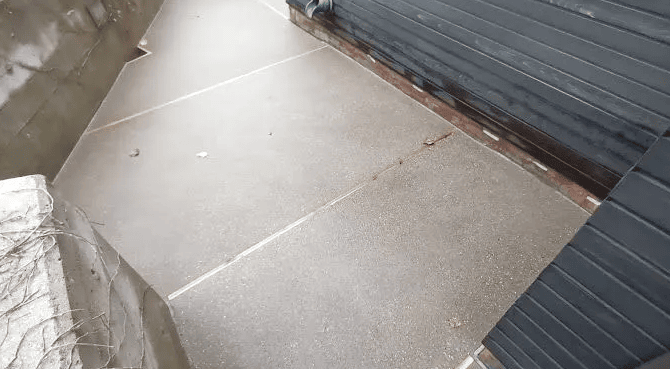
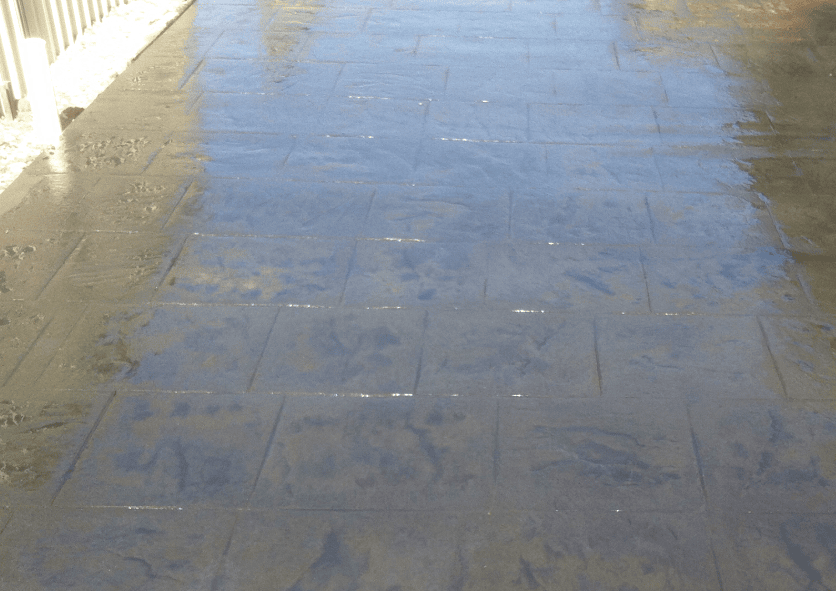
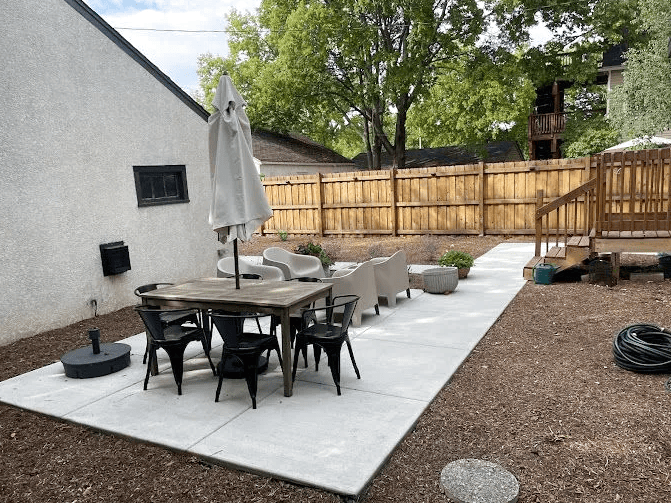
Getting the surface right on an industrial floor is just as important as what goes underneath it. We work with facilities across Mobile, from the Brookley Aeroplex area to industrial corridors along Airport Boulevard and Moffett Road, and we know that the wrong finish can lead to dusting, chemical damage, or surface breakdown long before the slab itself gives out. Our industrial concrete solutions include the full range of surface systems, from basic burnished finishes to high-performance coatings, all matched to what your operation actually puts a floor through.
Power Trowel Finishing for Dense, Durable Industrial Floor Surfaces
A ride-on power trowel closes the surface of a concrete slab by densifying the paste layer and driving out bleed water. The result is a harder, tighter surface that resists abrasion from forklifts, pallet jacks, and foot traffic. For large warehouse pours, we use ride-on trowels from Multiquip to cover ground efficiently and produce consistent results across the entire slab. Timing the trowel passes correctly is critical. Too early and you trap bleed water, weakening the surface. Too late and the window closes. With over 20 years of combined experience, our crews know how to read the concrete and hit those passes right. On slabs calling for FF 50 floor flatness standards, we also use a laser screed during placement to set the baseline before troweling begins.
Chemical Hardeners and Densifiers for Abrasion Resistance
After troweling, many industrial floors benefit from a penetrating chemical treatment. Lithium silicate densifiers, such as products from Euclid Chemical or Sika, react with the free lime in concrete to form additional calcium silicate hydrate. That reaction fills microscopic pores, hardens the surface, and reduces dusting. For facilities handling heavy rolling loads or abrasive materials, this step adds measurable service life without changing how the floor looks or feels underfoot. We apply densifiers after a proper 28-day cure when possible, giving the concrete time to develop its full strength before treatment.
Epoxy and Urethane Coatings for Chemical, Oil, and Stain Resistance
Some operations need more than a hardened surface. Processing facilities, automotive service areas, and distribution centers dealing with fuel, hydraulic fluid, or cleaning chemicals often require a coating system that seals the slab and resists penetration. Epoxy coatings bond well to properly prepared concrete and provide a tough, chemical-resistant layer. Polyurea coatings offer faster cure times and good flexibility, which matters in Mobile's climate where temperature swings can stress a rigid film. Before any coating goes down, we prep the surface using a shot blaster or scarifier to open the profile, then verify moisture levels. A coating applied over a damp slab will fail early, which is a common and costly mistake. We also fill cracks with epoxy crack injection or polyurea joint filler before coating so the system goes down over a sound substrate. Surface systems from BASF Master Builders and Mapei are among the products we work with regularly on concrete flooring installation projects across Mobile County.
Choosing the Right Surface System for Your Facility's Specific Operations
Not every facility needs an epoxy coating, and not every floor needs a densifier. The right system depends on what you are actually doing in the space. A dry storage warehouse with standard forklift traffic has different needs than a food processing plant or a port-adjacent facility handling corrosive cargo. We look at your load types, chemical exposure, drainage requirements, and cleaning methods before recommending anything. For facilities near the Port of Mobile or along the Mobile River corridor, salt air and humidity are real factors that affect how coatings bond and how long they last. That brings us directly into how we approach coastal conditions when designing and finishing industrial concrete in this region.
Coastal and Marine Considerations for Mobile, AL
Working near Mobile Bay and along the waterfront means dealing with conditions that most inland contractors never face. Salt air, high humidity, and occasional flooding put industrial concrete under constant stress. We have spent over 10 years working in Mobile, and we understand how the local environment shortens the life of concrete that was not built with these conditions in mind. Whether your facility sits near the Alabama State Docks, the Austal USA Shipyard, or along the Cooper Riverside Park Industrial Area, the coastal environment is something we account for from the very start of planning.
How Salt Air and Humidity Affect Industrial Concrete Over Time
Salt air carries chlorides that work their way into concrete over time. Once chlorides reach the reinforcing steel inside a slab or foundation, corrosion begins. Corroding steel expands, which cracks the concrete from the inside out. Mobile's humidity keeps surfaces damp longer than drier climates, which speeds up that process. Facilities near Mobile River, Mobile Bay, and Dog River are especially exposed. We have seen slabs that were poured without proper mix design or corrosion protection fail within a few years in these conditions. That kind of early failure costs far more to fix than it would have cost to do it right the first time.
Concrete Mixes and Sealers Designed for Coastal Durability
For coastal industrial work, we use mix designs that reduce permeability and slow chloride penetration. That typically means a low water-cement ratio around 0.45, mixes incorporating Silica Fume or Fly Ash, and a minimum compressive strength of 5000 PSI. These materials tighten the concrete's pore structure so moisture and salt have a harder time getting in. After the concrete reaches full cure, we apply a penetrating concrete sealer or Lithium Silicate Densifier to further reduce surface absorption. For floors that also need chemical or abrasion resistance, an Epoxy Coating or Polyurea Coating adds another layer of protection. Products from Euclid Chemical, Sika, and W.R. Meadows are among those we have used on local industrial projects.
Corrosion Protection for Reinforced Concrete Near the Waterfront
Reinforcement selection and placement matter a great deal near the water. We use Rebar Grade 60 with adequate concrete cover, typically 3-inch cover or more in exposed conditions, to keep chlorides away from the steel as long as possible. In higher-risk areas, we also specify corrosion-inhibiting admixtures and, where the design calls for it, we discuss epoxy-coated or stainless rebar options with the project engineer. Vapor Barrier installation beneath slabs is standard practice on our coastal jobs, protecting against moisture migration from below. All of this lines up with ACI 318 guidelines for reinforced concrete durability in corrosive environments, and we work closely with local suppliers like Coastal Alabama Rebar Supply to source materials that meet project specs.
Dock and Port Facility Concrete Work Along Mobile Bay
Port and dock environments combine heavy industrial loading with direct saltwater exposure, which is about as demanding as it gets for concrete. We handle industrial concrete solutions for loading docks, aprons, and heavy-duty pavement in port-adjacent facilities, including areas near the Port of Mobile and Brookley Aeroplex. Slab thickness in these areas often runs 8 inches to 10 inches or more, with reinforcement sized and spaced to handle truck and forklift loads. We use a Concrete Pump Truck or Boom Pump to place concrete accurately in tight or elevated dock areas. On-site testing including slump tests per ASTM C143 and compressive strength cylinders per ASTM C39 are part of every pour so we can document that the mix met specifications. Industrial site preparation at waterfront locations also requires extra attention to subgrade conditions, since Mobile Bay Clay and soft coastal soils can shift if not properly addressed before the slab goes down.
All of this work requires proper permitting and adherence to local and state codes, which brings us to what you need to know about navigating permits, inspections, and compliance requirements here in Mobile.
More Than 20 Years Pouring Concrete in Mobile
We are a licensed and insured concrete contractor based right here in Mobile, AL. Our team has over 20 years of combined experience pouring and finishing concrete, and we have spent more than 10 years working specifically in the Mobile area. That means we know this region well, the soil conditions, the humidity, the coastal weather, and the local codes that affect how concrete work gets done here.
When you hire us, you are working directly with experienced tradespeople who have handled concrete projects of all sizes across Mobile County. We have poured driveways in Midtown, built patios in West Mobile, installed commercial slabs in the Port City area, and completed foundation work throughout the surrounding communities. This is our home too, and we take the quality of our work seriously because of that.
Concrete is not a forgiving material. If the subbase is not compacted properly, if the mix is wrong for the conditions, or if the joints are not placed correctly, you will see problems within a few years. Mobile's high humidity, heavy rainfall, and clay-heavy soils make those details even more important. We have seen what happens when those steps get skipped, and we do not skip them.
We carry full licensing and insurance so you are protected throughout the project. We also help you navigate permits and inspections when your project requires them, which takes that burden off your plate. Whether you are planning a new driveway, need a cracked slab repaired, or want to explore stamped or decorative options, we are straightforward with you about what the work involves, how long it will take, and what it will cost.
We offer free on-site estimates so we can look at your specific conditions before we give you a number. Concrete projects vary a lot depending on the site, and an honest estimate needs to account for your actual ground, your actual layout, and your actual goals.
Permits, Codes, and Compliance in Mobile, AL
Industrial concrete work in Mobile comes with real responsibilities around permits, inspections, and safety rules. We take those seriously on every project, whether we are pouring a loading dock near the Port of Mobile, laying heavy-duty slabs at Brookley Aeroplex, or placing foundations along the Airport Boulevard Corridor. Here is what that process looks like from our side.
Local Building Permits and Inspections Required for Industrial Concrete
Most industrial concrete work in Mobile requires permits through the City of Mobile Building Inspection Department or the Mobile County Building Permits Office, depending on the location. We pull the right permits before work starts and schedule all required inspections so nothing gets missed. Our work is designed to meet the Alabama Building Code and IBC 2021 standards. We also coordinate with the City of Mobile Planning and Zoning Department when a project involves site changes or drainage work that affects adjacent properties. On projects near the Mobile River or Dog River, we stay in contact with the Alabama Department of Environmental Management Mobile Office when stormwater or ground disturbance is involved.
OSHA Requirements That Apply to Industrial Concrete Work
Industrial concrete work falls under OSHA 1926 Subpart Q, which covers concrete and masonry construction. Our crew leads carry OSHA 30 certification, and we follow those standards on every pour. That includes shoring, formwork loading, protective systems, and equipment operation. Proper safety practices also reduce delays because a jobsite incident does not just hurt people — it stops a project. We keep our safety record clean because we work by the rules, not around them.
How We Handle Code Compliance From Design Through Final Inspection
Compliance is not something we handle at the end of a job. It starts at the design stage. We reference ACI 301, ACI 318, and ACI 302.1R when specifying slab thickness, reinforcement, and mix design. For industrial floors carrying heavy loads, we commonly spec 5000 PSI compressive strength concrete with #5 Rebar at 12-inch OC and proper dowel bar spacing. Our mix designs account for Mobile's coastal conditions, including high humidity, salt air near Mobile Bay, and the expansive clay soils common across the area. We verify mix performance using on-site testing that meets ASTM C94, ASTM C39, and ASTM C143 standards. That documentation follows the project through final inspection and stays in our records afterward.
Our Licensing, Bonding, and Insurance for Commercial and Industrial Projects
We carry an Alabama Contractor License and maintain bonding and general liability insurance appropriate for commercial and industrial work. We also carry workers' compensation coverage for every member of our crew. That matters to facility owners and general contractors because it removes your liability exposure on the jobsite. If you need documentation before a project begins, we provide it without delay. We are members of the Associated Builders and Contractors Gulf Coast Chapter and stay current with the Alabama Concrete Industries Association, which keeps us informed on code updates and regional best practices.
With permits, inspections, safety requirements, and documentation handled from day one, the project moves on a predictable schedule. That foundation of compliance is exactly what makes organized project management possible — and that is where we will focus next.
Project Management and Turnkey Services
When you bring us in for an industrial concrete project in Mobile, you get more than a crew and a mixer. We coordinate every step from the first site walk to the final surface treatment, so you have one point of contact and a clear plan from day one. With over 20 years of combined concrete experience and more than 10 years working across Mobile County, we understand what it takes to keep a large facility project moving on schedule and within spec.
What Turnkey Industrial Concrete Services Include
Turnkey means we handle the full scope. That covers industrial site preparation, formwork, reinforcement placement, concrete placement, finishing, curing, and surface treatment. We also pull permits through the City of Mobile Building Inspection Department and coordinate with the Mobile County Engineering Department when required. You do not need to manage multiple subcontractors or chase down paperwork. We take responsibility for the work from start to finish, and we document everything along the way, including mix designs, placement records, and test results.
Site Preparation, Grading, and Drainage Before the Pour
Mobile sits on coastal plain sediment, and many industrial areas near the Port of Mobile, Brookley Aeroplex, and the Alabama State Docks deal with soft subgrade, high water tables, and cohesive soils that can cause differential settlement if not handled correctly. Before any concrete goes down, we assess the CBR value of the subgrade, remove any organic fill, and bring in compactable granular fill where needed. We also install geotextile fabric when the subgrade soil requires separation from the base material. Proper slope and drainage design is built into the plan from the start, not added as an afterthought. Getting the subgrade right is what separates a slab that lasts decades from one that starts cracking within a few years.
Phased Scheduling to Minimize Disruption to Your Operations
We know that shutting down a warehouse, plant, or loading dock for an extended period is not realistic for most facilities. We work with you to build a phased pour schedule that keeps as much of your operation running as possible. Sections are planned around your traffic patterns, shift schedules, and equipment movement. Concrete flooring installation for heavy-duty concrete pavement in active facilities takes careful coordination, and we have done this type of work at industrial sites along the Moffett Road Corridor, Airport Boulevard, and the Schillinger Road Corridor. We build the schedule before we start, share it with your team, and stick to it.
Equipment We Use: Concrete Pumping, Heavy Machinery, and On-Site Testing
For large pours or areas with limited direct access, we bring in a boom pump or line pump to place concrete accurately without disrupting the surrounding work area. Concrete pumping solutions let us reach areas that a chute or buggy cannot, and they speed up the pour so the crew can focus on consolidation and finishing. We use a Somero laser screed to hit the FF 50 floor flatness and FL 35 floor levelness tolerances that automated equipment and forklifts depend on. Internal vibrators consolidate the mix around rebar and dowel bars, and ride-on power trowels bring the surface to the specified finish. On every pour, we run slump tests per ASTM C143, check concrete temperature per ASTM C1064, and cast cylinders for compressive strength testing per ASTM C39. Those results are documented and available to you, which leads directly into how we approach quality control and on-site testing across every phase of the project.
Quality Control and On-Site Testing
When we pour concrete for an industrial facility near the Port of Mobile or out along the Brookley Aeroplex corridor, every batch matters. A slab that carries forklifts, heavy trucks, or storage rack loads has no room for guesswork. That is why we treat testing and quality control as a built-in part of every pour, not an afterthought.
Slump Tests and Compressive Strength Testing Explained
Before concrete leaves the truck, we run a slump test following ASTM C143 to confirm the mix has the right water content. A mix that is too wet weakens the finished slab. For most of our heavy-duty industrial work, we hold to a 4-inch slump unless a high-range water reducer or superplasticizer has been used to maintain workability without adding water. We also check temperature per ASTM C1064 and unit weight per ASTM C138 on every pour.
Cylinder samples are cast on-site and sent for compressive strength breaks at 7 and 28 days following ASTM C39. Most of our industrial slabs are specified at 4000 PSI or 5000 PSI compressive strength, depending on the load requirements. We do not guess at whether those numbers are met. We document them.
Third-Party Testing and Certifications We Work With
We coordinate with independent testing labs when your project requires it. This is common on larger jobs near the Alabama State Docks or facilities along Mobile River where contract specs call for third-party oversight. Our crew holds ACI Field Testing Technician certification, and our work follows ACI 301 and ACI 302.1R guidelines for industrial concrete flooring installation. We also carry our Alabama Contractor License and maintain current OSHA 30 compliance, which keeps your site in line with OSHA 1926 Subpart Q and protects you from liability exposure.
Our Quality Control Process from Mix Design to Finished Slab
We source ready-mix from suppliers like CEMEX or Mobile Concrete Inc and review the mix design before work begins. For coastal Mobile conditions, we often specify silica fume or fly ash to reduce permeability and fight the corrosion that salt air accelerates over time. Subgrade compaction is verified using CBR value testing, which matters especially on sites with Mobile Bay Clay or soft subgrade common across the coastal plain. We use a Somero laser screed to hit FF 50 floor flatness targets where automated equipment demands it, and we finish with a ride-on power trowel for a dense, tight surface. Curing compounds meeting ASTM C309 are applied on schedule to protect the 28-day cure process and lock in design strength.
Safety Record and What It Means for Your Project
Over our combined 20-plus years in concrete, including more than a decade working in Mobile, we have built a clean safety record. That matters to you in a practical way. Jobsite incidents slow projects down, create insurance complications, and can trigger OSHA reviews that halt work. Our crews follow documented safety procedures on every industrial site, whether we are pumping concrete with a boom pump into a tight loading dock area or saw-cutting joints with a Husqvarna diamond blade saw in an active facility. We carry workers' compensation and general liability coverage, and we are happy to provide documentation before work starts.
Keeping quality high from the first batch to the final trowel pass means the slab you get is the slab you paid for. That same commitment carries over when existing concrete needs attention, which brings us to how we handle industrial concrete repair and resurfacing.
Industrial Concrete Repair and Resurfacing
Industrial floors take a beating. Between heavy forklifts, constant truck traffic, chemical spills, and Mobile's humid coastal air, concrete in warehouses, plants, and dock facilities wears down faster than most people expect. We have seen it firsthand across facilities near the Port of Mobile, Brookley Aeroplex, and industrial corridors along Airport Boulevard and the Schillinger Road area. When damage shows up, addressing it quickly and correctly keeps your operation running and prevents small problems from turning into expensive replacements.
Common Types of Damage Seen in Industrial Concrete Floors and Slabs
The most frequent issues we find in Mobile-area industrial facilities include surface scaling, joint deterioration, map cracking, spalling, and slab settlement. Much of this comes down to the local environment. Coastal Plain Sediment and Mobile Bay Clay beneath slabs can shift with moisture changes, and the combination of salt air, heat, and humidity accelerates surface breakdown when concrete was not mixed or cured properly to begin with. Facilities that handle oils, chemicals, or heavy wash-down cycles tend to see surface erosion and delamination of existing coatings. We use a GPR Scanner to assess subsurface conditions before any repair work begins so we understand what we are dealing with below the surface, not just on top of it.
Joint Repair, Crack Repair, and Slab Lifting Options
Failed control joints and working cracks are among the most common repair calls we get. When joints are left open or filled with a material that has broken down, edge spalling spreads quickly under forklift traffic. We typically clean and refill these with Polyurea Joint Filler, which handles the movement and load transfer that industrial floors demand. For non-moving cracks, Epoxy Crack Injection restores structural integrity. For voids beneath settled slabs, we use Polyurethane Foam Injection to stabilize the subgrade and lift the slab back toward grade without full replacement. All repair methods follow ICRI guidelines and are matched to the type of crack or joint movement we are actually seeing.
Resurfacing and Overlay Systems to Extend Floor Life
Concrete remediation does not always mean tearing out and starting over. In many cases, a properly prepared overlay or coating system adds years of service life at a fraction of replacement cost. We profile the existing surface using a Shot Blaster or Scarifier, verify bond strength, and then select the right system for your conditions. Epoxy Coating and Polyurea Coating systems work well for chemical resistance and abrasion. For floors that need hardness and dust control without a full coating, a Sodium Silicate or Lithium Silicate Densifier is often the right call. We use products from trusted suppliers like Euclid Chemical and Sika that hold up under real industrial use. Any overlay system we install is designed to meet the flatness tolerances your equipment needs, measured against standards like FF 50 Floor Flatness where required.
Emergency and Rapid-Repair Services to Limit Downtime
We understand that a damaged floor in an active facility is not just a maintenance issue, it is a production and safety problem. When a loading dock apron cracks through or a slab section becomes a trip hazard, you need it fixed without shutting down for days. We keep crews and equipment available for priority response across Mobile and the surrounding area. For fast-turnaround repairs, we use Type III Portland Cement mixes and appropriate accelerators to reach working strength quickly without sacrificing quality. Our concrete repair services are carried out to ACI 301 standards, and we document everything so you have a clear record for inspections and insurance.
Getting the repair right the first time matters beyond the immediate fix. How a repair is done today affects how long it holds and what it will cost you to maintain going forward, which is exactly what we cover in the next section on warranties, maintenance, and long-term value.
Warranties, Maintenance, and Long-Term Value
What Our Warranties Cover for Industrial Concrete Work
When we finish a project at a facility near the Port of Mobile or out at Brookley Aeroplex, we back our work with a written warranty that spells out exactly what is covered and for how long. Our warranties address structural performance, surface finish quality, and joint integrity. We document every placement, including slump test results per ASTM C143, compressive strength cylinder breaks per ASTM C39, and curing methods used. That paperwork matters when you need to make a warranty claim or when an insurance adjuster or future buyer asks for records. Coverage typically includes slab cracking beyond acceptable ACI tolerances, joint failures, and surface delamination when our specified coatings or densifiers were applied according to manufacturer standards.
Maintenance Plans That Reduce Long-Term Repair Costs
A well-placed industrial slab, whether it is an 8-inch or 10-inch slab thickness carrying heavy forklifts or pallet racking, still benefits from a regular maintenance schedule. We put together simple maintenance plans tailored to your operation. That usually means periodic joint inspections, reapplication of polyurea joint filler as needed, and resealing with a penetrating concrete sealer on a set interval. Mobile's coastal humidity and salt air off Mobile Bay accelerate joint wear and surface oxidation faster than in drier inland climates. Catching small joint gaps or surface scaling early keeps you from facing full-depth concrete repair services down the road. Planned maintenance consistently costs far less than reactive repairs.
Life-Cycle Cost Considerations for Industrial Concrete Systems
The upfront cost of a properly engineered industrial slab, with #5 rebar at 12-inch OC, a vapor barrier, and a quality epoxy coating, looks higher than a minimally reinforced pour. But when you spread that cost over 20 to 30 years of service, the numbers favor the better-built system by a wide margin. Premature slab replacement at an industrial facility is disruptive and expensive, involving demolition, disposal, subgrade rework, and lost production time. Our industrial concrete solutions are designed from the start around lifecycle cost, not just pour-day price. We factor in Mobile Bay Clay and soft subgrade conditions common across the region, which directly affect how we design subbase thickness and drainage to prevent differential settlement over time.
Sustainability Options Including Recycled Aggregates and Low-VOC Coatings
If your facility has environmental goals or reporting requirements, we can incorporate recycled content and low-emission materials into your project. Fly ash and slag cement are common supplementary cementitious materials we source locally through suppliers like CEMEX Mobile Plant and Holcim Mobile Cement. Both reduce the Portland cement content in your mix while maintaining or improving durability and chemical resistance, which matters in the corrosive coastal environment around Mobile. For surface systems, we specify low-VOC epoxy and polyurea coatings that meet current air quality guidelines and reduce worker exposure during application. These options do not require a trade-off in performance. They simply reflect thoughtful material selection.
Understanding what goes into protecting and extending your investment naturally leads to the next question most facility managers ask: who has actually done this kind of work here, and can we see it. That is exactly what the next section covers.
Our Experience and Past Industrial Projects
Over 20 Years of Combined Concrete Experience and What That Means for You
We have spent more than two decades pouring, finishing, and repairing concrete, with over 10 of those years working directly in Mobile and the surrounding area. That kind of hands-on time adds up. We have seen what Mobile Bay clay and coastal plain sediment can do to a slab when the subgrade is not prepared correctly. We know how the heat and humidity here affect cure times, and we understand how salt air along the waterfront accelerates corrosion in reinforcement if you do not spec the right materials from the start.
That experience shapes every decision we make on a job. When we talk about concrete reinforcement, we are not guessing at what works. We have used Rebar Grade 60 and welded wire reinforcement on projects ranging from light industrial pads to heavy-duty loading areas, and we know when each is the right call. We run on-site testing for slump and compressive strength following ASTM C143 and ASTM C39 so there is documentation backing up the work, not just our word for it.
Types of Industrial Facilities We Have Worked on in and Around Mobile, AL
We have completed industrial concrete solutions for a wide range of facilities across Mobile County. That includes warehouse slabs and distribution centers along the Airport Boulevard Corridor, manufacturing plant floors near the Brookley Aeroplex, and heavy-duty concrete pavement serving freight and logistics operations off Interstate 65 and Interstate 10. We have also worked near the Port of Mobile and the Alabama State Docks area, where marine conditions require extra attention to corrosion resistance and durability.
Our work covers concrete flooring installation for facilities handling forklifts and automated equipment, where floor flatness matters. We have placed slabs to FF 50 floor flatness and FL 35 floor levelness specs using a laser screed and finished them with a ride-on power trowel. We have also handled industrial site preparation, including subgrade compaction, vapor barrier placement, and drainage planning before a single yard of concrete is poured.
Beyond new construction, we offer concrete repair services and concrete remediation for existing industrial floors dealing with joint deterioration, surface scaling, or load-related cracking. We use tools like a GPR scanner to locate reinforcement and voids before we cut or repair, which protects the slab and keeps your operation running with as little interruption as possible.
Local Client References and Project Portfolio
We are glad to connect you with past clients here in Mobile who can speak to the quality and reliability of our work. Our portfolio includes industrial facilities in areas like Tillmans Corner, the Schillinger Road Corridor, and Moffett Road, as well as projects closer to the waterfront near Mobile River and Dog River where coastal conditions are a real factor.
If you want to see specific project details, including slab thickness specs, mix designs, or the reinforcement layout we used, we can walk you through that. We keep records of our work, including test results and as-built notes, so you have something concrete to review rather than just a sales pitch. We have worked with suppliers like CEMEX Mobile Plant and Vulcan Materials Mobile and maintained relationships with local inspectors and the City of Mobile Building Inspection Department throughout our time here.
How to Request a Bid, Timeline Estimate, or Site Consultation
Getting started is straightforward. Reach out to us with a description of your project, your site location, and any drawings or specs you have on hand. If you do not have detailed drawings yet, that is fine. We can visit your site, evaluate the conditions, and put together a written bid based on what we find. For industrial work, we typically discuss slab thickness, reinforcement type, concrete mix design, surface finish requirements, and any phasing your operation needs to stay open during construction.
We will give you a realistic timeline, not a number designed to win a bid. We coordinate with other trades and account for Mobile's weather patterns so the schedule we give you holds up. We also carry full licensing, bonding, and insurance for commercial and industrial work in Alabama, and we are glad to provide that documentation upfront.
Whether you need a single slab, a full turnkey project, or a repair on an existing floor, a site consultation gives both of us a clear picture of what the job requires. From there, you will have the information you need to make a sound decision about moving forward.
Ready to Get Your Industrial Concrete Project Started in Mobile, AL
After more than 20 years of combined concrete experience and over a decade working right here in Mobile, we have seen firsthand what it takes to build industrial slabs, foundations, and floor systems that hold up under real-world conditions. From the salt air blowing off Mobile Bay to the soft coastal plain sediment and expansive clay soils common around the Brookley Aeroplex and Port of Mobile corridors, this region presents challenges that only a locally experienced team is truly prepared to handle.
Why Choosing a Local, Experienced Industrial Concrete Contractor Matters
Industrial concrete work is not a place to cut corners. Under-specified slabs crack, settle, and fail under forklift traffic and heavy loads. Poor curing weakens the surface. Missing reinforcement leads to costly repairs down the road. We do this work correctly the first time, and we back it up with documentation, testing, and warranties that protect your investment for the long haul. Here is a quick look at what you get when you work with us:
- Mix designs engineered for Mobile's coastal humidity and salt air exposure, including mixes with silica fume and corrosion inhibitors where the environment demands it
- Proper subgrade evaluation and industrial site preparation to address soft or unstable soils before a single yard of concrete is placed
- Reinforcement detailed to ACI 318 standards, whether that means #5 rebar at 12-inch OC, welded wire reinforcement, or fiber reinforced concrete
- High-strength mixes reaching 5000 PSI compressive strength for heavy-duty slabs that support loaded trucks, forklifts, and storage rack systems
- Laser screed placement and ride-on power trowel finishing to hit FF 50 flatness tolerances for automated equipment and conveyors
- Controlled joint layout with polyurea joint filler to manage cracking where it will least affect your operations
- Concrete pumping solutions that reach areas standard equipment cannot, using boom pump setups when site access is tight
- Surface systems including epoxy coatings, urethane topcoats, and sodium silicate densifiers selected for your specific chemical and abrasion exposure
- On-site quality control testing following ASTM C39 and ASTM C143 protocols so every pour meets the spec before it sets
- Full permitting coordination with the City of Mobile Building Inspection Department and compliance with the Alabama Building Code and OSHA 1926 Subpart Q
- Concrete repair services, joint repair, and resurfacing options to extend the life of existing slabs without a full replacement
- Documented warranties and project records that protect you during future inspections, insurance reviews, or facility resale
Next Steps to Get Your Industrial Concrete Project Started in Mobile, AL
Whether you are planning a new warehouse slab near the Airport Boulevard Corridor, a loading dock at a distribution facility off Interstate 65, or a heavy-duty apron at an industrial site along the Mobile River, we are ready to walk the job with you, assess your site conditions, and put together a detailed scope and timeline that fits your schedule and budget. We keep your operation running and your project moving forward without surprises.
Getting started is simple. Fill out the quote request form below or give us a call today, and one of our team members will follow up to schedule a free on-site consultation for your Mobile, AL industrial concrete project.
Mobile AL Concrete
202 Congress St
Mobile, AL 36603
Business Hours
| Mon | 7:00 AM – 10:00 PM |
| Tue | 7:00 AM – 10:00 PM |
| Wed | 7:00 AM – 10:00 PM |
| Thu | 7:00 AM – 10:00 PM |
| Fri | 7:00 AM – 10:00 PM |
| Sat | 7:00 AM – 10:00 PM |
| Sun | 7:00 AM – 10:00 PM |